Quick Take
- Narration: Amy Gordon delivers a calm, steady performance that matches the book’s CBT-based, reassuring tone, well-suited to a teen audience navigating real distress.
- Themes: cognitive behavioral tools, anxiety identification, teenage independence and confidence
- Mood: Reassuring and practical, with genuine warmth beneath the clinical structure
- Verdict: A well-structured CBT guide that earns its place on the short list of genuinely useful teen mental health audiobooks, and, as reviewers note, it helps adults too.
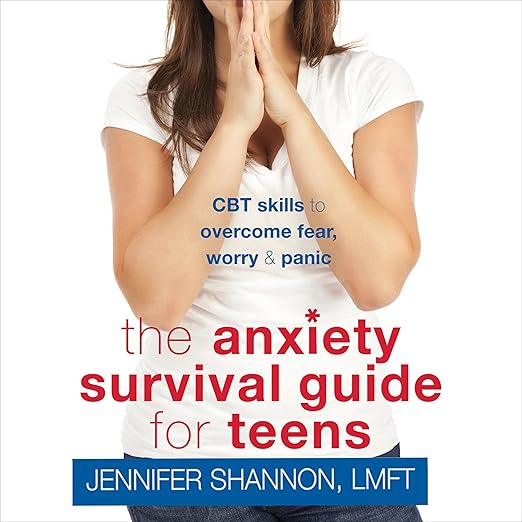
I was browsing the teen section of my audiobook queue on a rainy Tuesday afternoon, half-expecting to find the usual parade of vague affirmations and recycled breathing exercises. What I found instead was Jennifer Shannon’s The Anxiety Survival Guide for Teens: a book that cuts through the noise with something rarer and more useful: actual structure. Shannon is a cognitive behavioral therapist who has spent years working specifically with anxious teenagers, and that specificity shows from the opening chapters onward.
One of the reviews that stayed with me described a fifteen-year-old who ignored the book for two weeks after her mother gave it to her, then eventually picked it up and started talking about how it helped her see the world differently. She told her mother she was glad other people were like her enough to have a book about it. That detail, small as it sounds, tells you something important about what Shannon gets right: she writes in a register that teenagers actually recognize as honest, not condescending.
Our Take on The Anxiety Survival Guide for Teens
Shannon’s central organizing metaphor is the monkey mind, a restless, frightened stream of anxious thoughts compared to the chatter of a scared monkey. It is exactly the kind of concrete image that makes abstract concepts land for younger listeners. The book uses this framework to introduce cognitive behavioral techniques not as clinical procedures but as tools with logic behind them. Shannon explains not just what to do but why it works, which matters enormously for teenagers who are old enough to demand reasons but young enough to find medical language alienating.
What makes this audiobook genuinely distinctive is its scope. Shannon does not limit herself to everyday nervousness. She covers phobias, social anxiety, panic attacks, OCD, agoraphobia, separation anxiety, and generalized anxiety disorder, each addressed specifically, not folded under a vague umbrella of feeling stressed. For a 4-hour-and-16-minute listen, that is efficient and substantive. One reviewer described it as the most comprehensive and easy-to-understand book on anxiety they had ever encountered, and that person was not even a teenager: they bought it for their teen and found it helped them more. That crossover appeal surfaces repeatedly across the listener reviews, and it says something real about Shannon’s clarity of explanation.
Why Listen to The Anxiety Survival Guide for Teens
Amy Gordon’s narration is the right choice for this material. Her voice is calm without being clinical, warm without veering into false cheerfulness. When the content turns toward heavier territory, covering panic attacks, OCD rituals, and separation anxiety, she maintains a steadiness that models exactly the kind of regulated tone Shannon is teaching readers to find in themselves. For a teen listener who may already be dysregulated, that vocal consistency is not a small thing.
The accompanying PDF, available in the Audible library alongside the audio, adds genuine value here. Shannon’s CBT frameworks work best when you can revisit them, and the worksheets and exercises that come with the print edition translate reasonably well to a companion document format. If you are listening with a teenager in a shared-listening context, a car ride or a commute, the PDF gives them something concrete to return to later.
What to Watch For in The Anxiety Survival Guide for Teens
This is not a book for teens in acute crisis or those dealing with trauma that extends beyond anxiety. Shannon is rigorous about defining her scope, and that rigor is appropriate, but it means some listeners may find the book insufficient on its own. The CBT approach requires follow-through: the tools only work if you practice them, and the audiobook format, while accessible, does not replicate the accountability of working through exercises with a therapist. Parents and teens should treat this as a starting point and a reference, not a replacement for professional support when that support is needed.
There is also a structural reality of CBT-based books in audio form: some sections are denser than others, and a listener who is mid-panic will not find this a comfort listen. It is better used between difficult moments, as a preparation and education tool, than as in-the-moment relief. Shannon does not claim otherwise, but it is worth knowing before you start.
Who Should Listen to The Anxiety Survival Guide for Teens
This audiobook belongs in the library of any teenager who suspects their anxiety is more than ordinary nervousness, any parent trying to understand what their child is experiencing, and honestly any adult who missed out on practical CBT tools earlier in life. It is particularly well-suited to motivated teens who want language for what they are experiencing and concrete steps to address it. It is less suited to listeners seeking emotional catharsis or narrative-driven exploration of mental health: this is a guide in the practical sense, not a memoir. If you want someone to sit with you in the hard feelings, look elsewhere; if you want tools to manage those feelings more effectively, this delivers.
Frequently Asked Questions
Does the book cover specific anxiety disorders, or just general teen stress?
It covers both. Shannon addresses everyday anxiety as well as phobias, social anxiety, panic attacks, OCD, agoraphobia, separation anxiety, and generalized anxiety disorder, each as a distinct condition with specific CBT-based approaches.
Is this audiobook useful for parents, or is it written only for teens?
Multiple reviewers note that it helped them as adults just as much as their teenagers. Shannon writes accessibly enough that the content translates across ages, though the framing and examples remain focused on the teen experience.
What is the PDF companion mentioned in the product description?
The PDF contains the worksheets and exercises from the print edition. It is available in your Audible library alongside the audio file. It is most useful for revisiting CBT techniques between listening sessions.
Is Amy Gordon’s narration appropriate for a teen who might find the subject embarrassing to listen to?
Yes. Gordon’s tone is matter-of-fact and reassuring without being dramatic. She avoids the kind of over-emotive delivery that can make mental health content feel stagey or uncomfortable for self-conscious teen listeners.