Quick Take
- Narration: Allyson Ryan brings a controlled, brittle quality to Poe Webb that suits a character perpetually managing what she reveals and conceals.
- Themes: True crime culture, vigilante justice, identity built on secrecy
- Mood: Tense and psychologically coiled, with a contemporary media backdrop
- Verdict: A clever premise executed with consistent craft, though the ending divides opinion on whether the twist earns the buildup it receives.
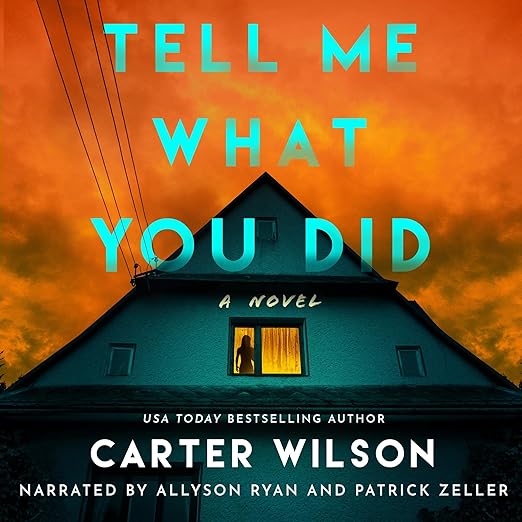
I came to Tell Me What You Did on a recommendation from a friend who hosts a true crime podcast herself, which felt like the ideal qualification to assess a thriller built around one. She pressed it on me with a specific instruction: do not read anything about it first. I followed that advice, and the experience of the first few chapters, not quite knowing where the story was going or how dark it would be willing to go, was significantly better for it. Carter Wilson knows how to construct an opening that keeps you calibrating your assumptions.
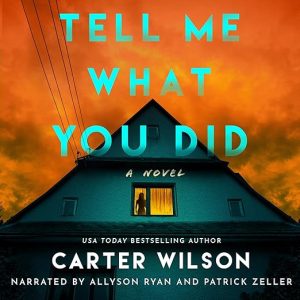
Published in January 2025 and narrated by Allyson Ryan, Tell Me What You Did centers on Poe Webb, host of a popular true crime podcast where anonymous guests confess crimes they have committed. The show’s promise is simple and morally slippery: Poe cannot guarantee the police will not come for her guests, but she offers simultaneous anonymity and audience. Then a man appears who claims to be the killer of Poe’s mother. Which would be unremarkable, except that Poe knows who actually killed her mother. Because she killed him herself.
Our Take on Tell Me What You Did
Wilson’s premise is among the more inventive thriller setups published recently: a true crime podcaster sitting across from someone whose claim ought to be impossible, with the full weight of her own secret pressing down on every question she asks. The interaction between Poe and the mysterious man she calls Hindley generates the novel’s best tension, and several reviewers singled out this dynamic specifically as the book’s strongest element. The back-and-forth between them has a cat-and-mouse quality that feels genuinely fresh within the genre.
The novel’s handling of its own central twist is where opinions divide. Several reviewers felt the conclusion lacked the kind of shocking climax a premise this well-constructed deserved. Others found the ending appropriately understated, more interested in character resolution than plot spectacle. Wilson himself seems to have been aiming for something that asks moral questions rather than delivers a pure genre payoff. Whether that feels like depth or disappointment will depend significantly on what you want from your crime fiction.
Why Listen to Tell Me What You Did
Allyson Ryan’s narration is well-matched to the material. Poe Webb is a character who has built her professional identity around getting others to confess while fiercely protecting her own secrets, and Ryan captures that controlled exterior with a vocal quality that suggests constant calculated management of information. She is effective in the podcast recording scenes, where the performative layer of Poe’s public persona sits over the private one, and equally strong in the moments where that control begins to slip. The production quality is clean throughout.
At nine hours and fifty minutes, Tell Me What You Did sustains its tension well in the middle sections, which can be the danger zone for thrillers with a strong premise. Wilson keeps the pressure consistent by doling out information gradually and ensuring that each new piece of context shifts your reading of what has come before.
What to Watch For in Tell Me What You Did
The true crime podcast world is rendered with enough specificity to feel authentic, including the parasocial dynamics and the ethical murkiness of the genre itself. Listeners who are themselves podcast consumers will find extra texture in Wilson’s portrait of how a show like Poe’s actually functions. The novel’s treatment of vigilante justice is thoughtful rather than straightforwardly celebratory, which may be welcome or frustrating depending on your expectations.
The ending is the principal point of division in reader responses. If you need your thriller to deliver a satisfying narrative shock in its final act, some reviews suggest this book may not deliver that in the expected form. The resolution is internally consistent and character-driven, but it prioritizes psychological truth over genre spectacle.
Who Should Listen to Tell Me What You Did
Tell Me What You Did is strongest for listeners who are already consumers of true crime media and will appreciate the insider texture of the podcast world Wilson constructs. It works well for fans of Wilson’s previous novels, particularly The Dead Girl in 2A and The New Neighbor, which establish a similar interest in characters with buried secrets. Listeners who prioritize premise originality and sustained atmospheric tension over the mechanics of plot resolution will find this rewarding. If you need a thriller to deliver its biggest shock in the final chapter, the divided reader response to the ending is worth weighing before you commit.
Frequently Asked Questions
Do I need to have read Carter Wilson’s previous novels, like The Dead Girl in 2A or The New Neighbor, before listening to Tell Me What You Did?
No. Tell Me What You Did is a completely standalone novel with no shared characters or setting with Wilson’s previous books. Familiarity with his style, particularly his interest in characters managing dark secrets, will shape your expectations usefully, but the novel requires no prior context.
Does Allyson Ryan’s narration effectively handle both Poe’s public podcaster persona and her private, guarded interior?
Yes. Ryan navigates the layering well, giving Poe a distinctly different register in her podcast recording scenes versus her internal moments of vulnerability. The controlled professionalism she projects in the public sections makes the cracks more effective when they appear.
Is the true crime podcast world in Tell Me What You Did rendered accurately, or does it feel like a surface-level backdrop?
The podcast mechanics and the ethical dynamics of the confession format feel specific and well-researched rather than generic. Wilson engages seriously with the parasocial nature of true crime audiences and the moral slipperiness of offering anonymity to people who have committed crimes.
Given the divided reaction to the ending, is Tell Me What You Did worth the investment of nearly ten hours?
If you are drawn to the premise and enjoy character-driven psychological tension over plot-mechanism payoffs, yes. The novel delivers well on its atmosphere and its central dynamic between Poe and Hindley throughout the runtime. The ending debate concerns the final resolution rather than the quality of the journey there.