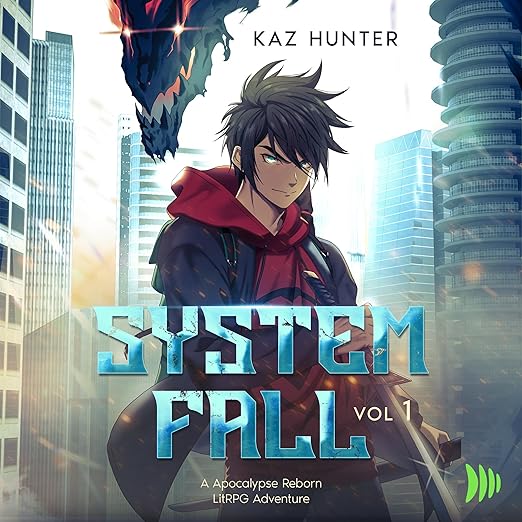
Quick Take
- Narration: Pete Cross delivers a solid performance that suits the action-driven material, though the internal monologue-heavy sections test his range.
- Themes: Regression and second chances, apocalyptic system integration, revenge as motivation
- Mood: Dark and urgent, with pacing that varies between propulsive and stalled
- Verdict: A worthwhile LitRPG debut for the Apocalypse Revisited series, with enough momentum in its better sections to carry readers into book two despite the structural rough edges.
I picked up System Fall on a commute that turned out to be longer than expected due to a delay, and there’s something fitting about that: a book about a man who gets to go back and do everything differently, encountered precisely when you’re stuck and waiting for things to move. The regressor premise is one of my favorite LitRPG frameworks when it’s handled well, and Kaz Hunter’s debut has the bones of something genuinely compelling beneath the uneven execution.
The story begins at what is effectively the end: Nick, who has lived through the catastrophe known as System Fall and spent years fighting the all-powerful entity called the Admin, is given the chance to begin again. Armed with the memory of everything he’s experienced, he re-enters a world that’s still early in the system’s arrival, equipped with knowledge his enemies can’t account for. If this sounds like a premise you’ve seen before, you’re not wrong – regressor LitRPG is an established sub-subgenre. But the specific shape of System Fall’s world, with its mechanical enemy architecture and the quasi-divine Admin as the antagonist, gives the familiar framework enough distinctiveness to stand on its own.
Our Take on System Fall
The opening is, by general reviewer consensus, the book’s weakest section. The non-linear structure – beginning at the end before resetting to the start – creates some initial confusion about how the world and Nick’s situation actually work. Once the regression kicks in and the book finds its momentum, the pacing improves considerably. Reviewers who stuck with it past the first act consistently note that their patience was rewarded.
Nick is a harder protagonist to root for than many LitRPG leads. He’s driven by rage and loss, and the book doesn’t soften that into something more palatable. One reviewer called this out explicitly: the MC is “kind of hard to root for,” while still finding the book worthwhile. That’s an honest assessment. System Fall is interested in what survival costs, not in making its protagonist conventionally likable, which is a respectable choice but not universally appealing.
Why Listen to System Fall
Pete Cross handles the material with competence across the twelve-hour runtime. The action sequences are where both the writing and the narration are strongest – the combat encounters carry genuine tension, and Cross delivers them with the right kind of forward energy. The sections that bog down in reviewer notes are the extended internal monologue passages, where Nick’s processing of his situation crowds out actual forward motion. Cross does his best with them, but the structural issue is in the writing.
The world-building is one of the book’s genuine strengths. The System Fall event – the arrival of a game-like structure that reorganizes reality and empowers both humans and monsters – is sketched with enough internal logic that the rules feel reasoned rather than arbitrary. The Admin as antagonist has real menace, and the sense that Nick is working toward something with enormous stakes gives the regression narrative its drive.
What to Watch For in System Fall
Several reviewers flag what one calls a “machete style editing” problem – the book runs longer than its content requires in multiple sections, particularly midway through. The internal monologue issue is the most consistent criticism: extended paragraphs of Nick working through his situation interrupt action sequences and slow the narrative without always adding new information or depth. Listeners who are patient with this tendency in LitRPG fiction will be less troubled by it than those who want lean, efficient storytelling.
The LitRPG system mechanics are also not as cleanly explained as they might be. The stat structure and ability system remain somewhat opaque throughout, which frustrates readers who come to the genre for the progression clarity. Hunter seems more interested in character experience than mechanical exposition, which is a legitimate authorial choice but creates friction with genre expectations.
Who Should Listen to System Fall
LitRPG readers who enjoy regressor narratives and don’t need a conventionally sympathetic protagonist will find enough here to make it worthwhile. Listeners who are forgiving of rough first entries in a series – and who can get through a slightly clunky opening to reach the better material in the latter half – will be rewarded. Anyone who requires tight mechanical LitRPG exposition, clean pacing, or a likable hero should look elsewhere. This is a promising debut with real strengths buried under editorial rough edges, and book two is likely where the series finds its stride.
Frequently Asked Questions
Is System Fall a true standalone, or does it end on a cliffhanger?
It ends on a somewhat open note, with the central quest against the Admin unresolved. One reviewer specifically calls out the final battle as unsatisfying, describing it as “a cowardly way to leave a fight.” Series continuation is clearly intended. Listeners who need full resolution per book may want to wait until more volumes are available.
How clear are the LitRPG mechanics in System Fall compared to more established series?
Less clear than the genre standard. Reviewers note that Nick’s stats and the overall system structure remain murky throughout. The book prioritizes Nick’s survival experience over mechanical exposition, which will frustrate LitRPG readers who come to the genre for the progression clarity.
Does the regressor narrative structure mean you need specific LitRPG series knowledge going in?
No prior series knowledge required – this is the first book in the Apocalypse Revisited series. The non-linear opening may cause some initial confusion, but everything you need is in the text.
How does Pete Cross handle the internal monologue-heavy sections that reviewers criticize?
As well as can be expected given the material. Cross performs the action sequences with more energy and the monologue sections are technically competent, but the structural issue is in the writing. No narration performance would fully solve the pacing problem that the extended internal passages create.