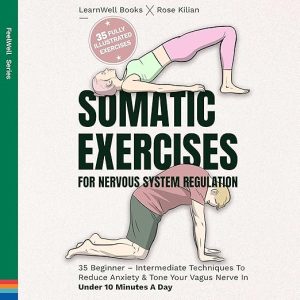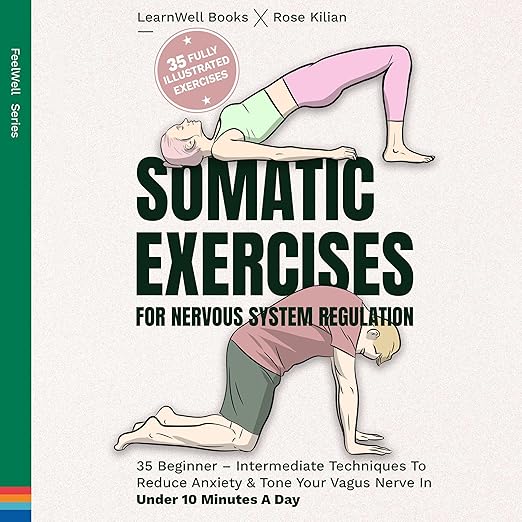
Somatic Exercises for Nervous System Regulation, published by LearnWell Books and narrated by Amberly Slack, is one of those audiobooks that works partly by example. Slack's narration has a measured quality that slows your breathing a little even before the material begins. The subject, somatic practice and vagus nerve regulation, has grown considerably in profile over the past decade as research on trauma and body memory has entered mainstream conversation through practitioners and researchers working in the field. This audiobook is not a research text. It is a practical introduction, pitched at people who want to understand what somatic exercises are, what they do to the nervous system, and how to develop a personal practice in accessible, daily-use increments.
The Verdict, Briefly
The book's organizing framework is the nervous system itself, specifically the relationship between somatic movement, vagal tone, and emotional regulation. LearnWell Books presents this in four areas: understanding somatic practices and how to personalize them, mastering movements for mind-body harmony, developing emotional release and resilience skills, and cultivating deep body awareness over time. That structure is well chosen because it moves from conceptual understanding toward practice, then inward toward self-knowledge. Reviewer Hummingbird52 noted the difference between physical therapy exercises and the same movements repurposed for nervous system regulation, which captures one of the book's central teaching points: it is not the exercises themselves that change things but the attention you bring to them. The distinction between movement as physical therapy and movement as somatic regulation is the conceptual core the book returns to across its chapters, and Slack's narration holds that thread clearly throughout. The book also covers the role of somatic work in supporting emotional release, which is territory that wellness literature often handles vaguely. LearnWell Books is more specific than most in describing what emotional release in a body-based context actually looks and feels like, which is helpful for listeners approaching somatic work for the first time.
What Makes Somatic Exercises for Nervous System Regulation Worth Hearing
At two hours and thirty-two minutes, this is a short audiobook by any measure, but its brevity is a feature for the kind of content it delivers. Reviewer Amazon Customer noted that the material is simple and genuinely usable by anyone who lives in the modern world, including people dealing with pain, trauma, or chronic stress. The book makes a point of keeping its language and instructions accessible, which is important for a subject that can easily become either overly clinical or muddled in vague wellness language. The ten-minutes-a-day approach the book advocates is realistic rather than aspirational, which is not always the case in this genre. Amberly Slack's narration reinforces this accessibility, reading with the kind of steady warmth that keeps even the more anatomical explanations of the vagus nerve feeling approachable rather than academic. Reviewer Liz Biernacki's aside that flash cards would be nice is a fair practical observation: some of the exercises lend themselves to quick visual reference, and a companion document would be useful for building a daily practice from the material.
Points to Consider
The main limitation of any audiobook covering physical exercises is that the instructions are verbal rather than demonstrated, and somatic work depends significantly on proprioceptive experience that is difficult to convey in words alone. Listeners implementing the exercises for the first time will benefit from supplementary visual resources, whether online videos of somatic practices or a practitioner who can provide in-person guidance for the first few sessions. The book also covers a broad scope in a short runtime, which means individual exercises are introduced at an orientation level rather than trained deeply. For listeners dealing with serious or complex trauma, this book is a useful starting framework but not a substitute for clinical somatic therapy with a qualified practitioner. For general stress management and nervous system care in everyday life, it delivers exactly what it promises. The Anxiety Relief series framing sets appropriate expectations: this is a practical tool for daily resilience, not a clinical intervention.
Who Should Listen to Somatic Exercises for Nervous System Regulation
This audiobook serves listeners who are new to somatic practices and want a clear, accessible introduction before deciding whether to deepen their exploration. It is also well matched to people who have read or heard about polyvagal theory, trauma and body research, or the work of practitioners like Peter Levine and want a practical companion that translates those ideas into a daily practice. Listeners dealing with generalized anxiety, stress-related physical symptoms, or the aftermath of difficult experiences will find the framework genuinely useful. Those looking for a deep scientific treatment of nervous system physiology or a clinical somatic therapy curriculum will need to look further. For the curious beginner or the stressed professional looking for a sustainable ten-minute daily practice, this audiobook is a solid and honest starting point that does not overpromise on what two and a half hours of listening can deliver. Listeners who approach this audiobook with genuine curiosity rather than skepticism will find that even a few weeks of consistent ten-minute daily practice produces noticeable changes in how the body responds to stress, which is ultimately the only evidence that matters in assessing whether somatic work is useful for a particular person. The audiobook also benefits from repeat listening in a way that most non-fiction does not. The exercises are meant to be practiced rather than simply understood, and returning to the relevant sections as you develop a regular practice gives the material a different quality than a single complete listen. Think of it as a practice companion rather than a book to finish and set aside.
In Brief
- Performance: Amberly Slack reads with calm deliberateness that suits the nervous system regulation content well, matching the material's emphasis on slowing down.
- What it covers: Somatic practice, vagus nerve health, emotional resilience
- Feel: Calming and methodical, designed to be listened to rather than simply consumed
- Our call: A genuinely useful introduction to somatic practice for anyone dealing with chronic stress, anxiety, or the effects of trauma, especially for listeners new to body-based approaches.
A Few Questions About Somatic Exercises for Nervous System Regulation
Can I follow the Somatic Exercises for Nervous System Regulation audiobook while actually doing the exercises, or is it better as a prior orientation?
Both approaches work depending on the exercise. Some movements are simple enough to follow along in real time with narration. Others benefit from listening through first and then practicing with the instructions in mind. A first complete listen, then returning to specific sections during practice, tends to get the most from the material.
Does Somatic Exercises for Nervous System Regulation audiobook explain the science behind vagus nerve regulation, or is it purely practical?
The book includes conceptual grounding in how somatic practices affect the nervous system and vagal tone, but it is weighted toward practice rather than deep physiology. Listeners wanting a thorough scientific explanation should look to texts like Porges's polyvagal work alongside this audiobook.
At just over two hours, does this audiobook have enough content to build an actual practice, or is it more of an overview?
It provides enough structure to start a ten-minute daily practice and understand why it works. The brevity means each technique is introduced rather than extensively trained, so listeners committed to developing a real practice should expect to revisit key sections multiple times and potentially seek out additional movement resources.