Quick Take
- Narration: Lisa Rost-Welling’s performance is clean and efficient, moving well through the procedural sequences and giving Katie Scott’s internal voice a grounded, capable quality.
- Themes: crimes that reach back across decades, the professional and personal costs of investigative obsession, the K-9 partnership as emotional anchor
- Mood: Taut and procedural with a genuinely harrowing opening image
- Verdict: A solid fifteenth entry in a long-running series that rewards loyalty to Detective Katie Scott without requiring readers to have started at book one.
I came to Sing Her to Sleep as someone familiar with Jennifer Chase’s Detective Katie Scott series rather than as a newcomer, and that context matters for any assessment. By book fifteen, a series like this has established its rhythms, its recurring cast, its emotional register. The question is whether Chase has found something genuinely fresh to build each new entry around, and the answer here is yes — the opening image is striking enough that it earns book fifteen its own identity rather than simply feeling like another number in a long sequence.
That image: a construction crew breaks ground at the Pine Valley building site, and two skeletons emerge from the disturbed earth. An adult and a child. Hands intertwined. The detail of the hands is the kind of thing that stays with you across eight-plus hours of audio — Chase knows that a case needs an emotional center that keeps drawing the reader back when the procedural machinery is running at its most technical, and those intertwined hands do exactly that work throughout the investigation. I almost cried, one reviewer wrote, describing the first scene, and that response is entirely understandable.
The Case: Twenty Years of Silence
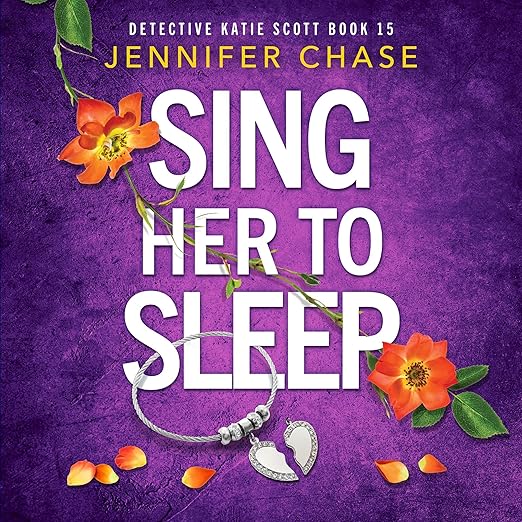
Meredith and Misty Collins disappeared twenty years before the events of the novel, and matching silver bracelets with half-heart charms are what the investigation uses to identify their remains. The cold-case element is well-handled — Chase gives Katie and her partner McGaven enough investigative texture to make the discovery feel earned rather than convenient, and the introduction of Meredith’s husband’s murder the day after the skeletons surface adds the contemporary-threat dimension that stops the case from being purely retrospective archaeology.
Reviewers noted that things are not as clear as they seem — that assumptions made early about guilt and motive do not survive contact with what the investigation actually uncovers. That structural honesty is one of the series’ reliable pleasures. Chase does not plant obvious red herrings for the sake of a twist; she builds a case in which multiple explanations could plausibly be true, and the resolution feels genuinely motivated by the evidence Katie assembles rather than by authorial convenience. The secrets held by people close to Katie about what happened at the Collins house add a layer of personal betrayal that the book handles without melodrama.
Series Trust and the Fifteenth Book Problem
There is a specific pleasure available only to readers who have committed to a long series, and Sing Her to Sleep delivers it. The callbacks to earlier cases, the shorthand between Katie and McGaven that reflects years of shared professional experience, and the sense of a community where people have accumulated history with each other — these elements cannot be transplanted into a standalone book and require the accumulated context the series has built across fourteen prior volumes. Chase rewards that investment without alienating newcomers, which is one of the harder structural challenges a series author faces at book fifteen.
Cisco and the Working Partnership
One reviewer singled out Katie’s K-9 partner Cisco as an integral element rather than window dressing, and that observation is accurate in ways that are easy to underestimate. Working dog narratives in crime fiction range from tokenistic to deeply meaningful, and Chase has built Cisco into the fabric of how Katie thinks and works. He is not a gimmick or a piece of equipment; he is a partner with behavioral tells that feed directly into Katie’s investigations. Cisco participates in search sequences, his responses to environments serve as investigative signals, and the bond between him and Katie is developed with care that accumulates across the series. Rost-Welling voices the passages involving Cisco with an alertness that matches his narrative function, and the shadowy figure watching Katie’s home at night adds a personal-threat dimension that Chase handles with more restraint than many thriller writers would, which makes the threat feel real rather than melodramatic. At eight hours and forty-three minutes, this is a brisk listen that moves efficiently through both the procedural sequences and the personal threads without shortchanging either.
Frequently Asked Questions
Does Sing Her to Sleep work as a standalone, or is series order important?
It works reasonably well as a standalone. The cold case at the center of book fifteen is self-contained, and Chase provides enough context about Katie Scott’s professional setup and personal relationships that new listeners can follow the investigation. Fans of the series will get more out of the recurring character appearances, but their absence does not make the book incoherent.
How important is the K-9 element to the mystery, or is Cisco mainly for emotional texture?
Cisco contributes to the actual investigation — Chase is careful not to reduce the dog to a mascot. He participates in search sequences and his behavioral responses are used as investigative signals that Katie reads. One reviewer specifically praised how the K-9 partnership serves the plot rather than just providing emotional comfort, which is accurate.
Is Lisa Rost-Welling’s narration consistent with previous volumes in the Detective Katie Scott series?
Rost-Welling has narrated multiple books in this series, and the consistency of her performance across the run is one of its strengths. Listeners who have followed the series in audio will find her characterizations of Katie, McGaven, and the supporting cast stable and familiar.
Does the personal threat to Katie resolve within this book, or does it carry over to future installments?
The main cold case resolves satisfyingly within the book. The shadowy figure element is handled with enough closure to feel complete while leaving enough open to sustain the series’ ongoing tension about Katie’s safety. Chase is experienced at threading serial and standalone elements, and she manages that balance here.