Quick Take
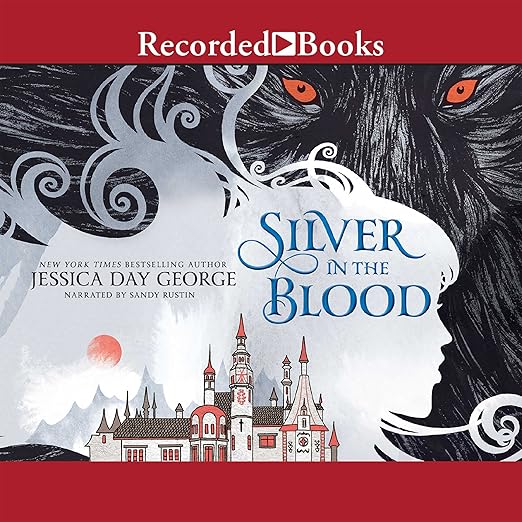
- Narration: Sandy Rustin gives Dacia and Lou distinct voices without caricature, handling the epistolary opening sections with particular skill before settling into a more traditional third-person delivery.
- Themes: hidden family legacy, Victorian-era supernaturalism, female friendship under pressure
- Mood: Gothic and gradually propulsive
- Mood: Gothic and gradually propulsive
- Verdict: A slow-building historical thriller that rewards patience with a genuinely darker edge than most YA supernatural fiction attempts.
I have a particular fondness for historical fiction that takes the Victorian and Edwardian supernatural tradition seriously rather than treating it as a costume party backdrop. Silver in the Blood by Jessica Day George does not fully belong to that tradition, but it reaches toward it in ways I found genuinely appealing, particularly in its handling of the Dracula family as a Romanian aristocratic legacy rather than a purely Gothic horror set piece.
The premise brings together Dacia and Lou, American cousins from wealthy New York families with Romanian roots, who are summoned to Romania to fulfill obligations to the Dracula family that their mothers have never fully explained. The setup is structured around a mystery the reader and the protagonists discover simultaneously: what is the family legacy, what are they capable of, and what does the Dracula heir actually want with Dacia?
Our Take on Silver in the Blood
The book’s strongest quality, identified by multiple reviewers, is the slow burn. Reviewer TSherm noted that the intensity builds steadily so that by the end she could not turn the pages fast enough, and that pacing is a deliberate choice that Jessica Day George is making. The first quarter of the book establishes the cousins’ friendship and their social world with enough care that when the situation in Romania begins to turn genuinely threatening, you believe in the relationships that are at risk.
Reviewer Midori Reads offers the most honest assessment: the book does not pull you in immediately, but around a quarter of the way through it earns your full attention. That trajectory is accurate and worth knowing in advance. This is not a book that opens with a hook designed to prevent you from putting it down. It is a book that builds trust in its characters before asking you to care about what happens to them, which is a more literary structure than most YA supernatural fiction attempts.
The treatment of vampires is also notably different from the post-Twilight normalized version. Reviewer BookishMiss specifically praises the return to vampires as menaces in the night, horrors rather than romantic ideals, and that reading is accurate. The Dracula family in this book is powerful and frightening in ways that draw from the original Stoker tradition rather than from paranormal romance conventions. The supernaturalism here is darker and less comfortable than the genre norm.
Why Listen to Silver in the Blood
Sandy Rustin’s narration handles the dual-protagonist structure well. The book opens in an epistolary format, letters between the cousins before they arrive in Romania, and Rustin differentiates the voices clearly enough that the transition into more conventional third-person narration in the later sections feels smooth rather than jarring. At just over nine hours, the pacing of the narration matches the pacing of the text: deliberate in the early sections, accelerating through the final act.
The historical setting, late nineteenth century, moving between New York society and Romanian aristocracy, gives the story a visual texture that translates well into audio. Rustin reads with a slightly formal register appropriate to the period without making the language feel stilted, which is a calibration that historical fiction narration frequently gets wrong in one direction or the other.
What to Watch For in Silver in the Blood
The synopsis is unusually brief for a book of this complexity. The phrase the royal Dracula family significantly undersells how the legacy actually functions in the narrative, and the monster-fighting duo mentioned appears later in the story than new listeners might expect. Going in with lower expectations about the speed of revelation is useful: the book earns its mysteries by making you genuinely uncertain about which of the Dracula family members can be trusted and in what ways.
Reviewer Midori Reads also raises the issue of an initially frustrating protagonist. Dacia’s constant flirting in the early sections can feel mismatched with the gravity of her situation, though this reviewer notes it resolves as the story progresses. That early characterization is intentional: part of the novel’s project is showing how socialized femininity in that period functions as both protection and limitation, and Dacia’s flirtatiousness is a social armor that the Romanian situation begins to strip away.
Who Should Listen to Silver in the Blood
This audiobook is well-matched for YA listeners who have grown tired of sanitized supernatural fiction and want something with genuine menace and historical texture. Adult fans of Gothic historical fiction who do not require literary complexity beyond the genre will also find it satisfying. Listeners who want immediate propulsive pacing should know that the slow build in the first quarter is real and intentional. Those who appreciate the rewards of patient character development before the plot accelerates will be well served by the nine-hour investment.
Frequently Asked Questions
Is Silver in the Blood the start of a series or a standalone novel?
Silver in the Blood was intended as the beginning of a series, billed as historical thriller series launch for Jessica Day George. However, a sequel has not been published as of the available information. The book resolves its central conflict but leaves the world and some character questions open in ways that suggest the original intent was continuation.
How does this book’s take on the Dracula family differ from typical vampire fiction?
George draws from the original Stoker tradition of vampires as genuinely threatening figures rather than the romanticized versions common in post-Twilight paranormal fiction. The Dracula family in Silver in the Blood is aristocratic, powerful, and frightening in ways that reviewers specifically praise as a return to horror rather than romance. The family legacy also functions differently from a simple vampire mythology, with elements that are specific to George’s world-building.
The book starts in epistolary format. Does that continue throughout?
No. The opening sections use letters between Dacia and Lou to establish the characters and their relationship before they travel to Romania. The format shifts to more conventional third-person narration as the story progresses. Sandy Rustin handles the transition smoothly in the audiobook version.
One reviewer mentioned the book starts slowly. How long does it take to build momentum?
Reviewer Midori Reads put the transition point at roughly a quarter of the way through, after which she found herself fully engaged. At nine hours total, that suggests the first two to two-and-a-half hours are the slower setup period before the plot begins to accelerate. The payoff is generally considered worth the patience by readers who complete the book.