Quick Take
- Narration: Charlie Engle narrates his own memoir, and that choice is indispensable, his voice carries the specific weight of someone who has lived everything he describes, from the bottom of addiction to the Sahara Desert.
- Themes: Addiction and recovery, ultramarathon running as both escape and salvation, injustice and resilience
- Mood: Raw and propulsive, funny in unexpected places, emotionally honest without self-pity
- Verdict: One of the most genuinely compelling running memoirs in the genre, but it’s also a book about addiction, prison, and the peculiar human need to push through every limit you encounter.
I put Running Man on during a long training run last spring and didn’t take my earbuds out until I’d covered eight more miles than I planned. That’s a cliche about audiobooks, the kind of thing you’re not supposed to write in a review, except it happened and I can’t think of a more honest way to describe the experience. Charlie Engle is a world-class ultramarathon runner who has crossed the Sahara Desert on foot, but this is not primarily a book about running. It’s a book about a man who needed something harder than anything the world could normally provide, and the gradual realization that the impulse driving him toward extremity was the same one that nearly killed him.
The opening chapters track Engle’s decade-long addiction to crack cocaine and alcohol with the specificity and candor that readers of recovery memoir will recognize but rarely find in a sports book. He describes a near-fatal six-day binge that ended in a hail of bullets as the bottom that preceded sobriety, and he doesn’t romanticize it or explain it away. The causal connection he draws between addiction and ultrarunning is implicit before it becomes explicit: both are ways of existing at the outer edge of endurance, ways of not having to be ordinary. When he frames running as his lifeline and his salvation, the claim is grounded in enough psychological specificity that it lands as true rather than therapeutic platitude.
Our Take on Running Man
The middle section of the book, which covers the preparation for and execution of the 4,500-mile run across the Sahara Desert documented in Matt Damon’s film Running the Sahara, is the most conventionally thrilling material. Engle is an excellent writer in the specific sense that he puts you inside the physical experience without reducing it to a list of hardships endured. The heat, the sand, the interpersonal tensions within the running team, and the logistical nightmares of crossing six countries on foot all come through with the kind of detail that suggests memory rather than reconstruction.
One reviewer noted they bought the book twice, which is perhaps the most emphatic endorsement available. More substantively, they described Engle as someone who ‘can bring you through low moments and highs and make you feel that you are with him and part of his team cheering him on.’ That communal quality is real. The prison section, which covers Engle’s investigation and ultimately unjust conviction for mortgage fraud and sixteen months in federal prison, is the most morally complex part of the book and the one most readers cite as a surprise. He does not use his incarceration as a melodramatic pivot; he uses it as an extension of the same theme the whole book is exploring, what happens when you strip away everything and only the core of a person remains.
Why Listen to Running Man
Engle narrating his own memoir is not merely a convenient choice; it is the difference between this audiobook and a lesser version of the same story. His voice is warm, self-deprecating when self-deprecation is earned, and capable of genuine humor in the places where the story calls for it. The funny anecdotes, which reviewers mention as a pleasant surprise, come through in his delivery with the timing of someone who has told some of these stories before and knows where the laugh lands. The serious passages are handled without theatrics, which makes them more effective.
At ten hours and twenty-five minutes, the pacing mirrors the book’s structural ambition: it covers an enormous span of life in a way that feels complete rather than compressed. The sequence from addiction through sobriety through marathons through ultras through the Sahara through prison through what comes after constitutes a full human arc, and Engle gives each section its appropriate weight without turning any of them into the sole point of the memoir.
What to Watch For in Running Man
The legal and prison sections involve a conviction Engle believes was unjust, and the book presents his perspective on the investigation and trial. This is inherently a partial account, and readers who want a balanced view of the legal proceedings will need to look elsewhere. Engle is candid about this limitation in the way any memoirist must be: this is his story as he experienced and understood it.
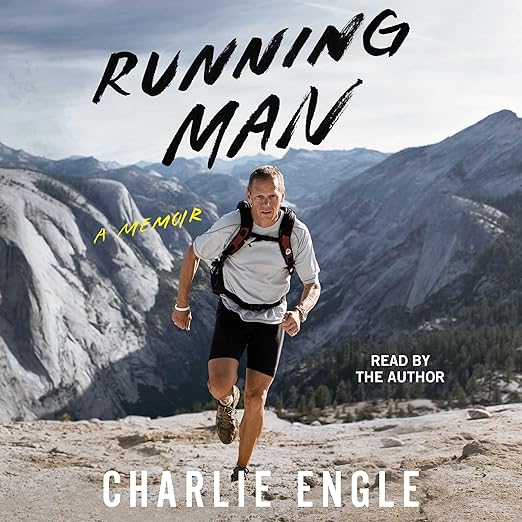
The book is also, in ways that aren’t always foregrounded in the marketing, a recovery story as much as an athletic one. The addiction narrative is explicit and unflinching in the early chapters, and some listeners may find that material difficult. It’s worth knowing before you start that Running Man requires you to sit with the devastation of addiction before you get to the exhilaration of the Sahara. That sequencing is intentional and right, but it means the audiobook’s tone is darker in its opening hours than the cover image suggests.
Who Should Listen to Running Man
Runners of every level will find something here, from the ultramarathon specifics to the broader question of what drives people toward extreme physical challenge. But this is equally a book for anyone who has been through addiction, recovery, or an experience that stripped them down to something essential and then had to figure out who that person was. The prison section will resonate with listeners who follow criminal justice and wrongful conviction stories. Anyone who has found that physical movement was the thing that kept them from falling apart will recognize the emotional logic of Engle’s journey even without sharing his particular extremes.
Frequently Asked Questions
Is Running Man primarily a book about ultramarathon running, or does it cover Charlie Engle’s full life story?
It covers his full life arc. The addiction and recovery chapters precede and contextualize the running chapters, and the book also covers Engle’s investigation and incarceration for mortgage fraud. The Sahara crossing is the most dramatic single episode but not the book’s entire focus.
How does Charlie Engle’s self-narration compare to professional narrators in similar memoirs?
Engle is a skilled storyteller with natural timing and warmth that most professional narrators would struggle to replicate for this material. The humor lands better in his voice than it would in someone else’s, and the serious passages benefit from the specific authenticity of someone narrating their own lived experience.
Is the content about addiction and prison difficult to listen to?
The opening chapters on crack cocaine addiction are explicit and unflinching, and the prison section involves a conviction Engle considers deeply unjust. Listeners sensitive to addiction narratives or accounts of incarceration should know those elements are central to the book, not peripheral.
Does Running Man cover the Matt Damon-produced documentary Running the Sahara?
Yes. The Sahara crossing is a major section of the memoir, and Engle discusses the filming, the team dynamics, and the logistical realities of the expedition in detail. The documentary provides a useful companion to this section, but the book covers the experience at significantly greater depth and from Engle’s first-person perspective.