Quick Take
- Narration: Katie Arnold reading her own memoir is exactly right, her prose sounds the way good outdoor writing moves, and hearing her voice the material about her father adds emotional layers a professional narrator could not manufacture.
- Themes: Grief and the body’s response to loss, father-daughter inheritance and revision, ultrarunning as psychological practice
- Mood: Transcendent and raw, with the landscape of northern New Mexico doing real narrative work throughout
- Verdict: A grief memoir that uses running as its honest subject rather than its metaphor, from a writer whose prose justifies the comparisons to Cheryl Strayed.
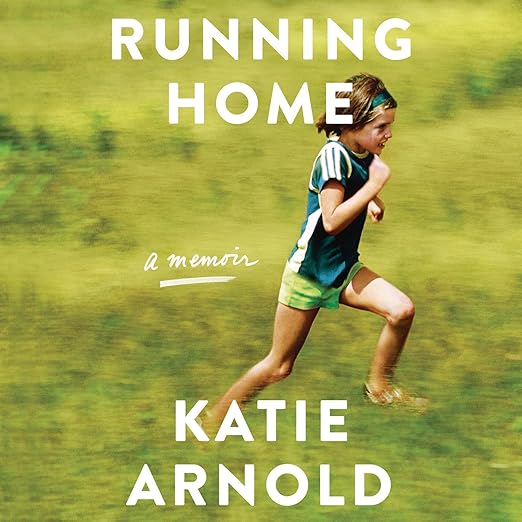
I was three weeks into a period of genuine personal difficulty when someone put Running Home in my hands and told me it was about running but actually about something else. I listened to the first two chapters sitting in my car in a parking lot, not ready to go inside yet. That is the kind of book this is: it finds you at the right moment, and then it refuses to let you go until it has finished saying what it has to say.
Katie Arnold is a longtime writer for Outside magazine, and Running Home is the memoir that emerged from three years of ultramarathon running following her father’s death from cancer. Her father, an enigmatic National Geographic photographer, had introduced her to movement and outdoor life from childhood. His death unleashed not just grief but an anxiety disorder that left her nearly paralyzed by fear. Running, longer and longer distances, first a fifty-kilometer race, then fifty miles, then one hundred kilometers through the wilderness of New Mexico, was how she moved through both.
Our Take on Running Home
The book’s central insight is that grief has a physical dimension that language alone cannot reach. Arnold runs not to escape the loss but to metabolize it, to give the body something to process when the mind has hit its limits. That distinction matters, and it is what separates Running Home from more conventionally therapeutic adventure memoirs. She is not running away from her father’s death. She is running with it, testing what the body can hold, discovering that its capacity is larger than she feared.
The portrait of her father is careful and revisionary. As she runs and processes, she discovers that much of what she believed she knew about him, about their relationship, about his choices, about the story she had been telling herself about her childhood, was incomplete. One reviewer described the book as a hidden gem and a more vibrant successor to Zen and the Art of Motorcycle Maintenance, which is an ambitious comparison that the prose partly earns. Arnold writes with outdoor writing’s characteristic directness, but she brings interior access that the genre often sacrifices for scenic description.
Why Listen to Running Home
Arnold narrates her own memoir, and this is one of those cases where the self-narration is definitively the right choice. Her voice has the quality of someone who has thought carefully about what she is saying and is still not entirely over it. The passages about her father, and about the specific fears that took hold after his death, carry emotional weight that her delivery does not try to amplify or manage. You hear a person working through something rather than a narrator performing grief.
Multiple reviewers noted that the book is not really about running, that you do not need to be a runner to be moved by it, and this is accurate. One reader who had never run farther than thirty-three kilometers called it something completely different from what they expected, and found themselves fully absorbed anyway. The landscapes, Virginia, New Mexico, the Grand Canyon, are rendered with the descriptive precision you would expect from an adventure journalist, but they function emotionally rather than decoratively. The desert and the mountains are not backdrop; they are part of what Arnold is learning to carry.
What to Watch For in Running Home
The book does not follow a linear emotional arc. Arnold’s anxiety disorder waxes and wanes, her understanding of her father revises and complicates rather than resolving cleanly, and the running itself is not a cure so much as a sustained practice. Readers who want a memoir that ends with the protagonist definitively healed may find the conclusion more provisional than satisfying. The ultramarathon material requires some patience if you have no prior interest in the sport, though Arnold keeps the technical detail subordinate to the psychological experience rather than using it as material for its own sake.
Who Should Listen to Running Home
Grief memoir readers, outdoor and running enthusiasts who want prose that matches the quality of the experience, and anyone navigating loss who wants company that does not pretend the way through is straightforward. It belongs on a shelf beside Wild and H Is for Hawk for readers who respond to that particular combination of physical journey and interior excavation. Skip it if you need narrative tidiness, Running Home earns its ambiguity, but it does not resolve it into comfort.
Frequently Asked Questions
Do I need to be a runner or have an interest in ultramarathons to connect with Running Home?
No. Multiple readers who do not run found the book fully absorbing. The ultramarathon context provides the physical stakes, but the book’s real subject, grief, anxiety, and the revision of a father-daughter story, does not require running knowledge.
How does Arnold’s self-narration compare to professional audiobook narration for a memoir like this?
It is one of the stronger cases for self-narration available. The emotional weight she brings to material about her father’s death is something a professional narrator would struggle to replicate, and her outdoor writing background means she reads her own prose with real understanding of its rhythm.
Is Running Home primarily about the ultramarathon races or about the grief and family narrative?
The grief and family narrative is central. The races provide structure and physical stakes, but the book is fundamentally about Arnold’s relationship with her father, the anxiety that followed his death, and the process of understanding a person she thought she already knew.
How does Running Home compare to Wild by Cheryl Strayed, with which it is often mentioned in the same breath?
Both use a demanding physical journey as the structure for a grief memoir, and both involve a complicated relationship with a parent. Arnold’s prose is more compressed and journalistic than Strayed’s; the interiority is equally present but expressed differently. Readers who loved Wild will find Running Home rewarding, though the two books are distinct in tone and in what they ask of the reader.