Quick Take
- Narration: Adam Lofbomm delivers a clear, professional read suited to textbook-style content, though the material is dense enough that listeners may need to replay sections.
- Themes: Project risk identification, agile and adaptive environments, risk response planning
- Mood: Methodical and authoritative, textbook-adjacent in structure
- Verdict: A comprehensive reference for PMP and PMI-RMP candidates and practicing project managers, though its textbook origins make it better consulted than listened to sequentially.
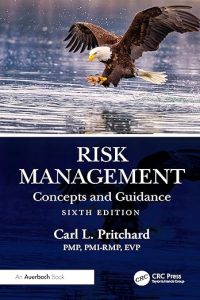
I want to be honest about where this audiobook fits in the listening landscape before anything else: Risk Management: Concepts and Guidance by Carl L. Pritchard is, in its foundational form, a textbook. Its sixth edition, aligned with the seventh edition of PMI’s PMBOK Guide, is designed as a study and reference resource for people pursuing Project Management Professional and Risk Management Professional certifications, as well as practicing project managers who need a comprehensive treatment of risk frameworks. That is a specific audience, and this review is directed primarily at them.
There are no listener reviews available for this audiobook at the time of writing, which is not unusual for specialist professional titles. The author’s reputation in the project management field is well-established; Pritchard holds PMP, PMI-RMP, and EVP credentials and has been publishing on risk management for multiple editions of this text. The sixth edition adds coverage of artificial intelligence applications in risk management and new material on adaptive project environments, which reflects the field’s current direction rather than merely updating older content.
Our Take on Risk Management: Concepts and Guidance
The book’s approach is holistic in a meaningful sense: it treats project risk as a blend of environmental, programmatic, and situational factors rather than as a checklist procedure. That framing differentiates it from narrower treatments that focus exclusively on risk registers and probability matrices. Pritchard introduces concepts like planned clairvoyance, the idea of building enough foresight into risk planning to anticipate future states systematically, which is a more useful mental model than the pure reactive frameworks that dominate less rigorous treatments.
The integration of agile concepts alongside classical risk management approaches is a genuine addition in this edition. Project managers working in hybrid environments, part-waterfall, part-agile, will find this more applicable than earlier editions that assumed a fully sequential project context. The AI chapter is newer territory, and without listener feedback it is difficult to assess how well Pritchard’s treatment holds up against the rapid evolution of actual AI tools in project contexts, but the framing of AI as a risk surface as well as a risk tool is a reasonable starting point.
Why Listen to Risk Management: Concepts and Guidance
Adam Lofbomm’s narration is competent and clear, which is the appropriate standard for content of this kind. A technical reference work does not require the emotional range of a novel narrator; it requires precision and pacing that allows complex definitions and framework structures to register. Lofbomm delivers that. At just under ten hours for a 502-page source text, the audio format condenses the material significantly, and listeners using this for certification study should expect to supplement the audio with the PDF companion that accompanies the Audible purchase.
What to Watch For in Risk Management: Concepts and Guidance
The textbook structure, with its appendices, reference materials, and supporting details that the synopsis specifically highlights, does not always translate cleanly to sequential audio listening. Risk management frameworks are often best learned through iterative reference, returning to specific concepts as you encounter them in practice, rather than through a single linear pass. The audio format is genuinely useful for absorbing the conceptual scaffolding of the book, the holistic risk model, the distinction between threat and opportunity, the role of the risk response matrix, but listeners who expect to walk away from a single listen fully prepared for PMI certification should temper those expectations.
The price point of $23.99 is higher than most titles in this review corpus, which reflects the professional reference positioning rather than a mass-market audiobook strategy. That pricing is consistent with the specialist audience and the depth of content.
Who Should Listen to Risk Management: Concepts and Guidance
PMP and PMI-RMP candidates who learn well through audio, and who are using multiple study formats in combination, will find this a useful component of their preparation. Practicing project managers who want to update their risk frameworks for agile and hybrid environments are the other primary audience. General business listeners curious about risk management in the abstract will likely find the density and textbook structure a challenge; a more accessible introduction to the concepts, such as a shorter popular treatment, would serve them better as a starting point.
Frequently Asked Questions
Is this audiobook sufficient on its own for PMP or PMI-RMP exam preparation?
No. It is a rigorous and comprehensive reference aligned with the PMBOK Guide seventh edition, but certification preparation requires practice questions, process review, and typically multiple study resources. The audio format is best used as one component of a broader study plan, supplemented by the companion PDF that accompanies the Audible purchase.
What does the sixth edition add compared to earlier editions of this text?
The sixth edition adds new chapters on artificial intelligence applications in risk management, expanded coverage of agile and adaptive project environments, and updated material on modern monetary theory, COVID-19 implications for project risk, climate change considerations, and contemporary policy debates around minimum wage and immigration in economic risk contexts.
How does Pritchard’s concept of planned clairvoyance differ from standard risk register approaches?
Planned clairvoyance refers to the practice of building systematic foresight into risk planning, designing your identification and assessment processes so that they can anticipate future states rather than merely cataloguing known risks. It is a more proactive mental model than the standard risk register, which tends to be reactive and list-focused rather than dynamically integrated into project planning.
Does the audiobook include the appendices and reference materials from the print edition?
The synopsis notes that a PDF companion is available in your Audible Library alongside the audio, which typically includes the supplementary materials that do not translate cleanly to spoken format. Listeners should access the PDF for appendix content and supporting reference tables.