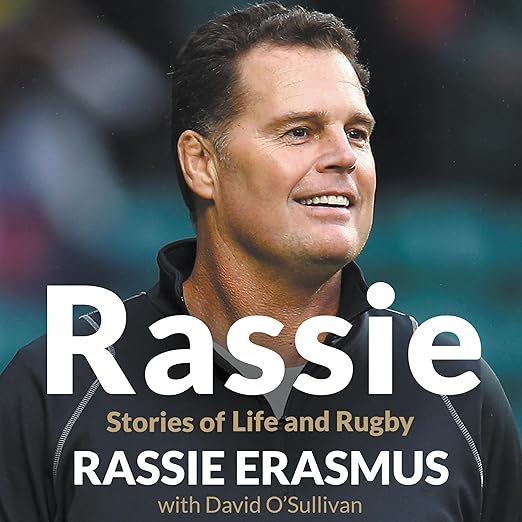
Quick Take
- Narration: Eben Genis brings South African authenticity to the material; his voice carries the appropriate weight for a biography of one of the game’s most polarizing figures.
- Themes: Unconventional leadership and earned respect, racial transformation in South African sport, the cost and reward of fighting institutional complacency
- Mood: Candid and revelatory, the kind of sports memoir that is actually about power, principle, and identity
- Verdict: An essential listen for rugby fans and a surprisingly rich leadership study for readers who come without a background in the sport.
I came to this one knowing Rassie Erasmus primarily through the referee video controversy, the long, unrelenting breakdown of refereeing performance that he posted in 2021 and that earned him a global ban from touchlines. Whatever you thought of that incident, and opinion remains sharply divided, it made clear that Erasmus is a man who will do something unusual if he believes it needs doing, and that he is willing to absorb consequences others would find intolerable. That quality, I suspected, would make for an interesting memoir. It does.
The Telegraph called him “rugby’s Pep Guardiola,” and the comparison is useful to a point. Like Guardiola, he is a methodical thinker who succeeded in part by being obsessive where his peers were casual, and who built a distinctive tactical identity that his sport initially resisted and later adopted. Unlike Guardiola, his story is inseparable from the post-apartheid politics of South African sport, and that dimension is what makes this memoir something beyond a conventional coaching story.
Our Take on Rassie
The book covers the full arc: his playing career under Nick Mallett’s record-breaking late-1990s Springbok team, the injuries that ended that career prematurely, his emergence as an unconventional coach at the Stormers, his time at Munster where Irish fans came to a grudging respect, and his return to South Africa as the architect of the 2019 Rugby World Cup-winning team. Erasmus writes with what reviewers consistently call candor, not the managed transparency of most sports memoirs but something closer to genuine self-examination alongside genuine score-settling.
The central achievement the book addresses most carefully is not the World Cup win itself but what preceded it: the appointment of Siya Kolisi as South Africa’s first black Springbok captain. Erasmus describes this as happening “without much fanfare or controversy,” and the context he provides for that characterization, why it was possible, what groundwork had been laid, and what it meant in the context of South African sport and society, is the most important part of the book. One reviewer called this dimension “transformation and massive success” achieved by “providing equal opportunity to the disadvantaged and creating a team narrative much more important than just winning.” That framing is accurate.
Why Listen to Rassie
Eben Genis as narrator brings a specific authenticity to the material. He is a South African voice familiar with the cultural context Erasmus is describing, and his narration of the behind-the-scenes rugby material has the quality of someone who knows what these games and these relationships actually feel like from the inside. At eleven hours and thirty-seven minutes, this is a full-length biography that earns its runtime through genuine detail rather than padding.
One reviewer who described themselves as having approached the book without strong prior views on Erasmus found the leadership story compelling regardless of the rugby context. The pattern of watching hours of video while teammates relaxed, devising strategies that were laughed at before being adopted, fighting the establishment at the Stormers and then earning grudging Irish respect at Munster, is a recognizable arc of anyone who has ever done something differently than convention demanded and been right about it. That universality extends the book’s appeal beyond the rugby-specific audience.
What to Watch For in Rassie
Readers who come to this book expecting a defensive account of the referee controversy will find something more complicated. Erasmus discusses his confrontational approach to the rugby establishment with his characteristic candor, acknowledging the cost while maintaining the stance. One reviewer noted his “outspokenness has caused problems for himself but ultimately has changed the status quo that needed a wake up.” That is probably the fairest summary of how the book positions its most controversial chapter.
For listeners who are not already rugby-literate, the tactical and positional discussions may require some background patience. The book assumes some familiarity with how the game works, its structures, competitions, and specific refereeing conventions. It is not impenetrable for a non-rugby reader, but the behind-the-scenes value will land harder for someone who understands what the Stormers are and what the World Cup means.
Who Should Listen to Rassie
Rugby fans, especially those with investment in the Springboks or the 2019 World Cup era, will find this essential. Sports biography readers who are drawn to unconventional leaders and institutional change-makers will find the Erasmus story compelling well beyond the rugby frame. Listeners interested in the intersection of sport and racial transformation in post-apartheid South Africa will find substantive and candid material. Listeners with no rugby knowledge and no particular interest in institutional leadership dynamics may find the specificity too niche.
Frequently Asked Questions
Do I need to follow rugby to get value from this memoir?
It helps, but it is not strictly required. The leadership and institutional dynamics are legible without deep rugby knowledge. The tactical and match-specific sections will mean more to rugby-literate listeners, but the broader narrative of transformation, unconventional thinking, and earned respect is accessible without it.
How does Erasmus handle the 2021 referee controversy in the book?
With the candor reviewers describe as characteristic throughout. He discusses his confrontational stance on what he perceived as unaccountable refereeing, acknowledges the consequences it brought him, and maintains the underlying position. It is not a defensive account.
What makes Eben Genis the right narrator for this material?
He brings South African authenticity to a story that is deeply embedded in South African sporting and social culture. His familiarity with the context makes the behind-the-scenes Springbok material feel grounded in the way a generic narrator could not achieve.
Is the book’s treatment of Siya Kolisi’s appointment as Springbok captain given appropriate depth?
Yes, by most reviewer accounts. Erasmus provides context for why the appointment was possible and what it meant, rather than simply citing it as an achievement. The racial transformation dimension of the 2019 World Cup story is treated as the genuinely significant thing it was.