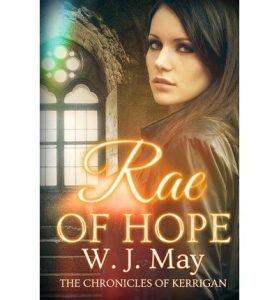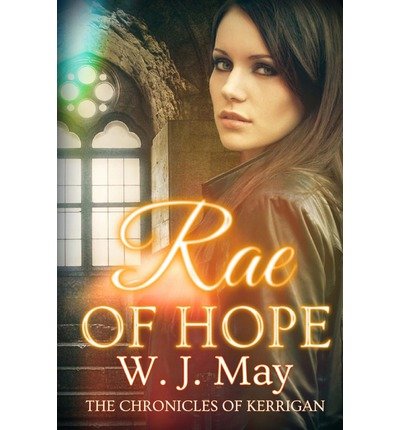
A tattoo on your sixteenth birthday sounds like a rite of passage until the ink decides what you are capable of, and that is the premise holding this audiobook together. Rae Kerrigan is fifteen, her parents died when she was young, and she knows almost nothing about where she comes from. A scholarship to Guilder Boarding School in England changes that, because the school is where the family secret is waiting. W.J. May frames it as a question about inheritance, asking whether the sins of the father become the sins of the daughter, and gives Rae a year of new friends, a forbidden attachment and one birthday to survive.
How Rae of Hope Holds Up
The first thing to report is what this page does not contain. Behind the 4.5 average sit 154 ratings and not a single written review anywhere on the listing, so nobody has described the eight hours and seventeen minutes on offer, and nobody has said whether the school section drags or flies. A number without testimony is a weak thing to buy on, and it is worth being honest that the usual evidence a reader would weigh simply is not available here. Judge the premise, judge the length, judge the series that follows, and accept that the rest is unknown until you have pressed play yourself.
The metadata around it is stranger still. The publisher line on this listing names a print-on-demand paperback platform rather than an audio producer, and both that line and the language entry carry stray invisible characters, which is print bookkeeping wearing an audio credit. The description itself is damaged: one sentence collapses mid-thought into the phrase that Rae must also face the ultimate receive a tattoo on her sixteenth birthday, having lost its own noun somewhere along the way. Further down, a line announcing a title coming in 2021 still sits in copy attached to a 2013 release date. None of that is the book's fault, but all of it tells you how much attention the page has had.
The premise is a durable one and the description delivers it without hedging. An orphaned girl arrives at a prestigious English boarding school on a scholarship, discovers that her family has a history nobody intended her to learn, and is told that on her sixteenth birthday she will be marked with ink carrying specific powers, powers that may bind her to something dark in that history. Add new friendships, a school that watches her, and an attachment the book calls star-struck and forbidden, and you have the shape that keeps paranormal academy stories working. The one external credential the page offers sits in the opening words of the copy, which introduce May as a USA Today bestselling author, and for a listing this sparse that single line is carrying a lot of weight. The scholarship detail earns its place too: Rae arrives at Guilder as somebody who does not belong there by birth, which gives the discovery about her family a second edge. Eight hours and seventeen minutes is a proper full-length listen rather than the novella these series often use to open, so the school has time to become a place instead of a corridor.
Scale is the other argument, and this description makes it at considerable length. What follows this book, according to the page, includes Dark Nebula, House of Cards, Royal Tea, Under Fire, End in Sight, Hidden Darkness, Twisted Together, Mark of Fate, Strength and Power, Last One Standing and Rae of Light, with prequels, a sequel sequence and further spin-offs listed after those. If you are the kind of listener who wants somewhere to live for months rather than a weekend, the runway here is unusually long, and a first volume that lands buys you a great deal of road. Series readers know how rare it is to find the door already attached to that many rooms.
Weak Spots in Rae of Hope
The condition of the page is the first warning, and it is a loud one. A description with a broken sentence in it and a stale announcement for a book coming in 2021 does not inspire confidence about the accuracy of the rest, including the details a buyer would normally take on trust, such as who published this recording and when it was made. The bulk of that description is a catalog listing rather than a summary, which is a choice that serves the series more than it serves this book.
Navigation is the second issue. No series name or number is recorded on the listing even though the description names the sequence at length and this volume opens it, so nothing here will carry you to the second book once you finish. The genre tag reads arts and entertainment, which for a paranormal boarding-school story is a shelving choice that hides it from most of the readers who would want it. Content guidance is absent beyond the teen and young adult filing, which matters for a story built around a fifteen-year-old approaching a birthday that may bind her to an unspeakable darkness in her family's past.
The Right Listener for Rae of Hope
Paranormal academy readers who want a British setting and a bloodline plot are the intended audience. If tattoos as inherited magic, a school with an agenda and an orphan discovering her parents were not who she assumed sound like an evening well spent, this first volume does what such volumes do, and does it at a length that gives the school time to become a place rather than a backdrop. It also suits listeners who deliberately seek out long series, because few opening books come attached to a backlist of this size. Eight hours is enough to know whether the setup suits you before the commitment turns serious, and the description makes no secret of how much material waits on the other side of that decision.
Buyers who want the page itself to inspire confidence should hesitate here, because this one gives them very little to work with. Readers wanting a self-contained story should also look elsewhere, because the description is explicit that this is a beginning and the rest of the shelf is already written and waiting. For a careful buyer, the broken sentence and the outdated announcement will register well before anything about the story does, and that first impression is worth trusting when you decide how much to spend.
Good to Know
Where does the Rae of Hope audiobook sit in the Chronicles of Kerrigan?
It opens the sequence. The description lists eleven further volumes after this one, from Dark Nebula through Rae of Light, plus prequels and spin-offs, although the listing itself records nothing that would help a listener move from one to the next.
Are there any listener reviews for the Rae of Hope audiobook?
None at all. The page carries 154 ratings and a 4.5 average with no written accounts of any kind, so the performance, the pacing and the ending are all unreported. Anyone buying is doing so on premise, runtime and star average alone, which is unusually thin.
What does the tattoo do in the story?
Rae is told she will be marked on her sixteenth birthday, and that the marking carries specific powers which may tie her to something dark her family did before she was born. Undoing that inheritance is what the book sets her up to attempt across its eight hours.
How big a commitment is the wider series?
Substantial. Beyond the main sequence the description lists a prequel run, a sequel run called The Chronicles of Gabriel, a Kerrigan Chronicles set and a twelve-book Kerrigan Kids line. Starting here means opening a shelf rather than picking up a single self-contained story.