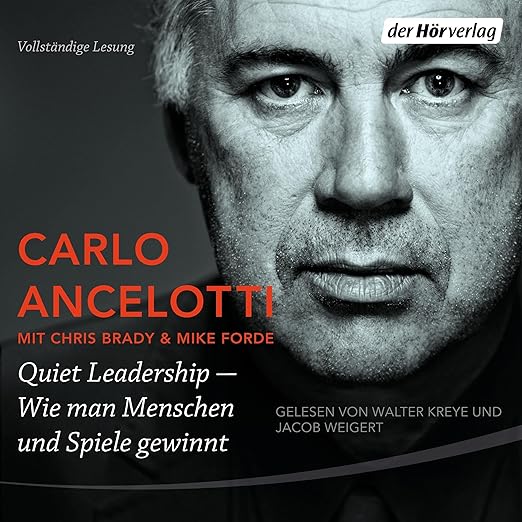
Quick Take
- Narration: Walter Kreye reads the German-language original with natural authority; the audiobook is in German, which limits accessibility for English-only listeners despite the English-friendly title.
- Themes: Servant leadership, talent development, emotional intelligence in high-performance environments
- Mood: Measured and reflective, more philosophical memoir than tactical playbook
- Verdict: A genuinely interesting window into Ancelotti’s management philosophy, but be aware this audiobook is in German, English-language readers should seek the translated print edition instead.
I want to be transparent about something before I go further: this audiobook is in German. The title Quiet Leadership appears in English on some storefronts, and Carlo Ancelotti is internationally known, so it is easy to assume the recording would be in English. It is not. The narrator is Walter Kreye, the publisher is Der Hörverlag, and the reviews are written in German. If you do not speak German, this particular recording is not for you, and the English-language print edition would serve you better.
With that caveat firmly in place: Quiet Leadership is a genuinely compelling document for anyone interested in how a man who has won the Champions League multiple times thinks about leadership, talent, and the specific challenge of managing world-class egos without diminishing them. Carlo Ancelotti is not a loud coach. He is not a motivational speaker. He is something rarer: a manager who believes that the quality of a relationship with each individual player is the primary lever of performance, and who has built an extraordinary career around that conviction.
Our Take on Quiet Leadership
What distinguishes this book from the typical football manager memoir is the specificity of Ancelotti’s reflection on leadership mechanics. He is not interested in inspiring aphorisms. He wants to explain, with some precision, why he manages the way he does, why he gives different players different degrees of freedom, why he values emotional intelligence over tactical brilliance in his coaching staff, and why he has found quietness to be a competitive advantage in environments saturated with noise.
The book includes contributions from players who worked closely with him: David Beckham, Cristiano Ronaldo, Zlatan Ibrahimovic, John Terry, and Sir Alex Ferguson are among those who offer perspectives on what it felt like to be managed by Ancelotti. These sections are among the most valuable in the recording. Hearing Beckham describe the specific way Ancelotti made him feel valued at a difficult stage of his career, or Ferguson reflecting on a fellow manager whose philosophy differed so completely from his own, adds a dimension that pure autobiography cannot achieve.
Why Listen to This Audiobook
German-speaking listeners interested in leadership, management, or football biography will find this a rewarding nine hours. Kreye’s narration is clear and well-suited to the reflective, occasionally discursive tone of Ancelotti’s writing style. The co-authors, Chris Brady and Mike Forde, bring structure to what might otherwise feel like loosely connected anecdotes, organizing the material around specific leadership principles, how to build trust in a new environment, how to develop young talent without crushing them with expectation, how to maintain standards under the extraordinary pressure of elite football.
One German reviewer noted that the book delivers a bit less than the promise of the title, it is more autobiography than leadership manual, and those hoping for an Ancelotti-style framework they can apply directly to their own professional context will find the connections require some extraction. That is a fair point. This is a book about a specific man in a specific world, and the transferable lessons are present but not always foregrounded. Readers willing to do that work will find genuine value here.
What to Watch For in This Recording
The structure of Quiet Leadership weaves Ancelotti’s playing career together with his coaching career, which can be slightly disorienting if you are listening primarily for the management philosophy. The biographical material is interesting, his time as a central midfielder with Roma and AC Milan is genuinely formative to his understanding of what players need, but it means the book does not follow a purely thematic logic. Episodes from different decades of his life sit beside each other, connected by theme rather than chronology.
Another reviewer flagged that the book’s treatment of leadership principles is somewhat surface-level, which is accurate for the management-focused reader. Ancelotti is not a systems thinker in the way that coaches like Pep Guardiola or Jurgen Klopp have been portrayed in their respective books. He is an intuitive leader who trusts relationships over processes, which makes for honest and engaging memoir but a less structured leadership text.
Who Should Listen to Quiet Leadership
German-speaking listeners who follow football and are interested in management philosophy will get the most from this recording. The contributor sections featuring Beckham, Ronaldo, and others add genuine texture that makes this more than a standard career retrospective. Business readers looking for broadly applicable leadership models will find the material interesting but will need to translate the football-specific examples themselves.
English-only listeners should note again that this audiobook is in German and seek the translated edition in print or a different format. The ideas Ancelotti explores, the competitive advantage of staying calm, the importance of reading each person as an individual, the distinction between authority and authoritarian, are worth your time. Just make sure you are listening in the right language.
Frequently Asked Questions
Is this audiobook in English or German?
This audiobook is in German. The narrator is Walter Kreye and the publisher is Der Hörverlag. Despite the English-language title appearing on some storefronts, the recording itself is in German. English-only listeners should seek the translated print edition of this book instead.
Does the book include the contributions from Beckham, Ronaldo, and Ibrahimovic in the audio format?
Yes. The contributions from players including David Beckham, Cristiano Ronaldo, Zlatan Ibrahimovic, John Terry, and Sir Alex Ferguson are included in the recording. These sections are among the most praised elements of the book and add valuable outside perspectives on Ancelotti’s management style.
Is Quiet Leadership more of a memoir or a practical leadership guide?
It is primarily a memoir with leadership themes woven throughout. Ancelotti discusses his philosophy in depth, but the material is organized around his personal history rather than a systematic framework. Readers looking for a transferable leadership model will need to extract it themselves from the biographical material.
How does this compare to other football manager memoirs in terms of self-awareness and honesty?
Reviewers consistently note that Ancelotti comes across as genuinely reflective rather than self-promotional. The book engages seriously with failures and challenges alongside successes, and the tone is notably more understated than many sports autobiography titles. The third-party contributor sections provide additional credibility by offering perspectives that are not filtered through Ancelotti himself.