Before You Press Play
- Read by: Ramon De Ocampo reads an adult's account of his own adolescence, which puts a grown voice inside a teenager's experience.
- At its heart: Domestic violence, generational poverty, a paradoxical mother, forgiveness attempted rather than achieved
- Vibe: Tense, watchful, unexpectedly funny
- Short version: A short, hard memoir that earns its place on a teen shelf, provided the listener is ready for sustained anticipation.
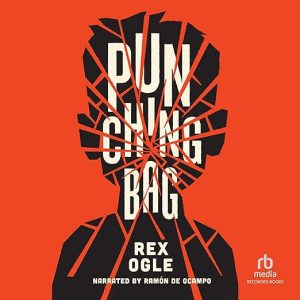
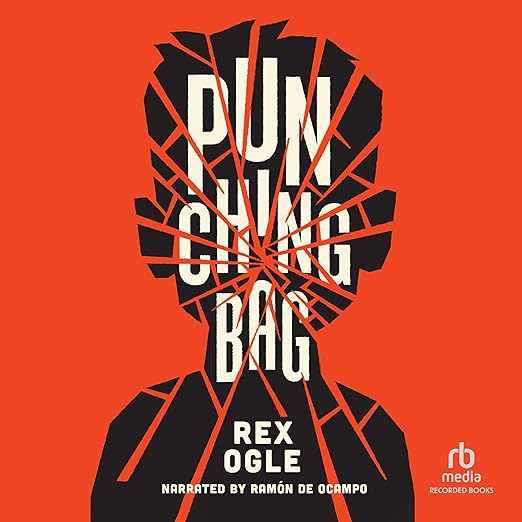
Rex Ogle already told the hunger half of this story. Free Lunch mapped what it was like to be the poorest kid in the room, and won awards for it; this audiobook is the companion volume, and it covers the part that was happening at home while all of that was going on. Six hours and twenty minutes of it, read by Ramon De Ocampo, published by Recorded Books in November 2021.
The title is not a metaphor the author reaches for at the end of a chapter. One reader puts it flatly: the book is aptly titled, because Rex has become the family punching bag. That is the arrangement the memoir describes, and the fact that it is aimed at teenage readers is the thing that gives it its particular charge.
Ogle refuses to simplify his mother, and that refusal is what lifts this above the run of testimony. The description calls her passionate and fierce and admits the relationship is paradoxical, and the book holds both of those at once rather than resolving them into a verdict. One reader on this page reaches the same conclusion by a different route, reading the violence as something the mother inherited rather than chose, a way of living she was raised inside. Running alongside her is the stepfather, whose anger the book charts as a trajectory, which is a colder and more frightening word than outburst. And hovering over all of it, in the description's phrase, is the talismanic presence of an unborn baby sister.
Ramon De Ocampo carries the whole of it, and what deserves thought is what happens when this specific material loses the option of skimming. A reader here calls the book compelling "but hard to read at times because of the domestic violence", and in print that difficulty has a release valve: your eye can move faster than your attention. A recording will not let you. The Author's Note sitting at the front of the book, which another reader says struck a chord and set the tone before the story began, therefore arrives in audio as something you are told rather than something you might turn past. Sample that opening note. It is the book telling you what it is.
What Works
Honesty is the reason, and readers describe it in terms of use rather than admiration. One writes that the author shares his story vulnerably in order to help others understand how to begin the path to healing, which is a claim about function, not about prose. Memoirs of abuse aimed at young readers can slide into either misery or uplift; this one is being praised for landing between them.
Testimony from one adult reader is the most persuasive thing here, and it explains why survival is the point. "Survival doesn't diminish the awfulness and the violence, but it is possible and that is important to know, especially when you are young," that response reads, adding that moments of happiness and laughter are mixed in. For a teenager living inside something similar, the value of a book that says both of those things at once is difficult to overstate.
Humor is real here and it is structural. The description talks about moments of grace and humor threaded through as beacons of light, and that threading is what keeps the book readable at all. Ogle is funny in the way that people who grew up managing an unpredictable adult tend to be funny, which is to say the jokes are a survival skill rather than decoration, and they land differently when someone is saying them aloud to you. Read silently, a joke in a book like this looks like relief. Spoken, it sounds like a person deciding, in the moment, not to cry.
Classroom credibility is worth noting too. A teacher on this page describes having read Free Lunch with students and buying this one to read alone, admitting to not having touched young adult writing in decades. That is a specific route in, and it suggests the book works for adults who are professionally responsible for teenagers as well as for the teenagers themselves.
Before You Commit to Punching Bag
Age suitability is the live question, and the clearest answer on the page contradicts itself inside a single notice. One reader recommends it wholeheartedly "for any mature teenager or younger child who has a certain level of responsibility", then immediately qualifies: "Not for any/all young readers". That is the correct amount of hedging. The category places this on a teen shelf, the subject is sustained domestic abuse, and the right listener is defined by maturity rather than by age.
Intensity over duration is the second thing to weigh. The narrative device the memoir uses is anticipation, a boy moving through his days waiting for the next violent episode because he knows it is coming, and six hours of held breath is a different experience from a book you can close. Listeners who have lived through something comparable should treat this as a book to take in sections. My own advice would be to stop at a chapter break rather than at the end of a session, since the chapter breaks are where Ogle lets the air back in.
A pair of notes on the numbers. The average of 4.7 across a hundred and sixty-nine grades sits below the five written responses, all of which award full marks, so the page shows you the warmest end of the reaction. And one of those five is dated five weeks before this recording was published, which means it was written about the book rather than about the audio. Nothing follows from that except caution about reading it as testimony on the reading itself.
Who It's For
Give this to the mature teenager who has already read Free Lunch and asked what happened next, and give it to the adult who works with young people and wants to understand the arithmetic of a household like this from the inside. It earns a place with serious memoir readers too: the construction is careful, the humor is earned, and the refusal to make the mother a villain is a genuinely difficult authorial choice.
Do not come to this for a recovery narrative with a resolved ending, because forgiveness here is described as an attempt rather than an accomplishment. And choosing on a young reader's behalf without first knowing what they can carry would be a mistake: the material does not soften itself for its audience, and one reader on this page went out of the way to say so.