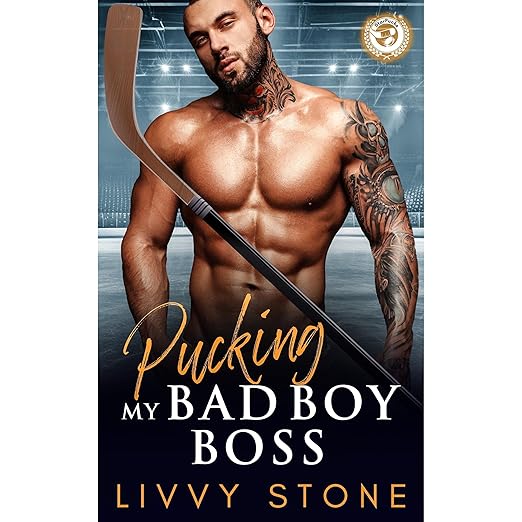
Quick Take
- Narration: Virtual Voice AI narration handles the text competently at the sentence level but lacks the tonal range needed for a dual-perspective romance where emotional dynamics drive the plot.
- Themes: Power dynamics in workplace romance, fake engagement tropes, a woman navigating a male-dominated sports industry
- Mood: Steamy and fast-paced, with occasional tonal inconsistencies from the AI narrator
- Verdict: Livvy Stone’s hockey romance has a sharp premise and a genuinely capable heroine in Isabella, but listeners who find AI narration disruptive to immersion should seek the ebook format instead.
I will be honest about how I approach hockey romance audiobooks: I come looking for specific things, and this genre has developed reliable conventions for delivering them. The enemies-to-lovers dynamic, the forced proximity, the heroine who is competent in a high-stakes environment, the hero who is arrogant in ways the narrative eventually complicates. Livvy Stone’s Pucking My Bad Boy Boss delivers most of these with reasonable energy. What it cannot fully deliver, through no fault of the writing, is a narrated experience that matches the emotional heat the text is trying to generate. That limitation comes from the narrator, or more precisely from the absence of one.
Virtual Voice is Amazon’s AI narration technology, used across a growing number of independently published audiobooks. The practical effect on listening experience varies depending on the prose style and the emotional demands of the text. For Pucking My Bad Boy Boss, which is built around a romance between Isabella Carrington, the strategically sharp team manager, and Dominic Steele, billionaire hockey legend and unexpected owner of the team she manages, the AI narration presents a specific problem: the emotional texture of a romance depends heavily on voice, and virtual voice gives you competent text-to-speech where you need something closer to performance.
Isabella Carrington as a Premise Worth Your Time
Setting the narration question aside, the setup that Stone has constructed for this romance is more interesting than the genre average. Isabella is not a passive entry point into a male-dominated world. She has been building her career deliberately, applying expertise developed by watching her brother play and managing with strategic intelligence rather than navigating by proximity to someone else’s power. A reviewer described the chemistry between Isabella and Dom as hot from the first page, and several noted specific appreciation for a female protagonist who holds genuine professional authority rather than merely asserting it.
The one-night stand that opens the novel, followed months later by the discovery that her new boss is the same man, is a well-worn romance setup. Stone’s handling of the workplace power dynamic that follows is sharper than many books using the same structure. Isabella’s decision to remove herself from what she identifies as a toxic power struggle while still advancing her career is described clearly enough that it functions as characterization rather than plot mechanism. She knows what she wants and what it costs, which is the foundation a satisfying romance heroine needs.
Dom Steele: The Dominant Male Lead and His Limits
Dominic Steele is a harder sell. Several reviewers, including one who otherwise enjoyed the book, noted that his arrogance exceeds the threshold they find compelling, and that his habit of pushing Isabella to do what he wants while she permits it creates a tension between the narrative’s claim that she is a strong woman and the actual dynamic it depicts. This is a recognizable tension in the bad-boy-boss subgenre: the appeal of the dominant male lead depends on a degree of give-and-take that some of these books achieve and some do not.
Stone seems aware of this problem and attempts to address it through the fake engagement subplot, where Dom’s proposal to appease team investors gives Isabella a form of leverage she exercises. The subplot is functional rather than particularly original, but it creates the power-sharing that the early chapters lack. Whether Dom has changed convincingly by the novel’s end will depend significantly on reader tolerance for his earlier behavior, a response that varies sharply in the reviews.
What the AI Narrator Can and Cannot Do for This Text
A human narrator with experience in romance audiobooks would have served this text considerably better. The genre’s conventions around emotional heat, the breathless pacing of desire scenes, the vocal differentiation between a heroine’s internal voice and her guarded public performance, require expressive range that Virtual Voice approximates but does not achieve. The narration reads the text clearly and without the most obvious AI artifacts, but it flattens the emotional gradient in a way that makes the hotter passages feel more like recitation than experience.
Listeners who are highly sensitive to narration quality may want to read the ebook, where Stone’s prose carries without the mediating layer of AI voice. Listeners who find AI narration acceptable for genre fiction and want the audio format will find this a competent if not emotionally immersive experience. The text itself does the heavy lifting that a better narrator would share.
The Pregnancy Reveal and the Happily Ever After
The synopsis telegraphs that Isabella’s return to Dom for seconds has consequences, as it notes he is about to learn this Queen comes with a little prince. The secret pregnancy trope carries its own genre conventions, and Stone plays them relatively straight. The resolution ties together the professional arc, the romantic arc, and the family arc with the tidiness that standalone romance readers expect. The book promises no cheating, no love triangles, and no violence, and it keeps those promises.
For listeners drawn to hockey romance with a genuinely capable heroine at its center, Pucking My Bad Boy Boss offers enough of what the genre promises to justify the time. The AI narration is the main obstacle between the text and the experience a skilled human narrator would provide, and it is worth knowing that limitation before committing to eight hours of audio.
The broader context here is that Virtual Voice narration is becoming more common across independently published romance, and the quality question it raises is worth thinking about directly. For plot-driven genre fiction where the pacing rather than the performance carries the reader, AI narration often works adequately. For romance, where emotional resonance in the narrated moment is the primary product, it tends to underserve the text. Stone’s book sits in the latter category, and readers who discover that distinction through this audiobook will have a useful framework for evaluating future AI-narrated titles in the genre.
Frequently Asked Questions
Does the Virtual Voice AI narration significantly affect the listening experience for this romance audiobook?
Yes, meaningfully. The AI narration handles the text competently at the sentence level but lacks the expressive range to convey the emotional dynamics of a heated romance. Listeners who find AI narration disruptive to immersion are better served by the ebook version.
Is Isabella a convincing strong female protagonist given the power dynamics with Dom throughout the book?
Reviewer responses are divided. Isabella is clearly established as professionally capable and strategically intelligent. The dynamic with Dom in the early chapters, where his pushiness tests her stated independence, is handled inconsistently. The fake engagement subplot shifts some of this balance, but readers sensitive to the tension between claimed strength and actual dynamic may find it frustrating.
Does Pucking My Bad Boy Boss work as a standalone, or does it tie into the rest of the Pucking Hot Hockey Billionaires series?
The synopsis explicitly describes it as a standalone romance. Readers do not need prior knowledge of the series, and the ending provides a complete happily-ever-after resolution within this book.
How explicit is the content, and is there a content warning for listeners who prefer romance without graphic scenes?
The book is described as steamy by multiple reviewers and the marketing language confirms adult content. It is not appropriate for readers who prefer clean romance. The synopsis and book description are transparent about the content level, and the no-cheating and no-violence promises in the synopsis are kept.