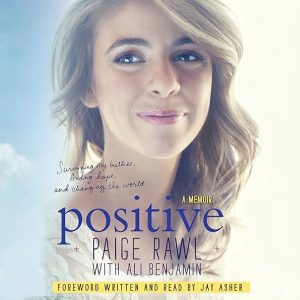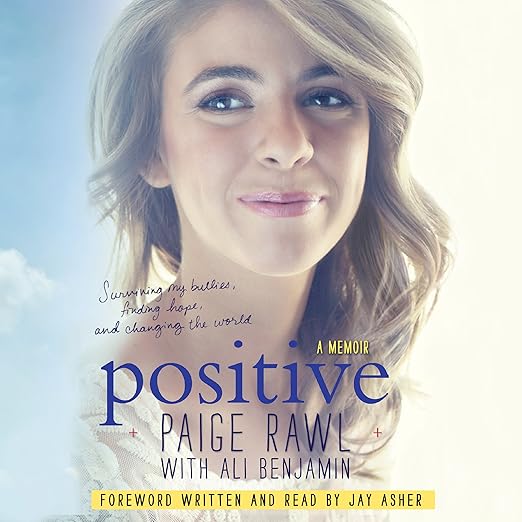
I don't reach for teen memoirs lightly. The genre has a gravitational pull toward sentimentality that can undercut even the most genuinely difficult stories, and when an author narrates their own work, there's always the risk of performance overwhelming truth. So I want to say clearly that Paige Rawl's Positive does neither of those things. I finished it on a Tuesday morning commute and sat in my car for a few minutes before going inside, which is the only honest measure I have for a book like this.
Rawl has been HIV positive since birth. She didn't feel defined by that diagnosis until the day she disclosed it to a middle school friend, and within hours, the bullying began. Co-written with Ali Benjamin, the memoir traces what followed: the texts, the taunts, the slow erosion of a girl who had been, by her own account, confident and engaged. And then the night she stood in her bathroom staring at a bottle of sleeping pills.
First, the Big Picture
What separates this memoir from others in the genre is its refusal to explain the bullies. Rawl doesn't construct elaborate theories about why her classmates did what they did. She just tells you what happened, in the specific language of a teenager navigating a world that had suddenly turned hostile, and trusts the reader to feel the accumulation. That trust is the book's greatest strength. The detail is precise, particular texts, particular moments in hallways, particular silences from adults who should have intervened, and it's that precision that makes the cruelty visible rather than abstract.
The co-authorship with Ali Benjamin is seamless. You don't feel the seam. The prose reads like a young person who has processed her experience enough to tell it clearly without having processed it so thoroughly that the rawness is gone. That balance is difficult to achieve in memoir, and it's achieved here.
The Best Parts of Positive
Self-narrated memoirs live or die by the author's willingness to be heard at their most vulnerable. Rawl reads her own work with a steadiness that occasionally cracks at precisely the right moments, she's not performing grief, she's recounting it, and the difference is everything. Her narration of the bathroom scene is not melodramatic. It's quiet in a way that is far more affecting. And her delivery of the advocacy work she went on to do, the Elizabeth Glaser Pediatric AIDS Foundation ambassador work, the public speaking, the conferences, carries genuine conviction rather than inspirational-book energy.
One reviewer, a self-described cynical reader who avoids memoirs about depression and bullying, wrote that this one was different, that it doesn't manipulate you into feeling sympathy but earns it honestly. I agree with that assessment. The audio format amplifies it: Rawl's own voice is the argument.
A Few Reservations
The book's explicit message, that HIV is not an identity, that bullying has real and lasting consequences, that action is preferable to complacency, is stated clearly and without apology. For some readers, that directness will feel like the book explaining itself too neatly. I understand that critique. Literary memoir often does its best work when it trusts the reader to draw the lesson. Rawl and Benjamin don't always extend that trust.
But I'd argue this is a deliberate choice for a specific audience. Positive was written for teenagers, their parents, and educators, people who may need the lesson named. The advocacy framing is part of the book's purpose, not a concession to timidity. If you come to it from a literary criticism angle and want more ambiguity, you'll find the ending too resolved. If you come to it as someone who works with young people or loves one who is struggling, the clarity will feel like a gift.
Who Should Pick Up Positive
Essential listening for parents of middle schoolers, educators, and anyone working with young people around issues of difference, stigma, and belonging. Also genuinely powerful for teenagers themselves, Rawl is speaking to peers, not at them, and that register matters. If you're looking for literary memoir with complex authorial distance and unresolved ambiguity, look elsewhere. And if you avoid books about bullying because they tend toward emotional manipulation, I'd encourage you to try this one, it's the exception.
Key Details
- Narration: Paige Rawl reads her own memoir with an authenticity no hired narrator could replicate, her voice carries the lived weight of every moment she describes.
- Themes: HIV stigma and identity, the mechanics of middle-school cruelty, resilience as active choice rather than passive endurance
- Mood: Raw and unflinching, moving toward hard-won hope
- Verdict: A memoir that earns its emotional impact through specificity and honesty, narrated by the one person who could tell it this way.
A Few Questions About Positive
Is Positive appropriate for middle school listeners, given the content about suicidal ideation?
The book addresses the subject seriously and without sensationalism, Rawl describes the moment honestly but not graphically. Many educators and parents use it specifically as a conversation-starter with teens. It's worth previewing the bathroom scene section before sharing with a younger reader.
Does Paige Rawl's self-narration change the emotional experience of the memoir?
Significantly. Her voice carries a lived authenticity that a hired narrator couldn't approximate. The moments where her delivery shifts, quieter, slightly unsteady, happen organically, not as performance choices, and that naturalness is what gives the audiobook its particular impact.
How does the HIV-positive context shape the bullying narrative, is this primarily about HIV stigma or bullying more broadly?
Both, interwoven. The trigger is HIV disclosure, and Rawl addresses stigma specifically throughout. But she and Benjamin frame the broader argument around the mechanics of bullying itself, how it escalates, who looks away, how institutions fail. Readers without direct HIV experience will find the larger pattern recognizable.
Who is Ali Benjamin and how involved is the co-authorship?
Ali Benjamin is a bestselling author best known for The Thing About Jellyfish. The co-authorship is credited openly, and the prose is more polished than a solo teen memoir would typically be. The collaboration appears to have shaped the structure and clarity of the narrative without displacing Rawl's authentic voice.