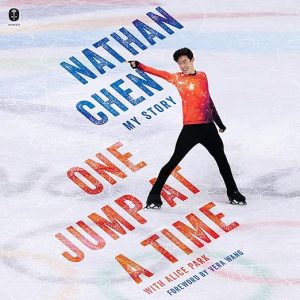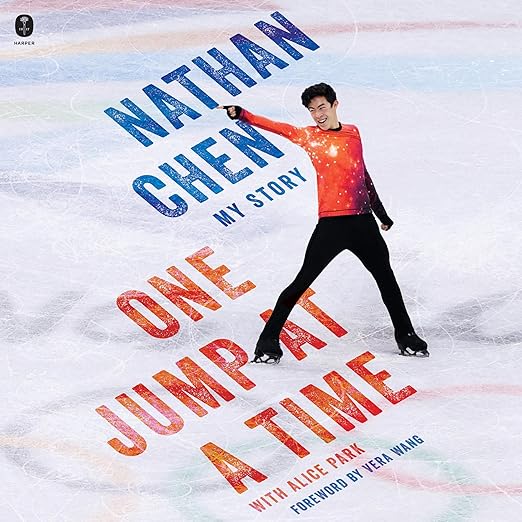
Nathan Chen was three years old when he first put on figure skates, and by his own account the feeling was immediate and right in a way nothing else had been. That detail comes early in this audiobook, and it does two things at once: it grounds the memoir in something specific and personal rather than generic athletic mythology, and it sets up the central tension that runs through One Jump at a Time, the gap between a child's natural aptitude and the extraordinary economic and personal sacrifice required to develop that aptitude into an Olympic gold medal.
Chen narrates his own memoir, and the choice matters. His voice is considered and careful, with a quiet intensity that suits the material better than a more performatively emotional narrator would have. Listening to him describe the 2018 Olympics, when a catastrophic short program destroyed his individual medal chances in the Games his family had built everything toward, carries a weight that comes specifically from knowing the voice is his. He is not performing devastation. He is reporting it, which makes it more affecting.
Our Take on One Jump at a Time
The economic dimension of competitive figure skating, almost entirely invisible in broadcast coverage of the sport, is one of this audiobook's most illuminating threads. Chen grew up in one of five children born to Chinese immigrants without the resources that elite skating typically assumes. Rink time, coaching, costumes, travel: the costs are staggering and largely private, borne by families who bet everything on a talent that might not develop as hoped. Chen's mother, Hetty Wang, stepped into the role of early coach precisely because the family could not afford professional instruction at the level that would actually serve her son. Her story, woven through the memoir, is as compelling as Chen's own.
The Beijing 2022 chapters are what most listeners will come for, and they deliver. Chen competing in the city his parents left, while his grandmother still lived there, adds a personal and historical layer to a competition that was already charged with political significance. He handles this dimension with the same careful honesty he applies to everything else in the memoir, acknowledging the complexity without collapsing it into simple narrative. He was the first Asian American man to stand at the highest podium in figure skating, and the book does not underplay what that means while also refusing to let it become the only thing the story is about.
Why Listen to One Jump at a Time
The pandemic chapters are among the most technically interesting for anyone who follows competitive skating. Chen describes training and competing during COVID-19 with specific detail about how the absence of audience affected his performance psychology, how the competitive calendar's disruption required constant recalibration, and how the isolation of that period interacted with the intense personal pressure of an Olympic cycle. These passages give the audiobook a contemporaneity that anchors it in history rather than treating Chen's story as existing in a timeless athletic space.
One of the three reviews attached to this audiobook is a one-star response written in Spanish expressing boredom. That response is worth noting because it points to something real about Chen's narrative style. He is not a showman on the page any more than he is on the ice. He is precise and controlled. Listeners who expect memoir to deliver sustained emotional highs will find him more subdued than they hoped. Listeners who appreciate that kind of discipline in writing will find it the quality that makes the memoir last.
What to Watch For in One Jump at a Time
The section on the quadruple jumps, the technical signature that earned Chen his nickname as the Quad King, is more accessible than non-skating readers might expect. Chen explains the physics and the psychological demands of landing quads in competition with clarity and without condescension, and these passages give listeners who have only seen figure skating on television a real sense of what the technical ambition looks like from the inside. The relationship between technical innovation and artistic expression in skating, a debate that has surrounded Chen's career, is addressed with more nuance than his public critics have often allowed.
The chapters on his Yale experience, pursued alongside competitive skating at its highest level, also deserve attention. Chen's decision to prioritize education as a parallel commitment rather than a fallback position says something specific about the values his family instilled, and his account of managing an Ivy League course load during Olympic preparation is genuinely surprising.
Who Should Listen to One Jump at a Time
Figure skating fans who followed Chen's career and want the story behind the broadcasts will find this audiobook essential. The detail he provides about training, competitive strategy, and the internal experience of major events answers questions that broadcast coverage never reaches. Listeners interested in the intersection of immigrant family experience, American athletic culture, and what it costs to reach the top of an exclusive and expensive sport will find rich material here regardless of their interest in skating specifically. The memoir does not overreach into social commentary, but the threads are present and substantive. Those who need high emotional temperature throughout a sports memoir may find Chen's measured style frustrating; for listeners who prefer honesty over inflation, it is the book's defining virtue. The audiobook also serves listeners who want a genuine account of what it costs, not just financially but psychologically and physically, to pursue excellence in an unforgiving solo sport without the professional support structures that most elite athletes take for granted.
Does Nathan Chen self-narrate this audiobook, and how does that affect the listening experience?
Yes, Chen narrates his own memoir at five hours and twenty-nine minutes. His delivery is quiet and carefully controlled, which suits a story he is clearly still close to. The performance is not showy but carries an authenticity that an outside narrator could not replicate, particularly in the passages about the 2018 Olympic short program disaster.
Does the audiobook cover the 2022 Beijing Olympic gold medal in detail?
Yes. The Beijing chapters are among the most developed in the memoir. Chen covers the competition itself, the emotional complexity of competing in his parents' home city where his grandmother still lived, and what winning felt like after the 2018 collapse. The personal and historical dimensions of that win receive serious attention.
How much technical skating knowledge do I need to follow this audiobook?
None required. Chen explains technical concepts, including the quadruple jumps that defined his competitive identity, with clarity and without jargon. The audiobook is as much a family story and immigrant narrative as it is a sports memoir, and both threads work independently of skating knowledge.