Quick Take
- Narration: Sam O’Mahoney delivers a performance well-suited to the Irish rugby world the book inhabits; the narration carries the emotional intelligence the subject requires without tipping into hagiography.
- Themes: Elite sporting obsession, leadership under pressure, the psychology of serial winning
- Mood: Intense and reflective, occasionally vulnerable in ways that catch you off guard
- Verdict: Sexton writes about winning the way people who care deeply about process write about it: not triumphantly, but restlessly, as if the next thing to achieve is always visible from the current one.
I put this one on during a run, thinking rugby would keep the pace. I was right, though not quite in the way I imagined. Johnny Sexton’s voice as delivered through Sam O’Mahoney’s narration has a quality I can only describe as relentlessly forward-moving. He does not dwell. He analyzes and advances. By the time I had finished the first two hours I had stopped thinking about my pace entirely and was just listening to a man explain, with impressive precision, what it costs to be the best at something for a decade and a half.
Sexton’s career record is extraordinary by any measurement. Four European Cups with Leinster. Four Six Nations Championships, including two Grand Slams. Unprecedented victories in the Southern Hemisphere. Two stints at world number one ranking. The World Player of the Year award. And yet this book begins not with those achievements but with the moment in May 2009 when none of that seemed even remotely likely. He was 24, not first choice at Leinster, uncapped by Ireland. What happened between that moment and everything that followed is the actual subject of the book.
Our Take on Obsessed: The Autobiography
What Sexton understands, and what makes this autobiography more interesting than most sports memoirs, is that achievement at the highest level requires a particular psychological configuration that is not simply admirable. The obsessive quality the title names is not a cute word for dedication. It is a real and sometimes difficult orientation toward competition that has costs. Sexton is honest about his intensity being a source of friction, with teammates, with coaches, and at times with himself. He does not sanitize his competitiveness into something universally charming. He presents it as what it is: the thing that got him to the top and the thing that made him occasionally hard to be around.
The relationships with Brian O’Driscoll, Paul O’Connell, Joe Schmidt, and Andy Farrell are drawn with genuine specificity. These are not generically admiring portraits of great players and coaches. Sexton has opinions. He has disagreements. He has moments of respect that he earned rather than simply assumed. The section on his relationship with Joe Schmidt in particular has the quality of an honest reckoning with what it means to be coached by someone who demands everything and gives exactly as much back.
Why Listen to Obsessed: The Autobiography
Sam O’Mahoney’s narration is a strong match for the material. He handles the Irish rugby world’s specifics without self-consciousness, and he navigates the emotional texture of the book with a restraint that serves Sexton’s own voice well. This is not a performative reading. It is a translucent one, where the narrator’s job is to deliver the author’s perspective without layering additional interpretation on top of it. O’Mahoney succeeds at that with consistency across eleven hours.
The Guardian described the book as offering a revealing glimpse into the psyche of a serial winner, which is accurate and also slightly undersells it. What is revealed is not simply a mindset but the specific conditions and choices that produced it. Sexton traces the development of his competitive character from childhood through the Leinster academy system and into professional play with enough detail that the transformation feels legible rather than mysterious.
What to Watch For in Obsessed: The Autobiography
If you have no context for Irish or European rugby, some sections will require patience. The tactical and structural elements of the game, the competitions that matter and why, the club versus country dynamics, the significance of specific defeats and victories, all of these will land differently depending on whether you are reading as a fan or as an interested outsider. The book is written for people who follow the sport, and it does not stop to explain itself to those who do not.
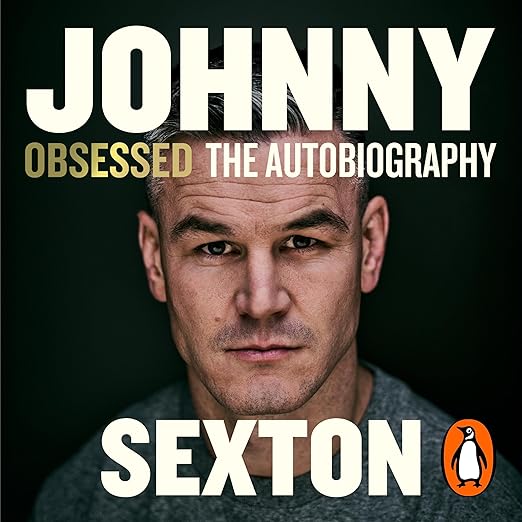
The No. 1 Bestseller designation on the cover reflects its reception in Ireland and the UK, where Sexton is a genuinely iconic figure. International readers who are not plugged into the European rugby world may find the emotional peaks and valleys of the narrative harder to calibrate. This is a book where knowing the score in advance enriches rather than spoils.
Who Should Listen to Obsessed: The Autobiography
Rugby fans, particularly Leinster and Ireland followers, are the core audience and will get the most from the competitive specifics. The 605 ratings at 4.4 reflect a wide readership across the UK, Ireland, France, and Germany, suggesting the book translates across rugby-following cultures.
Beyond rugby, this is a strong listen for anyone interested in the psychology of elite performance, specifically the version that is uncomfortable and demanding rather than inspirational and clean. Sexton does not present obsession as simply a virtue. He presents it as a force that has to be managed as well as maintained. That honesty makes the book worth eleven hours of anyone’s time.
Frequently Asked Questions
Does Obsessed require detailed knowledge of rugby to be enjoyable?
A working familiarity with European rugby helps considerably. Sexton does not stop to explain the sport’s fundamentals, competitions, or club structures. Listeners who follow Irish or European rugby will get the most from the competitive specifics; those without that background will still find the psychological and leadership material engaging but may lose some of the emotional stakes around specific matches.
Is Sam O’Mahoney’s narration a good fit for an Irish rugby autobiography?
Yes. O’Mahoney handles the Irish sporting world without affectation and delivers the book’s emotional range with appropriate restraint. He does not impose extra interpretation on Sexton’s voice, which allows the author’s perspective to come through clearly across the full eleven-hour runtime.
How honest is Sexton about the difficulties of his career, including injuries, disputes, and personal challenges?
The book is frank about his obsessive character and the friction it created. Sexton addresses his relationships with key figures including coaches and teammates with specificity and sometimes disagreement. The accounts of injury and personal setbacks are included without being dramatized for effect.
Does the book cover Sexton’s retirement decision and his reflections on his legacy?
The autobiography was published in October 2024 and covers his full career arc through retirement. Given that the book ends with the perspective of a player looking back at a completed elite career, there is genuine reflection on legacy and what the obsessive pursuit of winning cost and gave.