Quick Take
- Narration: Oprah Winfrey anchors the listening experience with real authority and warmth, the format of short celebrity letters is well-suited to audio.
- Themes: Self-reflection across a lifetime, vulnerability behind public achievement, the gap between who we were and who we became
- Mood: Uplifting and occasionally tender, with surprising moments of grief
- Verdict: An emotionally varied collection best absorbed in short sessions, particularly suited to young adult readers or anyone at a crossroads.
I started Note to Self during a morning that had gone sideways before nine o’clock, and I want to be honest about what that context brought to the experience. There is something about listening to letters, real letters, from people whose lives you can see the shape of, that cuts through the noise in a particular way. By the time John Lewis had finished his, I had put down what I was doing and simply listened. That is the effect this collection is designed to produce, and it produces it.
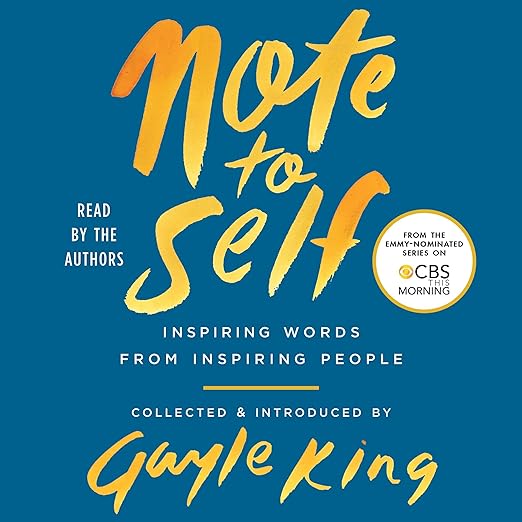
The premise comes from CBS This Morning: twenty-first-century public figures write letters to the young people they once were. Gayle King curated the collection, and Oprah Winfrey narrates the framing and introduction. The range of contributors is wide, Congressman John Lewis, Vice President Joe Biden, Maya Angelou, Russell Brand, Kesha, Dr. Ruth, a Newtown father, a military widow, Kermit the Frog. That breadth is both the collection’s strength and its organizing logic: no two lives here follow the same arc, and the letters catch on different things. Some contributors mourn; some instruct; some apologize to the person they were; some simply tell a story they have never told.
Our Take on Note to Self
The collection was updated to include a new set of contributors, Tracy Morgan, Adam Rippon, François Clemmons, Senator Tammy Duckworth, Alexis Ohanian, and Alex Honnold among them, which means the audio edition has more material than the original. The additions feel consistent with the project’s spirit: voices from different worlds, different relationships to fame and difficulty, different things to say to a younger self.
What makes the best letters in the collection work is specificity. Maya Angelou does not offer generic comfort; she writes from a particular place in her particular life. John Lewis, whose letter arrives with the knowledge of everything he gave to the civil rights movement, addresses the young man who had not yet chosen that path. The Newtown father and the military widow carry a weight that the celebrity letters do not, and King is smart enough to include them, the collection would be shallower without that contrast.
Why Listen to Note to Self
Oprah Winfrey as narrator is an asset that cannot be overstated. She has a particular warmth and authority in the spoken word that suits the format, the letters feel introduced and held rather than simply read aloud. She knows these people, many of them, and the sense that these letters exist in a real conversational context comes through in her framing. At under three hours, the collection is designed for short sessions, and the audio format is particularly well-suited to that intent. You can listen to three or four letters during a commute and return the next morning.
One reviewer described the experience as reading a few letters during commercial breaks of a Hallmark movie on a rainy Saturday, which is probably the perfect delivery. The format is episodic rather than cumulative, each letter stands alone, and there is no narrative thread that demands you track it across the full runtime.
What to Watch For in Note to Self
The collection is uneven, some letters are brief to the point of feeling slight, and a handful of contributions from lesser-known figures may not land with every listener. The genre is inherently variable: celebrity introspection ranges from the genuinely illuminating to the cheerfully platitudinous, and Note to Self contains examples of both. A listener who arrives expecting consistent depth may find some letters more rewarding than others.
The title is shelved under Teen and Young Adult, but it is a collection for any age. The letters address young selves, but the reflection in them is the reflection of experience, and adult readers, particularly those at points of transition, are likely to find as much in it as a teenager would. The YA classification undersells the breadth of the audience.
Who Should Listen to Note to Self
This collection works well for young adult listeners navigating identity and uncertainty, for which it was partly designed, but it is equally well-suited to adults who want something that rewards dipping into rather than sustained attention. It is a strong gift listen, the kind of audiobook that pairs with a difficult year or a transition point. At under three hours it asks very little in terms of time and delivers more than it promises in terms of emotional range.
Listeners expecting a single sustained narrative or deep biographical coverage of any individual figure will not find that here. Each letter is short, and the collection’s effect is cumulative and impressionistic rather than built from any one contribution.
Frequently Asked Questions
Is Note to Self appropriate for actual young adult listeners, or is it more of an adult reflection collection?
Both, genuinely. The letters address young selves and speak directly to themes of uncertainty, identity, and growing up, which resonates with teen listeners. But the reflection is the reflection of experience, and adult listeners at crossroads report finding it equally meaningful. The YA classification is accurate but incomplete.
How much of the audiobook is narrated by Oprah Winfrey versus other voices?
Oprah narrates the introduction and framing; the individual letters appear to be read as part of her narration of the collection. Her presence is significant throughout, which is a genuine draw, her warmth and authority in the spoken word shape the listening experience more than a neutral narrator would.
Are the letters in the collection read by the celebrity contributors themselves?
Based on the metadata, Oprah Winfrey is listed as the narrator, which suggests the letters are presented through her reading rather than each contributor’s own voice. This is worth noting for listeners who might be expecting a full cast, the intimacy of hearing each person’s own voice is not what this edition offers.
Does the updated edition with new contributors feel integrated, or does it feel like an add-on?
The additions, including Adam Rippon, Tammy Duckworth, and Alex Honnold, fit the project’s spirit. Reviewers of the updated edition do not flag the new material as inconsistent, and the range of voices in the additions is comparable to the original collection.