Quick Take
- Narration: Scott Brick is in exceptional form here. AudioFile’s note that he devotes attention to every voice is accurate, and his handling of rural settings is particularly strong.
- Themes: Friendship tested to the breaking point, moral reckoning within a strict code, violence as inheritance
- Mood: Introspective and simmering, with violence that lands because it has been earned across the series
- Verdict: Series superfans who feared Orphan X was becoming formulaic will find this tenth entry genuinely reinventing the character and his relationships.
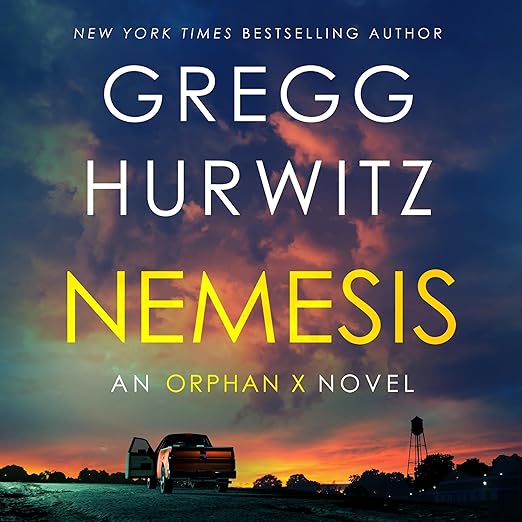
Series fatigue is a real problem in thriller fiction. By book ten, readers have seen a protagonist survive enough that survival becomes expected, and the question shifts from whether to how, which is a far less interesting question to carry through sixteen hours. Gregg Hurwitz was clearly aware of this with Nemesis. This is an Orphan X novel that uses the tenth-entry milestone to interrogate everything the series has built rather than simply adding another case to Evan Smoak’s file. I listened to this over a weekend, and I was thinking about it well into the following week, which is not typical for me with action thrillers no matter how well executed.
The central conflict is not between Evan and an external villain, though that element arrives in due course. The conflict is between Evan and Tommy Stojack, his best friend in the world. Tommy is the gunsmith who has created much of Evan’s combat gear across the series. He is one of the few people Evan trusts completely, which means the revelation that Tommy has crossed one of Evan’s hardest lines carries weight that no external antagonist could replicate. Their argument explodes into open warfare. The question of whether lifelong friendship can survive a fundamental betrayal is a more interesting premise than most thriller setups, and Hurwitz pursues it with the seriousness it deserves.
Our Take on What Makes This Different from Standard Orphan X
One reviewer who has read the entire series called Nemesis the best by far, offering a specific reason: Hurwitz avoids the obvious plot tropes, particularly the extended climactic fight sequence that usually consumes the final act. Instead, the confrontation with Tommy resolves in a single chapter while the novel devotes its energy to the relationship’s weight and the moral accounting that relationship demands. Another reviewer worried that Evan was becoming formulaic alongside comparable series heroes like Gabriel Allon and Scott Harvath, then found that Hurwitz had anticipated that concern precisely. The novel brings Evan back to basics, which in this context means stripping away the operational scaffolding and asking what remains when you remove the missions, the safe houses, and the commandments he has built his entire post-government life around.
Why Listen to Scott Brick on This Entry Specifically
Brick has been the Orphan X narrator since the beginning, which gives him a depth of familiarity with Evan that new listeners cannot fully appreciate from a single entry. AudioFile’s observation that he devotes attention to every voice is most apparent in the secondary characters. Joey Morales, who multiple reviewers noted with affection in this installment, benefits from Brick’s ability to distinguish her clearly from the series’ predominantly male ensemble without caricature. The rural settings, which one reviewer called especially well served in the narration, come through in Brick’s slower, more textured approach to descriptive passages. He trusts the material, and the material trusts him back.
What to Watch For in the Tommy Subplot
Tommy’s parallel narrative, pursuing his own promise to a dead friend’s son while Evan closes in on him with vengeance in mind, gives Nemesis a structural complexity that earlier Orphan X novels did not attempt. The son’s predicament is not simply a plot device to delay Evan’s reckoning with Tommy. It establishes what Tommy values and why his apparent betrayal of Evan’s code might carry its own internal logic. One reviewer described the setup as a reckoning before they can deal with the Four Horsemen, top flight assassins also looking for Tommy, and that framing is accurate. The external threat serves the internal conflict rather than the reverse, which is the key structural difference between this entry and the series’ more conventional installments.
Who Should Listen to Nemesis
This is emphatically not the right starting point for the Orphan X series. The emotional weight of the Tommy conflict, the character development with Joey, and the specific commandments Evan lives by all require accumulated investment from earlier books. Readers already in the series who have hesitated at book ten should not. Readers who gave up on the series around books five or six and wondered if it had meaningfully improved can use Nemesis as their answer: yes, significantly.
Frequently Asked Questions
Is Nemesis accessible as a standalone entry, or do I need to read all ten Orphan X books first?
It is not accessible as a standalone. Reviewers consistently emphasize that the emotional payoff of the Tommy conflict and the character development with Joey require having read the prior series. Start with the first Orphan X novel.
The synopsis says this is the tenth book in the series. Does it feel like a milestone or a regular installment?
Reviewers treat it as a genuine milestone. The series appears to be deliberately using this entry to reinvent its formula and open new narrative paths for Evan rather than delivering a standard case.
How does Scott Brick’s narration hold up across sixteen-plus hours?
AudioFile praised his attention to individual voices, and listener reviews support that assessment. Brick is particularly noted for the rural setting descriptions and for distinguishing Joey’s character from the ensemble. No listener fatigue reported at this runtime.
One reviewer said the ending left them unsettled for days. Is this a dark ending or simply an unconventional one?
The reviewer clarified they were not sure whether to rate it lower because of how it made them feel, ultimately concluding that feeling unsettled was a mark of the novel’s quality rather than a flaw. The ending is unconventional for the genre rather than nihilistic.