Quick Take
- Narration: Alex Lee brings a composed, period-appropriate tone to 1940s Westleham, handling both the village atmosphere and the emotional complexity of Martha’s situation with steady competence.
- Themes: Post-war village life, marriage and disappearance, amateur detection and moral accountability
- Mood: Cozy and nostalgic with a melancholy undercurrent, warmly English in texture
- Verdict: The fourth Martha Miller mystery delivers the series’ best revelation yet while maintaining everything that makes this corner of post-war England worth returning to.
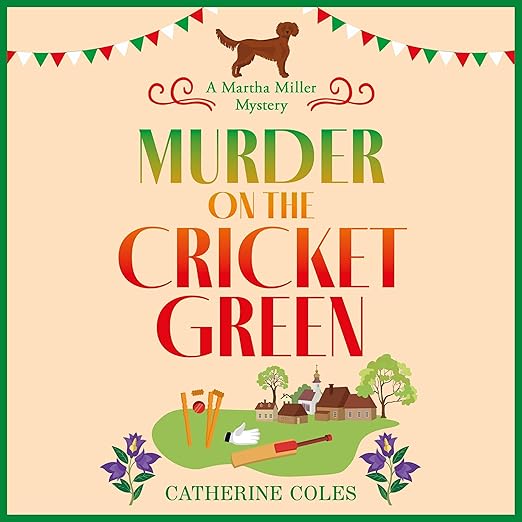
I tend to be suspicious of cozy mysteries that position themselves as comfort listening, because comfort is not the same thing as good, and too many series in this genre confuse pleasant atmosphere with actual craft. The Martha Miller Mysteries have been on my radar for a while, recommended by several readers who know my tolerance for village-cozy conventions is limited but my patience for well-drawn characters is not. I finally came to Murder on the Cricket Green on a Sunday afternoon, and I will admit that by the time the first cricket ball was bowled, Catherine Coles had me more invested than I expected to be.
The setup is elegantly simple and emotionally rich. It is May 1948, and Westleham is finally having its first village cricket match since the end of the war. Martha Miller has more pressing concerns: her husband Stan has reappeared after two years of unexplained absence, acting as though nothing unusual has happened. Martha does not know how to feel, partly because Stan’s return complicates her growing feelings for the kind-hearted local vicar, Luke. Then Stan collapses dead on the cricket green, and every eye in the village turns to Martha.
Two Years of Silence, Explained at Last
For readers who have followed this series from the beginning, book four delivers what earlier entries have been building toward: a full accounting of where Stan was and why he disappeared. One longtime reader described herself as “sooooo excited” to finally have this answered, and the payoff appears to have satisfied most of the series’ fanbase. The revelations reframe Stan’s character in ways that are genuinely affecting, he is not quite the cad initial impressions suggested, and the machinery of how his absence was arranged against Martha’s interests makes for a satisfying mystery-within-a-mystery alongside the main murder plot.
This kind of delayed revelation is a structural risk in series fiction: you spend books hinting at a backstory that had better justify the wait. Here, it does. The why of Stan’s absence connects to post-war anxieties about money, loyalty, and the small compromises that become large betrayals over time, territory that feels right for this particular setting and period.
What Alex Lee Brings to Westleham
Narrator Alex Lee has been with this series from the beginning, and by book four that consistency pays dividends. The village of Westleham is populated with recurring characters, elderly neighbor Maud with her reliable opinions, Martha’s sister Ruby, the various suspects who have accrued their own histories across the series, and Lee distinguishes them without caricature. Her Martha is believably worn by circumstance without being flattened by it, and the scenes involving Luke have a careful restraint that suits the period and the character’s cautious emotional state.
At six hours and forty-eight minutes, this is a brisk listen. The pacing reflects the cozy genre’s preference for forward momentum over extended atmospheric detours, and Lee’s narration respects that contract with the listener. There is no indulgence here, which suits a story that has real emotional stakes to deliver within a limited runtime.
The Village as Social Pressure Cooker
One of Coles’s consistent strengths in this series is her understanding of how small communities generate their own particular form of social surveillance. The line from one reviewer, “in a village this small, everyone has something to hide”, is not merely a genre tagline here. The cricket match as communal gathering is used intelligently: it brings everyone together and makes the murder simultaneously public and private, witnessed by the whole village in a way that shapes how information is held and released throughout the investigation.
The post-war setting adds a layer that distinguishes this from contemporary cosies. 1948 England is still sorting through absence and return, through what the war cost individual households in ways that the wider narrative of victory tends to paper over. Stan’s two-year disappearance resonates differently in this context than it would in a modern setting, there were so many legitimate reasons for men to be gone and unreachable during and immediately after the war, and Coles uses that ambiguity productively.
Who Should Listen and Who Should Skip
Start with book one of the Martha Miller Mysteries if you have not already. Reviewers are explicit that Murder on the Cricket Green works best with the prior context, and the Stan revelation will carry more weight if you have watched Martha navigate his absence over multiple books. If you are already a series reader, this is the most satisfying entry yet. For listeners new to cozy historical mysteries, this is an excellent representative of the form, well-characterized, period-specific, and emotionally grounded without being heavy. Skip it if you need your mysteries to be dark or your puzzle plots to be intricate; this is village fiction that happens to involve murder, not procedural crime fiction dressed in village clothing.
Frequently Asked Questions
Can Murder on the Cricket Green be read as a standalone, or do I need the earlier Martha Miller books?
Multiple reviewers strongly recommend starting with book one. The Stan Miller backstory is a thread that runs through the whole series, and the revelation in book four lands much harder with that context. Jumping in here risks spoiling earlier developments while also missing the emotional foundation.
Does this book finally explain what happened to Stan Miller?
Yes, and according to series readers, the explanation is satisfying. The review community describes his motivations as more sympathetic than expected, with the real culprit in his story being the circumstances arranged against Martha rather than Stan’s character itself.
How does narrator Alex Lee handle the multiple recurring characters across this long-running series?
Lee has narrated the series consistently, which pays off significantly by book four. The recurring villagers, including Maud and Martha’s sister Ruby, have established vocal identities that make returning to Westleham feel like returning to a place you know.
Is this appropriate for listeners who find cozy mysteries too light, or does it have darker elements?
It has more emotional depth than a typical cozy, particularly around Martha’s complicated feelings about Stan’s return and her growing connection with Luke. Reviewers describe it as good clean fun with a twist of murder and intrigue, which is accurate, but the character dynamics have real weight to them.