Quick Take
- Narration: Jay Prichard delivers the material cleanly and accessibly; his voice suits the book’s practical, non-academic tone without adding personality the text does not ask for.
- Themes: Sports psychology for performance, managing competitive nerves, focus and confidence under pressure
- Mood: Brisk and action-oriented, designed to be used rather than contemplated
- Verdict: A short, practical sports psychology primer that covers familiar ground competently; most useful for listeners who have no prior exposure to performance mindset training.
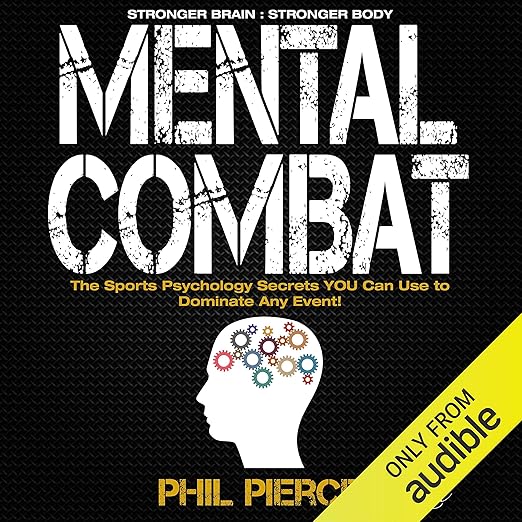
At just under three hours, Mental Combat makes no pretense of being a comprehensive treatment of sports psychology. Phil Pierce is explicit about his goals from the first chapter: this is a simplified, tactical guide designed to make the core tools of performance mindset accessible to people who would not otherwise wade through academic literature on the subject. That clarity of purpose is genuinely useful, even if it also tells you exactly what this book will and will not do for you.
I listened to this one on a weekday morning before a deadline, which in retrospect was probably the right context. Pierce writes with the urgency of someone who has watched athletes and martial artists underperform not because they lacked physical preparation but because their mental game collapsed at the wrong moment. That urgency translates reasonably well to the audio format, and Jay Prichard keeps the energy up without forcing it.
Our Take on Mental Combat
The content covers a range of performance psychology concepts: visualization, confidence triggers, managing adrenaline and pre-competition nerves, reading opponents, handling victory and defeat with the same composure, and a brief section on meditation that frames the practice as practical rather than spiritual. Pierce is honest that he is drawing on research from coaches and researchers rather than presenting original science, which keeps the book from overpromising on its authority. He positions himself as a synthesizer and explainer, and within that role he is effective.
One reviewer who practices and coaches martial arts noted that they had been applying many of these techniques for years and still found value in the book as a structured articulation of things they had learned intuitively. That is a meaningful recommendation from someone with hands-on experience. Another reviewer praised the book for being less theoretical and more concise on application than most texts in the genre.
Why Listen to Mental Combat
The book’s greatest strength is its accessibility. Pierce does not use jargon where plain language will do, and he structures each chapter to move from concept to application quickly. The section on reading opponents’ personality types is practical and specific in a way that distinguishes it from more generic confidence-building advice. The discussion of body position for managing nerves references relevant research on posture and stress hormones without getting lost in academic detail.
Jay Prichard’s narration matches the book’s tone well. He reads with enough energy to make the shorter chapters feel brisk rather than thin, and his pacing suits a listener who might be taking notes or pausing to try something rather than listening passively from start to finish.
What to Watch For in Mental Combat
The honest criticism in the reviews is worth taking seriously. One reviewer found Pierce’s writing style difficult to sustain attention through despite genuine interest in the subject, describing it as resembling a college assignment in its tone and structure. That observation is fair. Pierce’s prose is functional rather than vivid, and there are stretches where the book delivers information competently without making the experience of receiving it particularly engaging. For a three-hour audiobook, that is manageable; in a longer format it would be a more serious problem.
The material is also genuinely familiar to anyone with prior exposure to sports psychology literature. Mental Combat’s value is in its curation and compression, not in any original contribution to the field. Readers who already have a performance mindset practice will likely find the content redundant.
Who Should Listen to Mental Combat
Athletes, martial artists, and competitive performers who have heard that mental training matters but have not yet built a practice around it will find this a useful and non-intimidating starting point. The sub-three-hour runtime makes it genuinely approachable for someone skeptical about committing to a longer text on the subject. Those who already train their mental game consistently, or who have read widely in sports psychology, should look for something more advanced. The book is an entry point, not a destination.
Frequently Asked Questions
Is this specifically aimed at martial artists, or is it broadly useful for other athletes?
Pierce’s background is in martial arts and fitness coaching, and those contexts feature prominently in his examples. But the techniques he covers, including visualization, pre-competition routines, and managing nerves, apply across boxing, MMA, team sports, and even non-athletic high-pressure situations like public speaking or work presentations.
Does the book offer anything beyond what you can find in mainstream sports psychology books?
The content overlaps significantly with established sports psychology literature. Mental Combat’s value is in the compression and accessibility of the material rather than originality. For readers who want the foundational ideas without the academic scaffolding, that trade-off works. For those who want depth, primary sources in sports psychology will be more rewarding.
Is the runtime long enough to cover the material meaningfully?
At under three hours, the book delivers the essentials of each topic without dwelling long on any single technique. This suits the introductory nature of the text. Reviewers consistently note it as a quick, easy read, which accurately describes the experience.
How does Jay Prichard handle the more instructional sections, like breathing exercises or visualization guidance?
Prichard reads the instructional content clearly and without condescension, which is the right approach for a practical manual. He does not create audio exercises with cues and pauses; this is a straight narration of the text rather than a guided practice recording.