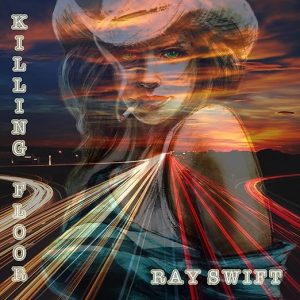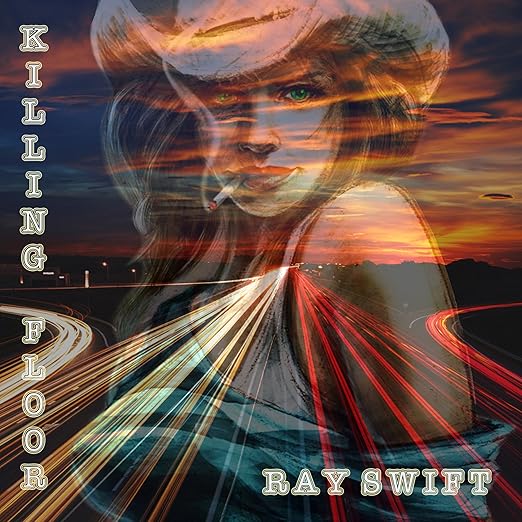
Ray Swift's Killing Floor is a study in a very specific kind of narrative craft: the revenge story told entirely from the perspective of someone who should be dead but isn't, and who has decided to make very deliberate use of that fact. This audiobook, narrated by Ronn Cobb across 7 hours and 20 minutes, delivers a dark, violent, and frequently hilarious account of Billy Cuddrock, a man who survives a kitchen knife to the chest and concludes that living well is not, in fact, the best revenge. Planning is. Careful, patient, attic-dwelling planning.
Billy Plans From the Attic, Cobb Narrates the Menace
Billy's situation at the novel's opening is grim by any useful metric. His wife Rose and her lover Born2Rock assumed the kitchen knife would settle things permanently. It nearly did. What saves Billy, beyond the medical intervention and the steady practical care of housekeeper Consuela, is a particular kind of stubbornness: the refusal to let people who underestimated him be right about it. He recovers, returns to the house, and takes up residence in the attic. He watches. He waits. He plans.
Swift's achievement is making this setup genuinely and consistently funny without undermining its menace. The gallows-comedy tone is established in the opening pages and maintained throughout the book with real discipline. Billy's interior monologue from the attic, observing Rose and Born2Rock living in his house below him with a blend of cold fury and detached black humor, is some of the sharpest writing in the novel. Ronn Cobb's narration earns substantial credit here: his delivery locates the exact register where dark comedy and genuine threat coexist without either canceling the other out.
Readers who come to this book expecting something in the vein of the Lee Child Reacher series will find they are in completely different territory. This is Ray Swift's novel, featuring protagonist Billy Cuddrock, and it operates in its own distinctive comic-thriller mode that owes nothing to the action-hero tradition.
Cobb's Weary Precision Against Rose's Erratic Panic
The novel's central pleasure is the slow, deliberate accumulation of Billy's plan. Swift is disciplined about withholding information in exactly the right sequence, so the listener is always slightly behind Billy, catching up to intentions that have already been set in motion. This produces genuine narrative tension even in scenes that are ostensibly quiet: an attic, a shared dinner table observed from above, a phone call overheard through the floor, a grocery delivery that Billy watches and catalogs. The domestic becomes sinister in Swift's hands, and this inversion sustains the middle section beautifully.
Cobb's narration is critical to the effect. He gives Billy a voice that is weary and precise, someone who has recalibrated his expectations of the world and is now operating on a revised set of rules. The contrast between Billy's measured, almost contemplative narration and the increasingly erratic behavior of Rose and Born2Rock as the book progresses creates a rhythm that drives the second half with real momentum.
The violence, when it arrives, is unflinching but purposeful. Swift does not use it as spectacle or as a payoff to be delayed and then indulged. Every escalation in the physical stakes is earned by what came before it, which is considerably rarer than it should be in the revenge-thriller subgenre. The result is a book that takes its own darkness seriously while still knowing exactly when to let Billy's deadpan commentary deflate the tension in precisely the right moment.
The supporting character work around Consuela, whose quiet loyalty to Billy creates the moral counterweight the story needs, is handled with more care than the novel's gallows-comedy mode might suggest. She keeps the book from becoming a pure exercise in nihilism.
Born2Rock Stays Broad While the Attic Stretches
The novel's tonal commitment requires a particular kind of attention from the listener. Readers expecting a conventional thriller with clean genre beats and forward momentum will find the pacing in the middle section, the long attic period, slower than expected. Swift is more interested in Billy's psychology and the accumulation of his observations during this period than in plot advancement, and some listeners will find this patience-testing rather than atmospheric.
The supporting characters, particularly Born2Rock, are drawn in broad strokes that serve the comedy well but limit the moral complexity of the conflict. The story is very firmly Billy's, told from his vantage point and through his particular filter, which means everyone else is seen only as Billy chooses to see them. This is a deliberate and defensible artistic choice, but it shapes what kind of novel this ultimately is.
The violence in the final act is graphic and will not suit all listeners. If dark crime fiction with explicit content is outside your comfort zone, that is worth knowing before committing to the runtime.
Cobb's Performance Alone Justifies Choosing Audio
This audiobook is for listeners who enjoy revenge narratives with a strong comic sensibility, who do not need their dark material softened or resolved into tidy moral categories, and who appreciate craft in the slow construction of tension. Fans of gallows-comedy crime fiction will find Ray Swift's voice distinctive enough to be worth seeking out beyond this book.
Ronn Cobb's performance is reason enough to choose the audio format over print for this particular novel. He locates Billy's specific blend of injured dignity and cold purpose with real precision, and the result is a listening experience that lands differently than reading the same prose on the page would. The 4.2 rating reflects an audience that found this book and recognized what it was doing. If the premise sounds like your kind of thing, it almost certainly is.
- Narration: Ronn Cobb finds the exact register where black comedy and genuine menace coexist throughout Billy's deadpan account
- Themes: Revenge, survival, betrayal, the patience required to play a very long game
- Mood: Dark, violent, and frequently hilarious in ways that feel entirely intentional
- Verdict: A revenge thriller with real craft in the tension-building and a narrator who delivers at every turn