Quick Take
- Narration: Virtual Voice narration delivers the text without warmth or variation, the kind of flat AI-generated delivery that works poorly for short emotional stories that depend on tonal connection with a young listener.
- Themes: Self-belief, resilience, bravery in everyday situations
- Mood: Motivational and structured, formatted more like a workbook than a narrative
- Verdict: The story content may be useful for parents and children reading together, but the Virtual Voice narration makes the audio format a significant downgrade from the print version.
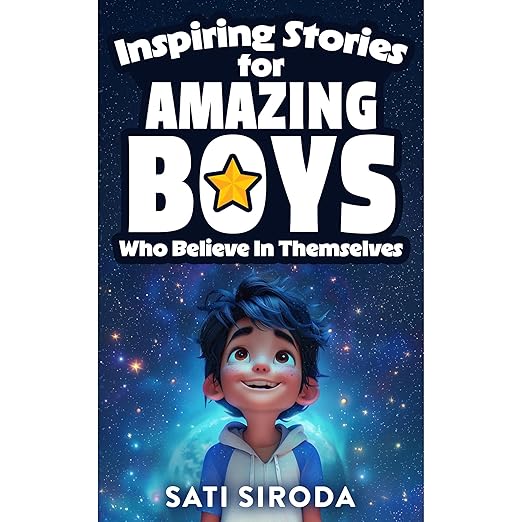
I want to approach Inspiring Stories for Amazing Boys Who Believe in Themselves fairly, because the underlying project, a collection of short motivational stories for young boys organized around themes like confidence, resilience, and kindness, is a genuinely useful thing to have in the world. The print reviews are warm and specific: parents describe doing affirmations together with their sons, watching confidence grow over time, finding the structured format easy to work with. The book clearly functions for the people who have used it.
What I cannot endorse is the audio format as it exists here, which is narrated by Virtual Voice, Amazon’s AI text-to-speech technology. For a collection of 21 short emotional stories designed to be read with a child, the narration is the delivery mechanism for everything that makes this material work. A warm, engaged human narrator can convey the encouragement in an affirmation, can make a character’s fear feel real before their bravery resolves it, can give a young listener the sense that someone is speaking directly to them. Virtual Voice cannot do any of those things. The delivery is flat, the pacing is mechanical, and the emotional register is absent.
The Book’s Structure and What It’s Actually For
Sati Siroda has organized the 21 stories into thematic sections: Confidence, Fearlessness, Resilience, Kindness, and related categories. Each story is short, designed for a five-minute daily reading, and concludes with affirmations and activities. This is a workbook-adjacent format as much as a narrative one, and the audio version captures the stories but not the visual activities. The daily affirmations can be listened to, but the fun activities and the Supercars Coloring Book bonus material are print-only by definition.
One reviewer describes using the book as a shared activity, doing the affirmations together with their son and discussing them regularly. That dynamic is clearly the intended use case, and it works best in print. The audio format imposes a passivity that does not suit this kind of interactive motivational content.
The Virtual Voice Problem for Children’s Motivational Audio
Virtual Voice narration is a particular mismatch for children’s motivational content. Children’s audiobooks depend more heavily than adult fiction on the narrator’s ability to create an emotional connection. The warmth of a human voice telling a child that being brave is worth it is not a trivial element. It is load-bearing. When that warmth is absent, as it is in AI-generated narration, the stories become a list of values rather than an experience of them.
This is not a criticism of Siroda’s writing, which by all print accounts succeeds at what it sets out to do. It is a criticism of the production choice. A title like this, specifically about emotional confidence and self-belief in young boys, deserved a narrator who could model that warmth in the delivery.
What the Print Reviews Tell Us
The print reviews are consistently enthusiastic and specific. Parents describe watching concrete behavioral changes in their sons. An educator notes the clear thematic structure. A reader in her thirties who picked it up for herself found the messages valuable across age ranges. The book works. The audio version as currently produced does not deliver the same experience. If you are considering this title for a child in your life, the print version will serve you significantly better.
Who Should Listen, Who Should Skip
Children who are strong independent readers will get more from the print edition. The audio is most useful as a complement to print for children who struggle with reading fluency and need to hear the text read aloud, but even in that use case, the Virtual Voice narration is a limitation rather than an asset. If you are buying this as a gift, the paperback is the better choice. Audio listeners specifically seeking motivational content for young boys would be better served by searching for titles in this category with human narrators.
Frequently Asked Questions
Are the daily affirmations and activities usable in the audio format?
The affirmations are included in the audio. The activities, including the Supercars Coloring Book bonus, are print-only and not accessible through the audio version.
What is Virtual Voice narration and why does it matter for this kind of book?
Virtual Voice is Amazon’s AI text-to-speech technology, which generates narration without a human performer. For motivational children’s stories that depend on warmth, pacing, and emotional connection, the absence of a human narrator significantly reduces the audio experience.
Is the five-minutes-a-day format transferable to the audio version?
Yes, the stories are short enough that the five-minute daily format works on audio. The structural problem is the narration quality rather than the runtime or organization of the content.
Would this work as a read-along experience, with a parent playing the audio while both parent and child follow in the print book?
That’s a more workable use case than audio-only listening. If you have both the print and audio versions, a parent playing the audio for context while the child sees the affirmations and activities in print would be more engaging than pure audio listening alone.