Quick Take
- Narration: January LaVoy brings what AudioFile called a richly layered performance to Morgan’s story, managing a large multigenerational cast with precision and emotional range.
- Themes: Identity theft and reconstruction, predation and survival, trust after violation
- Mood: Tense and propulsive with a genuine romantic warmth in the Vermont sections
- Verdict: Roberts at her most focused, a thriller that keeps the menace credible while building a romance that earns its resolution.
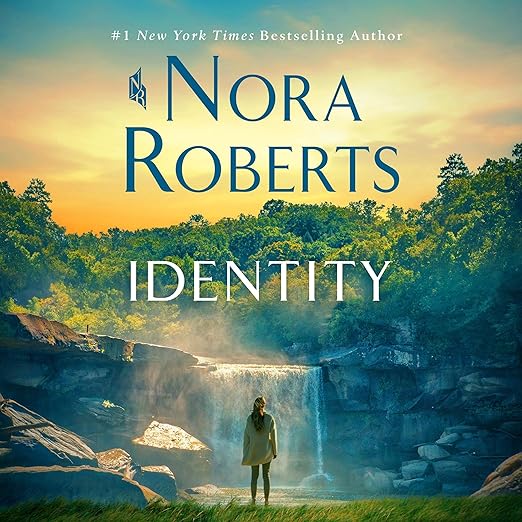
I listened to Identity during a week when I was working through a backlog of Nora Roberts audiobooks I had been meaning to get to for years. I had started with the In Death series, moved to a couple of the Irish trilogies, and landed on Identity with a reader’s expectation of competent craft and reliable satisfactions. What I did not expect was to feel genuinely unsettled. Roberts has always been able to generate momentum, but the specific mechanics of this book, the way Gavin operates, the cold precision with which he selects, targets, and moves through women’s lives, have a chill that goes beyond the genre’s usual menace.
January LaVoy narrated, and the AudioFile quote in the book’s own marketing is not hollow: she really does handle the cast with the kind of layered clarity that makes a large ensemble audiobook coherent. Morgan’s voice is distinct from Nina’s, from her mother’s, from the FBI agent’s, from Miles’s. The villain Gavin gets a register that is not monstrous in the obvious way but controlled and self-satisfied, which is more frightening.
Our Take on Identity
The plot mechanics of Identity are well-constructed in a specific way: Roberts does not make the identity theft plot feel like a device. The way Gavin selects his targets, women in particular financial and social positions, women who are trusting and newly stabilized, women who would be slow to understand what was happening to them until it was complete, is documented with enough specificity that it functions as a genuine education in how these crimes are actually perpetrated. One reviewer noted that the horror of Morgan’s situation is not just personal but structural: she let the monster in herself, which is the particular cruelty of this type of crime.
The Vermont sections, where Morgan rebuilds in her mother’s town and meets Miles, have been praised for their warmth and pacing. Miles is deliberately constructed as an anti-Gavin, unhurried, unflashy, rooted in something real rather than performed. The romance follows the Roberts template of gradual trust between people who have reason to be careful, and it works because the threat of Gavin’s return gives the growing intimacy a consequence that romantic subplots in thrillers sometimes lack. Morgan cannot fully give herself to something new while the man who shattered her previous life is still at large, and the book is honest about that friction.
Why Listen to Identity
Because LaVoy’s performance makes the thriller sequences genuinely tense. The sections told from Gavin’s perspective, which Roberts uses to keep the reader ahead of Morgan’s understanding of her own danger, require a different register from everything else in the book, and LaVoy shifts into it with a controlled economy that is more effective than a more theatrical approach would be. The effect is that you hear Gavin’s movements toward his next victim while Morgan is still working out that her nightmare is not over, and the dramatic irony has real weight.
Roberts has been writing in this genre for decades, and Identity shows that accumulated craft. The pacing is well-managed across fifteen hours; the thriller and romance threads are given roughly proportional space; the resolution is earned rather than abrupt. For readers who have found her previous romantic suspense titles satisfying, this is among the better entries in that part of her catalog.
What to Watch For in Identity
One reviewer noted some minor plausibility issues with the identity theft mechanics, which is fair, the plot requires Morgan to have been particularly vulnerable to a particularly sophisticated predator, and some of the specific details of how Gavin operates require a degree of suspension of disbelief. These are genre conventions rather than actual flaws, but listeners who want procedurally airtight crime fiction may notice the seams.
The book is also more romance-forward than pure thriller in its final third, which is characteristic of Roberts’s romantic suspense but worth noting for listeners who come primarily for the tension. The Gavin sequences maintain the thriller register throughout, but the Vermont scenes slow the pace in ways that are emotionally satisfying and narratively necessary even if they release some of the book’s forward momentum.
Who Should Listen to Identity
Nora Roberts readers who enjoy her romantic suspense titles more than her contemporary romance or fantasy. Listeners who want a thriller with a protagonist who is genuinely traumatized rather than conveniently resilient will find Morgan’s arc honest. LaVoy’s narration is reason enough to choose the audio version over print if you have not tried her before, her handling of a large cast in a long audiobook is genuinely accomplished. Those who want procedurally rigorous crime fiction without a romantic element will want to look elsewhere.
Frequently Asked Questions
Is Identity a standalone novel or part of a Roberts series?
It is a complete standalone. Morgan’s story begins and resolves within this single novel, with no connection to Roberts’s In Death series or other ongoing series.
How does January LaVoy handle the villain Gavin’s perspective sections?
LaVoy gives Gavin a controlled, self-satisfied register rather than an overtly sinister one, which is more effective. The horror of his sections comes from his calculation and confidence rather than from theatrical menace.
Does Identity work as the first Nora Roberts book a new reader tries?
Yes. It is self-contained, establishes its characters clearly from the start, and does not require familiarity with Roberts’s other work. Readers new to romantic suspense may find the tonal balance between thriller and romance unfamiliar, but the blend is accessible.
Is this book more thriller or more romance in terms of page time and focus?
The first half is more thriller-driven, with the crime and its aftermath centrally positioned. The Vermont section shifts toward romance with the thriller running as a persistent undercurrent until the resolution. Readers who enjoy the blend will find the balance satisfying; those who want one genre cleanly separated from the other will find it genuinely hybrid.