Quick Take
- Narration: Jeffrey Marsh narrates their own work with the warm, unhurried intimacy of someone speaking directly to a single person, which is precisely the effect the interactive format requires.
- Themes: Self-acceptance, breaking patterns of negative self-talk, LGBTQ+ identity and visibility
- Mood: Gently subversive and deeply warm
- Verdict: An interactive self-help audiobook that earns its format by making the listener feel genuinely addressed rather than instructed.
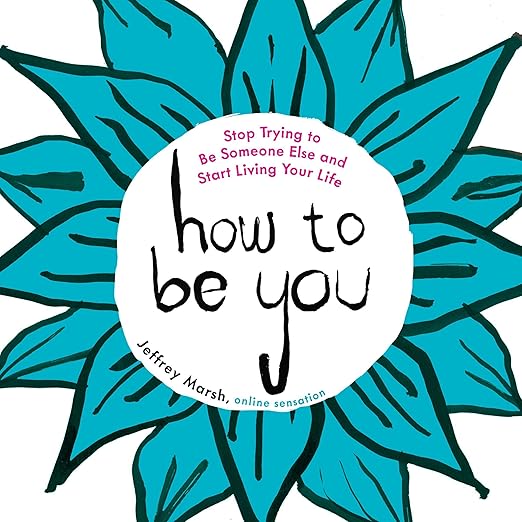
I came to How to Be You through the recommendation of a colleague who works in adolescent mental health, who described it as one of the few books in the identity-and-self-esteem category that does not condescend to its reader. That is a specific and meaningful distinction. The space is crowded with books that position themselves as answers rather than invitations. Jeffrey Marsh’s approach is the latter, and the difference comes through in the first minutes of listening.
Marsh narrates their own work, which is the correct decision for this book. How to Be You is structured around questions, reflections, and activities that require the listener to turn inward, and Marsh’s voice in these moments has the quality of someone sitting across from you rather than performing from a stage.
Our Take on How to Be You
The book draws on Marsh’s own story of growing up fabulous in a small farming town, a phrase that contains both the humor and the genuine difficulty of being visibly queer in an environment that is not designed for you. Marsh does not sentimentalize that experience or use it as a wound to display. They use it as a starting point for the larger argument: that the work of becoming yourself is not about transcending your past but about understanding the patterns your past installed in you and deciding which ones you want to keep.
The hero/ines whose stories Marsh weaves through the book come from across racial, age, and gender identities, which broadens the book’s reach without diluting the central message. Marsh is not writing exclusively for LGBTQ+ teens, but multiple reviewers note that LGBTQ+ youth will find a great deal here that echoes their specific experience. One reviewer describes it as a book they desperately needed twenty-five years ago.
Why Listen to How to Be You
The interactive format works in audio because Marsh paces it correctly. Questions are posed and held open rather than filled with narration. Activities are introduced with enough context that you can engage with them without a written guide in front of you. With 538 ratings averaging 4.8, this is one of the more substantively reviewed titles in this batch, and the pattern in reviews is consistent: people recommend it for the young person in their life who is struggling with exactly the weight the title names.
One reviewer calls it a love letter to each of us, which is apt. Marsh writes with a consistent awareness that the reader might be the person in their life who has heard the most variations of you are too much or not enough. The book is built to push back on that, persistently and without condescension.
What to Watch For in How to Be You
The hero/ines Marsh profiles, people who transcended rigid categories of race, age, and gender, are chosen because their stories are genuinely instructive rather than merely inspiring. Marsh distinguishes between those two things, and that distinction runs through the whole book. Inspiration is a feeling that fades. Instruction changes a pattern. How to Be You is organized around changing patterns.
At five hours and forty-one minutes, this is a longer listen than the format might suggest. The interactive components are woven throughout, not clustered, which means the audiobook rewards pausing rather than continuous listening. Marsh asks questions that take genuine time to answer, and the experience of the book is significantly richer if you give yourself that time rather than treating the activities as ambient background content.
The book is published by Penguin Audio, which typically invests in production quality. The recording is clean and warm. Marsh’s own vocal presence, unhurried and without performative authority, is the production’s most significant asset.
Who Should Listen to How to Be You
Tweens and teens struggling with identity, comparison, and self-worth will find Marsh’s direct address genuinely useful. LGBTQ+ youth, in particular, will find a resonance that is not always present in general self-help content. Adults who are working on the same questions, or who want to understand what a young person they love is navigating, will find the book accessible without being condescending. Skip it if you want a prescriptive step-by-step system rather than a reflective, interactive exploration.
Frequently Asked Questions
Is How to Be You specifically an LGBTQ+ book, or is it broadly applicable to any teen?
It is broadly applicable but has particular resonance for LGBTQ+ youth. Marsh does not position it as exclusively an LGBTQ+ resource, but reviewers consistently note that queer teens will find their experience reflected here in a way that general self-help books rarely achieve.
How does the interactive format work in audio when there are no printed journal prompts to fill out?
Marsh reads questions and holds space for them, and activities are explained with enough context to engage with them without a written guide. The audiobook works best when listeners pause for the reflective prompts rather than listening through continuously. A notebook alongside is helpful but not required.
Is Jeffrey Marsh’s self-narration a strength or a limitation compared to a professional narrator?
For this particular book, it is unambiguously a strength. How to Be You is built around the quality of Marsh’s personal address to the listener, and that intimacy cannot be replicated by a third-party narrator. Reviewers specifically describe the voice as warm and unassuming, which is exactly the register the material requires.
What age range is How to Be You best suited for?
Marsh writes for teens and young adults, and the book is most often given as a gift for this age range. However, multiple adult reviewers describe finding it meaningful for themselves. The self-esteem and identity work the book addresses does not have an expiration age.