Quick Take
- Narration: Megan Tusing brings Miley’s athletic determination and rising panic into clear relief, she handles the physical tension of the survival sequences particularly well without overdoing it.
- Themes: Captivity and escape, athletic identity under pressure, unlikely alliance
- Mood: Tense and claustrophobic, with sustained dread rather than jump-scare pacing
- Verdict: A propulsive wilderness thriller that earns its inspiration-from-true-events note through raw, believable detail.
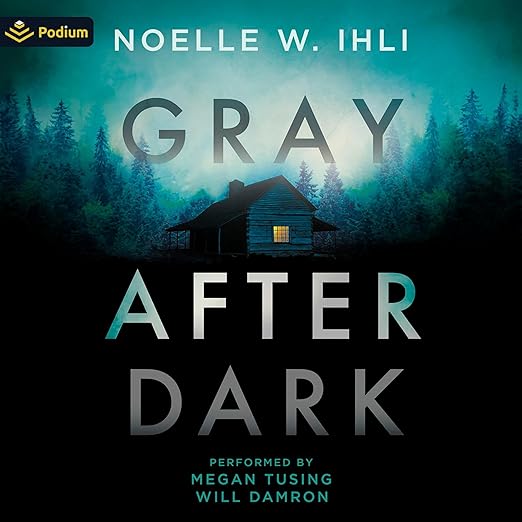
I finished Gray After Dark on a long evening in late winter, the kind of night where getting under a blanket and not moving for three hours felt like the only reasonable option. I had been in a mild thriller slump, too many books that promised breathless pacing and delivered something closer to a procedural checklist. Noelle West Ihli’s name came up in a recommendation, and I picked this one up without knowing much beyond the synopsis.
I should say upfront that I had not read Ask for Andrea, which one reviewer mentions as the author’s more creative, less disturbing entry point. I came to Ihli through Gray After Dark and came out with enormous respect for the tightness of her craft and a slight need to sit with something lighter for a day or two afterward.
Our Take on Gray After Dark
The setup is efficient. Miley is an elite runner whose Olympic trajectory has been derailed by an injury. She takes a summer position at a remote mountain lodge in Idaho’s Frank Church Wilderness, planning to train and recover. The local lore about a dead staffer goes unremarked upon in her planning. Then she is taken. What happens inside that off-grid cabin is the real novel, and Ihli does not rush toward it. The abduction sequence is disorienting in exactly the right way, and the cabin sections carry a pressure that accumulates rather than releasing.
The phrase inspired by true events sits in the synopsis without elaboration, and Ihli wisely does not dramatize it. The effect is that you read with a particular kind of weight. This is not a purely invented danger, and that knowledge changes how the physical details land.
Why Listen to Gray After Dark
Megan Tusing’s narration is well-matched to the material. She does not sensationalize the worst of it, which is the right instinct. Miley is an athlete, analytical under pressure, and Tusing plays that quality throughout even as the situation becomes increasingly desperate. The unlikely alliance the synopsis mentions involves one of the other captive figures, and the dynamic Tusing builds between these two voices gives the second half of the book its emotional weight.
Reviewer Heather T in Tucson describes the author as writing with such detail and flow that she was pulled along like a river current, and that is the right description. The sense of place in the Frank Church Wilderness is specific enough to feel researched, not googled. The isolation and scale of the landscape becomes almost a third antagonist.
What to Watch For in Gray After Dark
The reviewer who titled their review simply wow with five stars and the reviewer who gave it four stars while noting not much thrill both read the same book. The gap between those reactions is genuine and worth naming. This is not a thriller in the action-film sense. There are no sudden reversals of power, no last-minute cavalry. What there is instead is sustained dread, one woman’s attempt to use her body and mind under conditions designed to strip both away. If you need plot mechanics at regular intervals to stay engaged, the middle third may test your patience. If you are willing to sit inside the atmosphere Ihli builds, the payoff is real.
The content is dark. Reviewer Dragoness mentions nearly quitting at a certain point due to the intensity. Go in knowing this is a book that takes captivity seriously and does not soften what that means.
Who Should Listen to Gray After Dark
Readers who respond to character-driven survival narratives and do not need constant plot pivots will find this deeply satisfying. Fans of the true-crime-adjacent thriller tradition, particularly books where the horror is intimate rather than procedural, will find Ihli’s instincts strong. Listeners who are sensitive to depictions of captivity, violence, or sustained psychological pressure should heed the content warnings reviewers mention. This is not a comfort listen, and it is not trying to be one.
Frequently Asked Questions
Does Gray After Dark need to be read in sequence with other Noelle West Ihli books?
No, it is a standalone novel. The author has other thrillers including Ask for Andrea and Run on Red, but Gray After Dark does not require knowledge of any prior book.
How explicit is the violence and captivity content?
Several reviewers flag the intensity. The captivity sequences are detailed and psychologically heavy. The book does not wallow in graphic violence for its own sake, but it takes the situation seriously and does not pull punches on what captivity means.
What does inspired by true events actually mean in this context?
The synopsis does not elaborate, and the author does not provide extensive detail about the real-world basis. The phrase seems to refer to elements of the wilderness setting and the nature of the abduction scenario rather than a specific documented case.
Is the unlikely alliance mentioned in the synopsis a major plot element?
Yes. Without spoiling the specifics, the alliance forms in the cabin setting and drives much of the second half of the book. The emotional complexity of that relationship is one of the stronger elements of the narrative.