Quick Take
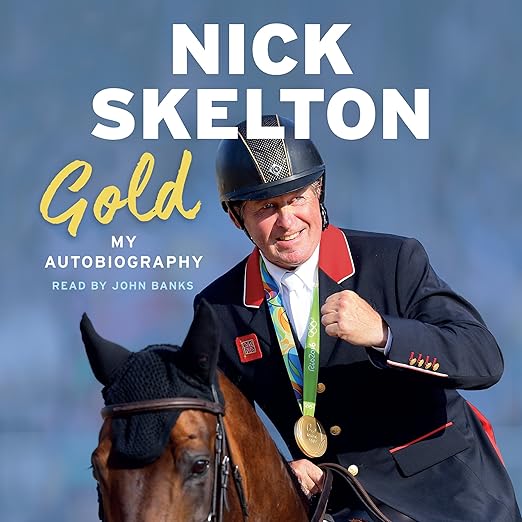
- Narration: John Banks delivers a steady, unshowy read that suits Skelton’s own unpretentious style, this is autobiography narrated as plainly as it was presumably lived.
- Themes: Athletic longevity and resilience, the bond between rider and horse, recovery and second chances
- Mood: Warm and matter-of-fact, with genuine emotional stakes around Big Star and the Rio comeback
- Verdict: Nick Skelton’s memoir is an honest account of a career that most equestrian sport listeners will find impressive and those outside the world will find unexpectedly moving.
I came to Gold knowing Nick Skelton by reputation, eight Olympic Games, individual gold at Rio 2016 at age 58, British equestrian legend, but knowing very little about the person behind the record. That gap between athletic achievement and human story is where autobiography lives or dies, and Skelton’s book navigates it with the same pragmatic confidence he apparently brought to everything else in a career spanning more than four decades.
The spine of the story is well-known in equestrian circles: a serious neck break from a fall in 2000 forced early retirement, followed by an improbable return to competition in 2002, followed by the career peak at Rio that made him the oldest individual gold medalist in show jumping history. What the book adds is everything in between, the minor competitions, the horses that did not become legends, the infrastructure of a career built from a Welsh pony called Oxo at eighteen months old.
Our Take on Gold
Skelton writes the way he presumably competes: no unnecessary flourishes, steady and direct. This is not a book that agonizes over its sentences or reaches for literary effect. It is a book that tells you what happened, in what order, and why it mattered. That plainness is both its limitation and its integrity. You will not find psychological depth-plumbing or extended meditations on the meaning of sport. What you will find is a remarkably honest account of how a career at the highest level of equestrian sport actually functions: the horses, the owners, the competitions, the injuries, the politics of team selection.
The relationship with Big Star, the horse Skelton rode to individual Olympic gold in Rio, is the emotional center of the later chapters. One reviewer noted that the book is beautiful, and while that may oversell it slightly, the sections describing the partnership between Skelton and Big Star carry genuine feeling without sentimentality. Skelton has spent his life around horses and he writes about them with the respect of someone who understands that the horse is not merely the equipment.
Why Listen to Gold
John Banks’s narration fits the material. He delivers Skelton’s plainspoken register without trying to dress it up, which is the right call. The audio format is particularly well-suited to the pacing of this kind of memoir, episodic, anecdotal, cumulative, because it allows the career arc to accumulate naturally without the reader having to hold the structure consciously in mind. One reviewer specifically recommended listening rather than reading, and I think that advice reflects something real about how the book’s incremental building of Skelton’s record works best in audio.
The book also works as an introduction to the equestrian world for listeners who know little about show jumping. Skelton explains the competitions and their significance without condescension, and the chronological structure provides a natural orientation to how the sport has changed across four decades.
What to Watch For in Gold
The early chapters covering Skelton’s youth and development will be most interesting to those with existing knowledge of the equestrian world. The competitions and riders he references in those sections will mean more to someone who can place them in context. The book picks up in emotional intensity in the later chapters, the neck injury, the retirement, the return, and those sections work for any reader regardless of equestrian background.
The audiobook does come with a note that accompanying reference material is available in the library section of the desktop site. If there are photographs or records included with the print edition, those are not accessible in the standard audio format, which is a minor loss for a memoir that covers so much visual sport.
Who Should Listen to Gold
Equestrian sport fans who want to understand what makes Skelton’s career exceptional will find this a thorough and honest account. Listeners who are drawn to comeback stories and athletic longevity, regardless of sport, will find the Rio chapter genuinely moving. Those entirely new to show jumping may find the early competition chapters slower, but the human story is accessible enough to carry them through. Readers wanting psychological interiority or literary self-examination should look elsewhere.
Frequently Asked Questions
Do I need to follow equestrian sport to enjoy Nick Skelton’s autobiography?
Not necessarily. The competition references in early chapters will mean more with existing knowledge, but the human story, particularly the neck injury, the comeback, and the relationship with Big Star, is accessible to any listener who enjoys sports memoir. The later chapters especially work independently of equestrian expertise.
How does the book handle the neck injury and forced retirement, does it dwell on the emotional side?
Skelton approaches it with the same plainspoken directness that characterizes the whole book. The emotional weight is present but not extensively examined through self-analysis. Reviewers describe the book overall as moving rather than introspective, and that balance holds in the injury sections as well.
Is the audiobook complete, or does it miss material available in the print edition?
The publisher notes that accompanying reference material is available in the desktop library section alongside the audio, which suggests there may be photographs or supplementary content not embedded in the audio itself. The narrative text appears complete.
What makes Skelton’s 2016 Rio individual gold medal significant enough to anchor the memoir?
Skelton won individual Olympic gold at age 58 on his horse Big Star, making him the oldest individual gold medalist in show jumping history. The achievement came sixteen years after a broken neck from a fall that ended his first career, which gives the Rio chapter the quality of a genuine second-act culmination.