Quick Take
- Narration: Brittany Pressley brings warmth and urgency to Kate’s perspective, navigating the emotional turbulence of a young woman caught between love and mythology with consistent conviction.
- Themes: Greek mythology reimagined, love and jealousy, female rivalry turned reluctant alliance
- Mood: Propulsive and emotionally charged, with a mythological grandeur underneath the teen heartache
- Verdict: Readers who connected with Kate and Henry in the first book will find the stakes higher and the emotional complications more layered in this satisfying sequel.
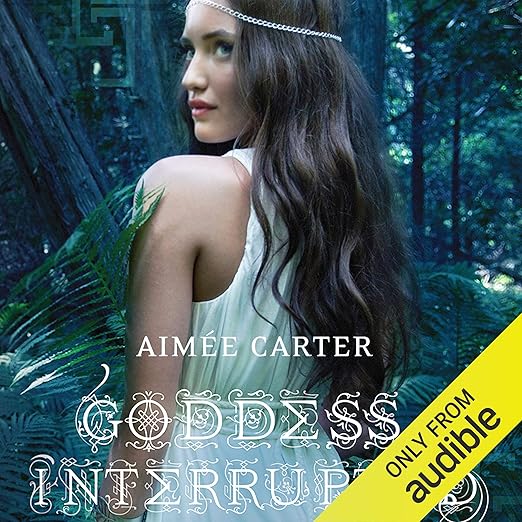
I came to Aimee Carter’s Goddess Test series through a recommendation from a listener who described it as the Greek mythology YA that feels genuinely invested in its source material rather than using the gods as costume. I started Goddess Interrupted on a long train ride and found myself far more absorbed than I expected, particularly because the emotional architecture of the story is more complicated than a standard sequel would attempt.
Kate Winters has earned immortality at the end of the first book, but Carter is smart enough to understand that winning something is not the same as belonging to it. That tension, between a hard-won title and an identity still forming, is what drives the first half of this audiobook and what gives the larger conflict its emotional stakes. Kate is about to be crowned Queen of the Underworld. She should feel victorious. Instead she feels invisible.
What the Crown Actually Costs
One of the things I appreciated most about Goddess Interrupted is how Carter refuses to let Kate’s victory feel uncomplicated. She returns from her sabbatical expecting a reunion with Henry, ruler of the Underworld, and instead finds distance, secrets, and a husband who seems constitutionally incapable of letting anyone fully in. This emotional cold shoulder from Henry is handled with more nuance than most YA romances manage. He is not cruel. He is walled off in a way that Kate cannot breach, and that specific variety of loneliness, feeling invisible to the person you love most, lands with a particular weight that conventional villain-driven conflict rarely achieves.
Then the King of the Titans abducts Henry during Kate’s coronation, and the book shifts from emotional drama to mythological quest. The transition is handled smoothly, but Carter is careful to keep the two registers connected. The external quest and the internal longing are not separate storylines; they inform each other at every turn. Kate’s desire to save Henry is inseparable from her need to understand what place she actually holds in his world.
Brittany Pressley reads Kate with a vulnerability that serves this material particularly well. There is an openness in her performance that reflects Kate’s essential character: someone who wants to trust everyone and keeps getting reminded that trust in the Underworld is complicated. Pressley avoids melodrama in the quieter emotional scenes, which makes the larger dramatic moments hit with considerably more weight.
Persephone as the Structural Complication
The most interesting choice Carter makes in this book is centering Persephone, Henry’s first wife, as both a threat to Kate’s future and an indispensable ally in the present crisis. When Henry is taken to Tartarus, it is Persephone who knows those depths, and Kate must set aside her jealousy to accept her guidance. This forced collaboration between two women competing for the same man’s place in history is where the novel earns its most intellectually interesting moments.
Carter does not resolve this tension cheaply. Persephone remains enigmatic throughout, her loyalties deliberately ambiguous, and the dynamic between the two women carries a complexity that elevates the story above many of its genre contemporaries. For listeners coming from other myth-heavy YA, the mythological scaffolding here operates differently than in Rick Riordan’s adventure-forward writing. Carter is less interested in puzzle-solving mechanics and more interested in using the Greek pantheon as an emotional landscape. The gods are not obstacles; they are personalities to navigate, each carrying centuries of accumulated grief and resentment. That approach demands patience, but it pays off.
A Third Act That Earns Its Cliffhanger
The rescue mission to Tartarus in the second half escalates with genuine momentum. Carter keeps the mythological geography consistent and uses the caverns of the Underworld to externalize Kate’s psychological state in ways that feel purposeful rather than merely decorative. Pressley’s pacing through the action sequences maintains the tension without tipping into the theatrical overcrowding that audiobook action can sometimes produce.
The ending is abrupt. One reviewer described it accurately as a huge unexpected twist where the book simply cuts off. Carter is playing a long game across the series, and readers who are not already committed to seeing it through may find the landing unsatisfying. This is not a flaw exactly, but it is a feature worth knowing about before you begin. Goddess Interrupted is the middle chapter of something larger, and it reads with deliberate awareness of that position.
Who Should Listen and Who Should Wait
Listeners who enjoy YA mythology that leans into romantic and emotional complexity rather than action-forward plotting will find this rewarding. If you finished The Goddess Test and were invested in Kate and Henry’s dynamic, Goddess Interrupted deepens that investment considerably. The Persephone subplot alone is worth the listen for anyone interested in how YA can handle complicated female relationships without reducing them to simple rivalry.
Skip this one if you have not listened to the first book. The story assumes familiarity with the full mythology Carter has established, and the emotional stakes will not land without that foundation. Also skip if you have low tolerance for cliffhanger endings. The series demands commitment, but for the right reader, that commitment is well rewarded.
Frequently Asked Questions
Do I need to listen to The Goddess Test before starting Goddess Interrupted?
Yes, without question. Goddess Interrupted picks up immediately after the first book and assumes full familiarity with Kate’s journey, the rules of the Underworld, and the mythology Carter has established. Starting here would mean missing the emotional and narrative foundation that gives this sequel its weight.
How does Brittany Pressley handle the romantic tension between Kate, Henry, and Persephone?
Pressley navigates the emotional triangle with restraint, which works in the book’s favor. She conveys Kate’s jealousy and insecurity without letting it tip into whining, and she distinguishes between Kate’s internal monologue and her interactions with other characters through subtle shifts in tone rather than dramatic vocal changes.
Is this more action-focused or character-driven compared to the first book?
Goddess Interrupted is primarily character-driven, with the Tartarus rescue mission providing action in the second half. The first half is largely about Kate’s emotional isolation and her struggle to connect with Henry. Knowing this going in helps set expectations appropriately.
Does the story resolve, or does it end on a cliffhanger?
It ends on a significant cliffhanger. The rescue arc concludes, but a major plot twist in the final pages sets up the next installment in a way that leaves considerable threads unresolved. Multiple reviewers flagged this as a surprise, so be prepared to continue with The Goddess Inheritance if you want closure.