Quick Take
- Narration: Andrew Tell brings controlled tension to the procedural material, though the performance is more reliable than distinctive, competent framing for a competent thriller.
- Themes: Serial predation and forensic investigation, the gap between evidence and leads, law enforcement collaboration under pressure
- Mood: Tense and methodical, with the procedural rhythm that Wolfe’s fans have come to expect
- Verdict: A solid Tess Winnett entry for established Leslie Wolfe readers; newcomers can start here but will get more from accumulating the series from the beginning.
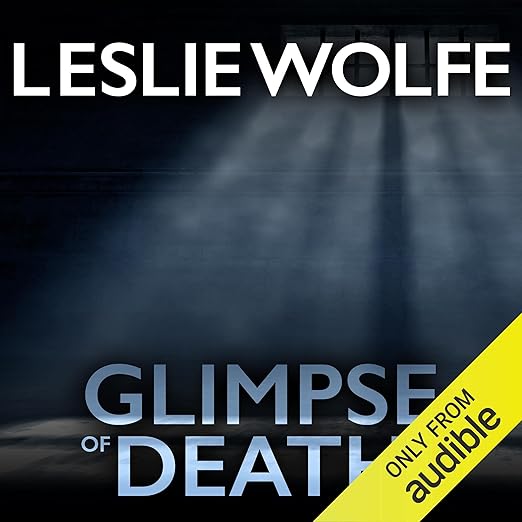
I came to Leslie Wolfe through a recommendation from a listener who described her as the kind of author who does the research and it shows. That description is accurate. Glimpse of Death opens with an image that is genuinely eerie: the body of a young woman found in her own backyard a week after her disappearance, arranged with an odd, unsettling peace, as if welcoming an unseen lover. The visual specificity is a Wolfe signature, and it sets the procedural stakes immediately. By the time the second body appears, the shape of what FBI Special Agent Tess Winnett is dealing with has taken on a disturbing logic.
Tess arrives to join local detectives on a case that quickly reveals itself to be serial rather than isolated. The killer’s method involves stalking, a calculated preview of what is coming, and a particular focus on young mothers. The investigation proceeds through layers of forensic evidence that multiply without immediately pointing anywhere useful, which is procedurally accurate and, at times, genuinely frustrating in the way that good crime fiction earns. Wolfe is not here to make the investigation easy; she is here to make it thorough, and the difference matters.
Our Take on Glimpse of Death
The book’s most interesting structural choice is the evidence problem. Wolfe gives her investigators plenty of physical detail and very few actionable leads, which mirrors actual forensic investigation more closely than many thrillers in the genre. One reviewer who identified an early candidate for the killer and followed that thread through to a satisfying confirmation described the experience as Wolfe hitting it out of the park. That kind of reader satisfaction requires the author to have done the setup work honestly, and Wolfe generally has. The unsub’s signature behavior, the way he shows victims a preview of their fate before acting, is specific enough to function as genuine profiling material rather than generic thriller menace. The detail that he targets young mothers adds a layer of calculating cruelty that the investigation has to unpick methodically.
Why Listen to Glimpse of Death
Andrew Tell narrates the Tess Winnett series with a steady competence that suits the procedural tone. He is not a showy narrator, and this thriller does not ask for showiness: it asks for clarity during the forensic sequences, appropriate urgency during the investigation peaks, and the ability to differentiate between a reasonably large cast of law enforcement characters without caricature. Tell manages all of this across a 10-hour runtime that feels appropriate for the density of investigative detail Wolfe includes. The pacing is methodical by design, and Tell’s delivery reinforces rather than undermines that choice.
What to Watch For in Glimpse of Death
One reviewer flagged a specific plot logic question: a survivor character apparently does not disclose her attacker despite having seen him clearly, which creates a narrative gap that careful listeners will notice. Whether this is a purposeful loose thread or an oversight is unclear, but it is the kind of moment that pulls attentive listeners out of the suspension of disbelief. Wolfe is also a prolific writer, and readers who have followed the Tess Winnett series will note that the formula is relatively consistent across entries. The variation is in the specific killer methodology and the forensic detail, while the overall shape of the investigation remains familiar. That reliability is a feature for series fans and a limitation for listeners wanting genuine structural surprise.
Who Should Listen to Glimpse of Death
Established Tess Winnett readers who want another solid series entry. Listeners who enjoy forensically detailed procedurals in the Michael Connelly or David Baldacci vein will find a kindred tone here. New-to-Wolfe listeners can start here: the procedural works as a standalone even if the series context enriches it. Those who prefer psychological complexity in their killers over operational specificity may find the unsub underdeveloped compared to the investigation itself, which is where Wolfe invests the bulk of the narrative energy.
Frequently Asked Questions
Is Glimpse of Death a good entry point into the Tess Winnett series, or should listeners start with Dawn Girl?
It functions as a standalone, and Wolfe’s procedural setup does not require prior series knowledge. That said, starting with Dawn Girl gives you more investment in Tess as a character, which sharpens the stakes in later entries including this one.
How does Andrew Tell’s narration compare to other audiobook performers in the crime thriller genre?
Tell is reliable rather than exceptional. He maintains procedural clarity, handles the cast differentiation adequately, and sustains appropriate tension. Listeners who prioritize narration as a primary factor may find him workmanlike; those who prioritize story will not find him an obstacle.
Does the book include the forensic profiling detail that some reviewers reference, or is it more action-driven?
It leans toward the procedural and forensic rather than action. The investigative process, evidence assessment, and profiling logic take up more space than pursuit or confrontation sequences. That balance will suit procedural fans and may frustrate those who want pacing driven by action.
Is the survivor plot question that reviewers flag resolved by the end of the book?
Reviewers note it as an open question: a character who should have identified her attacker earlier apparently does not, which creates a narrative logic gap. Whether this is resolved or simply glossed over is something careful listeners will need to assess for themselves.