Quick Take
- Narration: Hollie Jackson is a seamless fit for this series, delivering the comic timing and Southern Gothic warmth that the Verity Long books require.
- Themes: Paranormal cozy mystery, Southern community and belonging, love and loyalty under pressure
- Mood: Light and warm with enough genuine menace to keep the mystery honest
- Verdict: A reliable and affectionate fifteenth entry that will delight established readers of the series, though newcomers need to start from book one or earlier to get the full value.
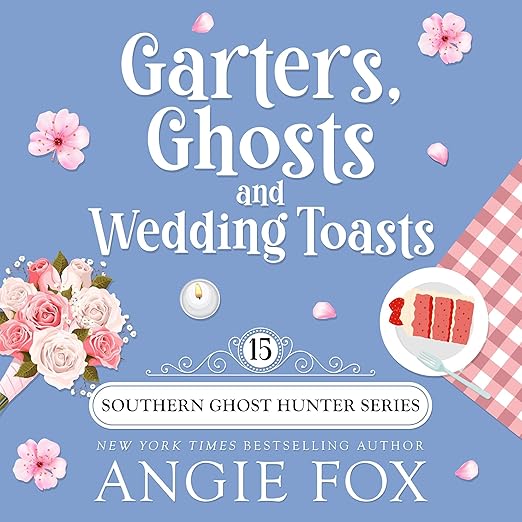
I finished the previous Southern Ghost Hunter mystery about three weeks before this one released and had to exercise genuine restraint not to start immediately on advance reviews. I came into Garters, Ghosts and Wedding Toasts with high expectations and the specific awareness that fifteenth entries in cozy mystery series are one of the more difficult things to sustain in popular fiction. Angie Fox has been delivering this series since 2013, and the question I kept asking as I listened was not whether this entry would be good but whether it would demonstrate the kind of creative renewal that long-running series occasionally need to stay genuinely alive rather than just competently executed.
The answer is mostly yes. The setup is inventive: Melody, Verity’s sister, gets her dream wedding funded by an Irish manor in Jackson, Tennessee, in exchange for the venue’s photo rights. The deal is too good to be true, which is established clearly and early, but the reasons for this go in an unexpected direction. Two dead grooms, fifty years apart, is a pleasingly dark premise for what is essentially a wedding comedy, and Fox uses the historic mystery alongside the contemporary one with the structural confidence of a writer who has had fifteen books to practice the form.
Frankie’s Crown Jewels and the Series’ Engine
One reviewer identified Frankie, Verity’s ghost gangster companion, as the engine of the series, and the assessment is hard to argue with. The dynamic between Verity and Frankie is what distinguishes these books from the broader cozy mystery genre, and Fox has maintained it carefully across fifteen entries without letting it calcify into formula. In this entry, Frankie’s preoccupation with the Irish Crown Jewels, which happen to be hidden somewhere in the Jackson manor, gives him a personal stake in the investigation that runs parallel to and occasionally complicates Verity’s. A reviewer noted that in this book they felt less closely intertwined than in previous entries, and I shared that impression in the early chapters, though the later sections restore the collaborative energy that makes them work as a duo.
The pacing is confident throughout. Fox does not waste the wedding setting; the specific comedy of a venue that is providing everything for free and insisting on photographing every moment creates genuine situational pressure that integrates with rather than disrupting the mystery plot. The reveal of what is actually under the wedding chapel is well-placed, and Fox avoids the cozy mystery’s most common structural failure, which is a third act that explains too much and earns too little of its explanation.
Hollie Jackson and the Demands of a Long Series
Jackson has been narrating this series long enough that the performance has moved past technical proficiency into genuine character ownership. Verity’s voice, which needs to carry both the comedy and the genuine fear without losing the warmth that makes her sympathetic, is completely established. The wide cast of secondary characters, including Melody’s groom-to-be Alec, whose poor timing is a running thread, and the various family members and manor staff who populate the investigation, are differentiated cleanly without the kind of elaborate vocal performance that would make the broad comedy feel forced.
The skunk Lucy’s subplot, in which she finds a romantic interest from the wrong side of the tracks, operates as pure comedy relief and Jackson delivers it with exactly the light touch it requires. In a lesser series, the recurring animal companion would feel like wallpaper; Fox consistently finds ways to make Lucy structurally useful to the plot and emotionally useful to Verity’s characterization, and Jackson’s voice work makes this integration feel natural rather than mechanical.
What Fifteen Books In Looks Like
The honest assessment of a fifteenth series entry is that it cannot deliver everything a first or fifth entry could. The world is fully established, the major character relationships are settled, and the formal options available to the writer are more constrained. What Garters, Ghosts and Wedding Toasts delivers instead is the specific pleasure of a form that has been mastered: the beats land precisely, the humor is calibrated correctly, the emotional stakes are genuine, and the mystery is fair-play. One longtime reader noted that this series had held their interest across all fifteen books, which they described as an unusual achievement, and having now worked through several of the earlier entries as well as this one, I think that sustained quality is attributable to Fox’s commitment to renewing the central character relationships rather than simply rotating the mystery plot.
The news teased at the end of this entry, that another book is coming, will be welcomed by readers who, as one reviewer put it, always dislike reaching the end and having to wait. Fox has created the kind of ongoing serial fiction that rewards continued investment, and this entry maintains the quality standard that investment deserves.
The Irish manor setting in Jackson, Tennessee, deserves more attention than a plot summary provides. Fox uses the tension between Sugarland and Jackson, which Verity frames explicitly as enemy territory, to generate a productive discomfort that runs underneath the wedding comedy. The historical weight of the manor, and the two dead grooms from fifty years apart who haunt its foundation both literally and figuratively, gives the setting a moral gravity that the lighter cozy registers of the series would not naturally produce. Fox earns this darkness without abandoning the warmth that the series runs on, which is a structural balance that fifteen books in she handles with something close to automatic precision.
A Free Audiobook for the Long-Term Fan
This free audiobook is both a celebration and a continuation. Jackson’s narration is polished, the production is clean, and the writing delivers exactly the pleasures the series has always promised: a mystery that respects the reader’s intelligence, comedy that comes from character rather than situation, and a central relationship, between Verity, Frankie, and the community of Welling, that has accumulated genuine emotional weight across fifteen entries. New listeners should start at the beginning. Everyone else should put this on and enjoy the party.
Frequently Asked Questions
Can I start the Southern Ghost Hunter Mysteries series with Garters, Ghosts and Wedding Toasts as book 15?
Not advisably. The book assumes familiarity with Verity, Frankie, Ellis, Melody, and the town of Welling that only comes from earlier entries. Fox provides enough context to follow the plot, but the emotional payoff is significantly reduced without the accumulated series investment.
How does the Irish Crown Jewels subplot fit into the main mystery?
Frankie’s obsession with the Crown Jewels, which are hidden somewhere in the Jackson manor, runs parallel to the main murder investigation and gives him a personal stake that both helps and occasionally complicates Verity’s work. The two threads intersect more clearly in the second half.
Does Hollie Jackson remain consistent as narrator across this long-running series?
Yes. Jackson has narrated the series consistently and by this entry the character voices are fully established. Her delivery of the comedic and dramatic material is well-calibrated, and the wide cast of characters is managed clearly.
Is the mystery in this entry genuinely solvable, or does the solution feel arbitrary?
The mystery is fair-play. Reviewers who engaged seriously with the plot noted that the solution followed from planted clues rather than requiring retrospective revision. The dual timeline structure, two dead grooms fifty years apart, adds complexity without making the resolution feel contrived.