Quick Take
- Narration: Phil Schoen brings broadcast energy to the collection, clear, paced for a teen audience, and enthusiastic without tipping into caricature.
- Themes: Resilience under pressure, diversity and inclusion in sport, the relationship between character and achievement
- Mood: Energetic and encouraging, like the best kind of pre-game talk
- Verdict: A well-assembled collection of athlete profiles with genuine breadth of representation and practical reflection tools built in.
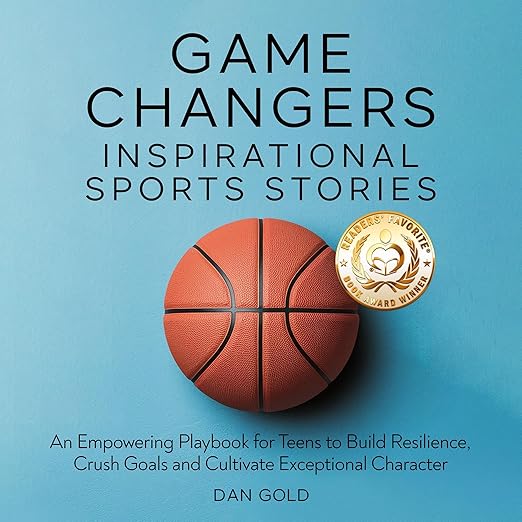
My niece went through a phase where she would only listen to audiobooks about athletes. I spent considerable time that year looking for collections that offered range beyond the usual suspects, Jordan, LeBron, Brady, and found that most were thin on female athletes, thin on non-American sports figures, and thinner still on stories about adversity that extended beyond winning championships. Game Changers: Inspirational Sports Stories by Dan Gold is not that kind of collection. It is not perfect, but it takes the breadth requirement seriously in ways that distinguish it from the genre average.
Phil Schoen narrates, and his broadcast background serves this material well. He has the cadence of someone who has introduced athletes on air for real events, and he brings that clarity and controlled enthusiasm to the text. For a teen listener, particularly one already engaged with sports media, Schoen sounds familiar without being condescending.
Our Take on Game Changers: Inspirational Sports Stories
The selection of featured athletes is the book’s strongest argument for itself. Tom Brady’s underdog story and Michael Jordan’s relationship with failure are expected inclusions, but Gold gives equal weight to Abby Wambach’s leadership at the 2011 Women’s World Cup and her subsequent LGBTQ+ advocacy. Serena Williams’s battle against racism and sexism, not just the wins but the specific and documented ways her excellence has been minimized, questioned, and penalized, is handled with more directness than many comparable books for teens. Yuna Kim’s global impact as South Korea’s dominant figure skating figure brings an international lens that most American sports anthologies do not bother with. Jackie Robinson’s inclusion carries its own weight; the civil rights dimension of his story is not softened for a younger audience.
The structure of the book works in its favor. Each chapter ends with reflective prompts, interactive exercises, and actionable steps, a format that one reviewer rightly identified as converting these stories into something usable rather than merely inspiring. For a teen reader or listener who is working through the relationship between athletic performance and character development, having the material scaffolded this way makes the difference between passive inspiration and something that might actually change behavior.
Why Listen to Game Changers
At five hours and twelve minutes, this is a collection built for sustained engagement over several sessions rather than one long sitting. Each athlete chapter functions as a self-contained piece, which means listeners can return to the ones that resonated without needing to rebuild context. The Michael Phelps chapter, framed around goal-setting and the management of ADHD, is particularly well-constructed: Phelps’s eight-gold-medal performance in Beijing is treated as the output of specific mental habits rather than exceptional talent alone, which gives the story genuine instructional texture. Parents and coaches who have read about sport psychology will recognize the framework Gold is drawing on.
What to Watch For in Game Changers
The book covers more than forty athletes, and that breadth comes at the cost of depth in individual chapters. Brady’s story is necessarily compressed, there are books of two hundred pages about his career alone, and some chapters feel more like summaries than true profiles. The reflective prompts vary in quality: some are genuinely useful, and some feel like exercises generated to fill the format rather than grow from the specific story being told. A listener working through this with a young person might want to evaluate the prompts chapter by chapter rather than treating them all as equally valuable.
Who Should Listen to Game Changers
The sweet spot is teen athletes between twelve and seventeen, particularly those who are navigating the transition from recreational sport to more competitive environments where mental skills start to matter as much as physical ones. Parents and coaches looking for shared listening material that opens conversations about pressure, identity, and character will find this useful. Adult listeners without a particular connection to sports motivation will likely find the material too introductory for their needs, this is correctly targeted at its teen audience and does not try to be more than that.
Frequently Asked Questions
How many athletes are profiled in Game Changers, and what sports are covered?
The book covers more than forty athletes across a range of sports including American football (Brady), swimming (Phelps), soccer (Wambach), tennis (Williams), basketball (Jordan), baseball (Robinson), and figure skating (Kim). The breadth of sports and nationalities is one of the book’s distinguishing features compared to most teen sports anthologies.
Are the reflective prompts and exercises at the end of each chapter interactive in the audio format?
Schoen reads the prompts and exercises as part of the audiobook, but they are designed to be written or discussed rather than completed while listening. Many listeners and parents use this as a prompt for conversation after each chapter rather than doing the exercises in real time during the audio.
Is this appropriate for younger teens, say, twelve or thirteen, or is it better for older teens?
Multiple reviews recommend it for middle school listeners and up. The language is accessible, the concepts are concrete rather than abstract, and the shorter chapter format suits younger attention spans. The Serena Williams and Jackie Robinson chapters handle race and discrimination directly, which parents may want to preview if they have concerns about how their specific child will receive that content.
How does Dan Gold handle the Abby Wambach and LGBTQ+ content, is it brief or substantive?
Based on the synopsis, Wambach’s LGBTQ+ advocacy is included as part of the character-building chapter, not isolated as a separate topic. The approach appears to integrate her identity and advocacy with her athletic leadership rather than treating it as incidental or as the whole story. The depth of that treatment is typical of the book’s chapter format, which means it is substantive but not exhaustive.