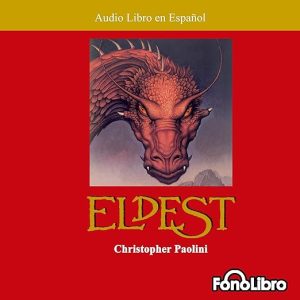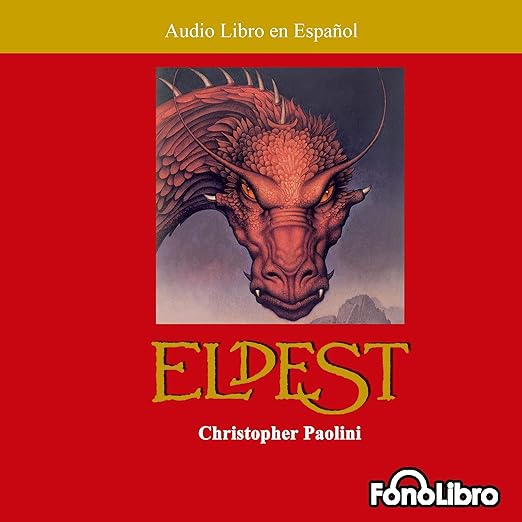
Eragon's saga begins again with this Spanish-language audiobook edition of Eldest by Christopher Paolini, narrated by Karl Hoffmann and produced by FonoLibro. Before anything else, the most important thing a potential buyer should know: this production is entirely in Spanish. Every word Hoffmann reads is in Spanish, intended for the Spanish-speaking audience that has followed Paolini's Inheritance Cycle in translation. English-language listeners who arrived here looking for an English edition will want to redirect their search. This review addresses the production on its own merits, which are real, but the language question is non-negotiable and must come first.
Hoffmann's Two Voices for Eragon and Roran
The second volume of the Inheritance Cycle is where Paolini's ambitions as a storyteller expand in ways that surprised many readers who had expected a straightforward adventure follow-up to Eragon. Instead of accelerating the central quest, Eldest opens into a longer, more complex narrative that follows two distinct storylines simultaneously. Eragon and Saphira travel to Ellesmera, the hidden realm of the elves, to complete the training that defines all Dragon Riders. Their companions on this journey include Arya, the elven ambassador, and Orik, the dwarf, and the world Paolini constructs in Ellesmera is among the richest and most fully realized in the series. The second storyline follows Roran, Eragon's cousin, who is fighting a desperate and deeply personal battle back in Carvahall against the forces of King Galbatorix.
Hoffmann handles this dual structure with genuine skill. His Eragon is earnest and interior, still shaped by the wonder of a young man who has discovered he carries an extraordinary destiny, while his Roran is earthier, more direct, driven by personal stakes rather than epic obligation. The distinction is consistent across the full running time and gives the audiobook real structural texture. Paolini's interest in the mechanics of magic, the ancient language that governs spellcasting, the specific rules of the Riders' bond, receives extended treatment here. These are the passages that divide readers: some find the depth rewarding, others find it slows the pace considerably. Hoffmann navigates them without rushing or becoming perfunctory. He delivers the worldbuilding sequences at the same committed register he brings to the action sequences, which is the correct approach for material Paolini clearly considered essential rather than decorative. The FonoLibro production quality is professional throughout, with clean audio and musical elements that support rather than crowd the narration.
A Serious Choice for Spanish-Speaking Listeners
For Spanish-speaking listeners who grew up with the Inheritance Cycle in translation, or who want to experience Paolini's saga in their first language, this production is a serious and well-crafted option. Hoffmann is not a compromise narrator. He has the range to move between the courtly language of the elven realm and the rougher register of Carvahall under siege without the shift feeling jarring, and he maintains energy across a storyline that requires patience from its audience in the extended middle sections. The Roran chapters are where the narration most clearly reveals its depth. Paolini deliberately made Roran a co-protagonist, not secondary filler, and Hoffmann treats those chapters with the same commitment he brings to Eragon's training sequences. The cousin's practical urgency, fighting for survival and rescue rather than for destiny, gives the audiobook a different emotional register to work with alongside the epic fantasy material, and Hoffmann uses that contrast well.
Spanish-language audiobook listeners who appreciate high-production epic fantasy will find the FonoLibro edition technically accomplished. The recording is clean, the pacing is controlled, and the decision not to rush through the longer expository passages reflects a production philosophy that trusts the source material. For a saga this long and structurally complex, that trust is not a minor detail.
Eragon's Gradual Transformation and Varden Politics
The transformation Eragon undergoes during his time in Ellesmera is not a sudden leveling-up in the familiar genre sense. It is gradual, disorienting, and carries consequences for who Eragon is as a person and not just as a fighter. Paolini builds these changes deliberately across many chapters, and the audiobook's accumulated runtime gives each stage of the transformation room to register before the next arrives. Hoffmann's performance of Eragon's internal adjustment to what is happening to him is one of the more psychologically attentive elements of the narration, subtle without being opaque.
The chaos and betrayal Eragon cannot predict, central to Paolini's setup for the book's climax, arrives at a moment that recontextualizes much of what has preceded it. The political complexity of the Varden, the rebel army Eragon is committed to serving, develops significantly in this volume and plants seeds for the series' largest conflicts. Listeners should pay careful attention to the relationships Eragon builds and strains within the Varden hierarchy. These are not decorative subplots. They carry weight that the third and fourth volumes of the Inheritance Cycle depend on, and the audiobook's treatment of them earns the care Paolini put into constructing them.
Start With Eragon Before This Continuation
Spanish-speaking listeners who have already read or listened to Eragon will find this a worthwhile continuation in a professional production. Listeners new to the Inheritance Cycle should start with the first book, as this volume does not stand alone. The emotional stakes of the Roran storyline, the full weight of Eragon's training, and the significance of the betrayal that arrives near the end all require the first book's foundation to land properly. English-language listeners should confirm before purchasing that this is the edition they intend, as the narration is entirely in Spanish. Fans of epic fantasy who are comfortable in Spanish, who enjoy audiobooks that take worldbuilding seriously and reward patience with narrative depth, will find this production a genuine achievement by both Paolini and FonoLibro.
The Short Version
- Read by: Karl Hoffmann differentiates the Eragon and Roran storylines with clear tonal consistency, delivering the Spanish-language production with warmth and committed range across both narratives.
- At its heart: Coming-of-age, mentor relationships, political resistance
- Vibe: Epic and patient, building toward confrontation through deep worldbuilding
- Short version: A professional Spanish-language production of Paolini's second Inheritance Cycle novel, but English-speaking listeners should verify this is the edition they intend before purchasing.
Common Questions
Do I need to listen to Eragon before this audiobook of Eldest?
Yes. Eldest is the second book in the Inheritance Cycle and picks up directly after the events of Eragon. The emotional stakes, the character relationships, and the political context all require the first book as foundation.
How does Karl Hoffmann handle the split between the Eragon and Roran storylines in the audiobook?
Hoffmann differentiates the two storylines through tone and register, with Eragon rendered as interior and wonder-struck and Roran as grounded and driven. The distinction is consistent enough to track the structural shifts without confusion.
Does this audiobook cover the full text of Eldest or is it abridged?
The runtime of approximately five hours and forty-three minutes is considerably shorter than what the full novel would require at a standard narration pace, which suggests this may be an abridged edition. Listeners who want the complete unabridged text should verify the edition details before purchasing.