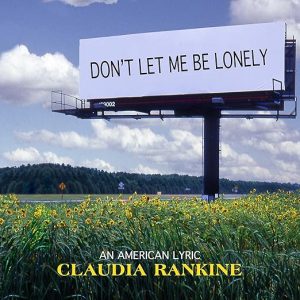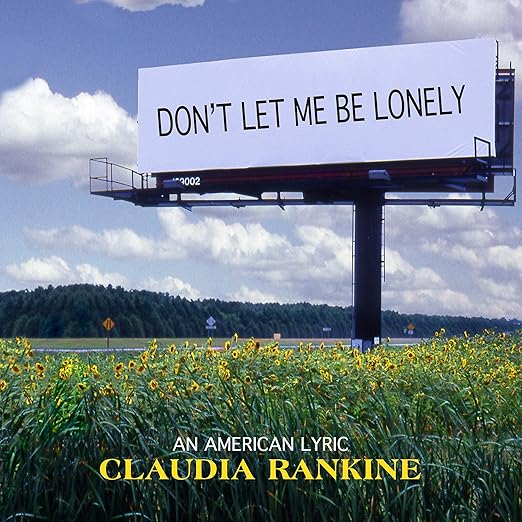
I was midway through an ordinary Wednesday afternoon when I put on Don't Let Me Be Lonely, and by the time Janina Edwards had read the first few pages I had stopped doing anything else. Claudia Rankine's work does that. It asks for your attention in a way that feels less like a demand and more like a quiet hand on the arm, an insistence that you pay attention to something you have been trained to look past.
At just over an hour and a half, this is one of the shortest audiobooks I have reviewed. Do not mistake brevity for simplicity.
This is a hybrid work that sits between poetry and essay, between lyric meditation and political commentary. Rankine fuses the two forms without announcing what she is doing, and the result is something that reads as neither pure poetry nor standard nonfiction. One reviewer described it as the poetic buried in the prosaic, which captures the texture well. Another noted it is not like a typical poetry book, structured more like essays but with essays that fold into one another the way poems do, each one creating pressure on what follows.
The content is organized around a recurring anxiety: that a life can not matter. Rankine moves through the deaths of Black Americans, through the assault of television and media on the self, through the political atmosphere of early-2000s America, and through the private experience of depression and disconnection. She does all of this with a clarity of sentence-making that feels earned rather than imposed. Nothing here is obscure for obscurity's sake.
Edwards Opens the Sentences Instead of Closing Them
Janina Edwards is the right narrator for this material. She does not perform the text in a theatrical sense but reads it at the pace it needs, allowing Rankine's sentences to open rather than closing them down with inflection. The audio format is genuinely useful here: the meditative rhythm of the prose-poem structure is easier to inhabit when you are listening than when your eye is scanning a page looking for plot momentum that is not the point.
One reviewer finished the entire book in a single sitting, unable to put it down despite its demands. That experience seems common among readers who encounter Rankine for the first time. The book works on you cumulatively; individual passages may not stop you cold, but by the time you reach the end of a section you realize you have absorbed something that has shifted the atmosphere slightly.
Recognizing Others as Our Only Salvation
This is not a listen for distracted commutes. The work requires something closer to active attention than most audiobooks, and if you put it on as background, you will miss the specific weight Rankine places on individual words and images. Reviewers who have engaged with it fully describe it as beautiful, complex, and moving. Those who have skimmed it will have gotten very little from the experience.
The political content, which addresses events from the early 2000s, has not aged in a way that makes it feel dated. The underlying concerns about race, visibility, and what Rankine calls the recognition of others as the only salvation for ourselves are as contemporary as when the book was first published in 2004.
Fans of Maggie Nelson and Ross Gay Take Note
Listeners who enjoy prose poetry, lyric essays, or work that sits in the territory between genres will find this essential. Fans of writers like Maggie Nelson, Ross Gay, or Jenny Zhang will recognize the formal ambition and the emotional directness. If you prefer audiobooks with plot momentum or clear argumentative structure, this will frustrate you. If you are willing to let a work unfold at its own pace and discover its logic slowly, Don't Let Me Be Lonely will stay with you longer than something three times its length.
In Brief
- Narrator: Janina Edwards reads Rankine's hybrid text with care, sustaining the meditative pace the work requires.
- Subjects: American loneliness, race and political grief, television and media saturation
- Tone: Dark, lyric, and quietly devastating; best absorbed in short sessions
- Bottom line: A brief but profound listen that rewards patience and re-listening; one of the more formally adventurous audiobooks you will encounter.
Good to Know
Is Don't Let Me Be Lonely a poetry collection or an essay collection, and does the audiobook format suit the hybrid form?
It is both and neither. Rankine herself calls it an American Lyric. The audiobook format actually suits the hybrid structure well because Edwards reads it at a pace that allows the lyric and essay elements to coexist rather than pulling against each other.
At only 95 minutes, is the audiobook worth the investment compared to reading the physical book?
The audio version adds the layer of Edwards's careful narration, which honors the rhythm of Rankine's prose. Whether that justifies the cost depends on how you relate to audio as a format. Rankine's own public readings suggest the work benefits enormously from being heard aloud.
Does the political content feel dated, given that it was first published in 2004?
Not meaningfully. The references to specific events of the early 2000s are present, but the underlying themes of racial grief, media saturation, and political disillusionment remain fully contemporary. Several reviewers have noted its resonance for readers encountering it decades after publication.