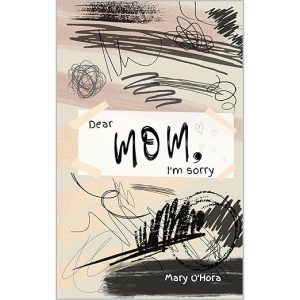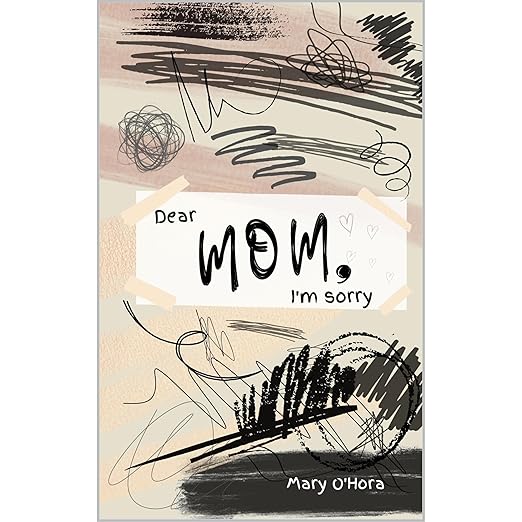
Dear Mom, I'm Sorry by Mary O'Hora arrives as an audiobook with a content warning that belongs at the front of any review: this is a fictional end-of-life journal from a 15-year-old girl addressed to her mother, dealing directly with suicide, mental health, and the particular kind of emotional numbness that makes a teenager feel that ending their life is rational rather than a crisis. That framing is not decorative. The book requires it, and O'Hora includes it herself in the author's foreword. Within that framing, she has written something that a significant number of readers have found genuinely illuminating rather than merely distressing, which is why the audiobook carries 384 ratings at 4.1 stars despite its extremely difficult subject matter.
The narrator is Chelsie. She is 15. She has decided. The journal is her attempt to explain her reasoning to her mother in enough detail that her mother will eventually understand and, she hopes, grant a kind of posthumous permission. That premise is structurally unusual in YA fiction. O'Hora is not writing a crisis narrative where intervention arrives. She is writing a document of a mind that has convinced itself, and she stays inside that logic throughout. The result is uncomfortable in the way that honest fiction about mental illness tends to be, and it is more useful for that discomfort than a softer treatment would be. Chelsie is not asking to be saved. She is asking to be understood, which is a different and in some ways more difficult narrative posture to maintain across an entire book.
Is Dear Mom, I'm sorry Worth Your Time?
The audiobook runs 4 hours and 20 minutes, narrated by Virtual Voice. That narration context is worth naming directly: the AI-generated delivery has a different quality than a human performance, particularly for a text this emotionally dense. The material calls for proximity and vulnerability, and listeners who find AI narration creates distance between themselves and a character's interior experience may find this version less immersive than a human narrator would produce. That said, the text itself carries significant weight, and multiple readers report finding themselves in tears at the book's emotional core regardless of the narration format. The writing does enough of the work that the narration gap matters less than it might in other contexts.
One reviewer described finding it fascinating to watch how Chelsie reasons and logics out her decision, making sure everyone around her is accounted for before she proceeds. Another noted that it shows clearly how often the issues a teenager faces are not the direct result of others' actions, which is one of the book's central and most honest arguments. Chelsie does not blame her mother. She does not blame anyone specific. She describes a state of being, a kind of blunted feeling that sits entirely inside her own experience, and she is trying to transfer that experience onto the page with enough fidelity that her mother will eventually understand rather than feel responsible for what could not be prevented. That distinction matters deeply to the character, and O'Hora honors it throughout.
The Best Parts of Dear Mom, I'm sorry
The case for this audiobook rests almost entirely on its willingness to stay inside its premise without offering easy resolution. YA fiction about mental health often builds toward intervention, recovery, or at minimum a moment where the protagonist reaches toward help. O'Hora has written something different: a document that ends where it ends, without reassurance. That is a legitimate artistic choice, and it produces a reading experience that several reviewers have described as genuinely useful for understanding the interior logic of severe depression in a young person.
Parents who are trying to understand what a struggling teenager might be experiencing will find this audiobook more illuminating than most clinical descriptions. Teachers, counselors, and social workers who work with adolescents dealing with mental health challenges will find Chelsie's voice recognizable in its patterns: the careful accounting, the desire not to be blamed onto others, the conviction that the suffering is real and not a performance. And young readers who have experienced this kind of emotional numbness themselves will find a character whose experience is named and rendered with care, which is itself a form of acknowledgment that the experience is real, not a sign of weakness or attention-seeking.
Before You Commit to Dear Mom, I'm sorry
The content warning in the author's foreword is serious. This book should not be the first resource for anyone currently in crisis. Safe messaging guidelines around suicide-related content exist for good reasons, and Dear Mom, I'm Sorry is not structured as crisis intervention material. Its value is for readers who are in a position to engage with difficult material analytically or empathetically, not for readers who are currently experiencing the states the book describes.
One reviewer assessed it as unremarkable as a literary object, noting that its value is primarily in the accuracy of its character study rather than in structural or prose innovation. That is a fair assessment. The journal format is straightforward. The writing is functional rather than stylistically ambitious. The book's value is in what it depicts and how accurately it depicts it, not in formal experimentation. Listeners seeking literary distinction alongside emotional weight should adjust their expectations accordingly. The rating of 4.1 across 384 reviews reflects a genuine split between readers who found it meaningful and those who wanted more from it technically. Both responses are legitimate, and the book is honest enough about its own limitations to acknowledge them.
Should You Listen to Dear Mom, I'm sorry?
Parents of teenagers dealing with mental health difficulties who want insight into a struggling young person's interior experience will find this audiobook valuable. Educators and mental health professionals working with adolescents will find Chelsie's voice recognizable and useful as a point of reference for the internal logic of severe depression. Older teen readers who have experienced or witnessed emotional numbness and depression may find the book validating, with the significant caveat that readers currently in crisis should access support resources rather than beginning with this material. Anyone who wants resolved YA fiction with forward momentum should look elsewhere. What O'Hora has built is specific, honest, and not for everyone, but for readers prepared to meet it on its own terms, it delivers exactly what it describes from the first page of Chelsie's journal.
Good to Know
Is this audiobook appropriate for teen readers, or is it intended for adults reading about teen mental health?
The book is written from a 15-year-old's perspective and intended for both audiences, but the content advisory is serious. The author's foreword explicitly flags suicide and mental health content. Teen readers who are not in a vulnerable state may find it illuminating. Teens currently experiencing mental health crises should access support resources rather than this audiobook first.
How does the Virtual Voice narration affect the listening experience for emotionally heavy material like this?
AI narration creates a different kind of distance than human performance, and for material this emotionally dense, some listeners may find it reduces immersion. Readers who are highly sensitive to narration style may prefer the print version. Multiple reviewers report the text itself carries sufficient emotional weight regardless of the narration format.
Does this audiobook offer resolution, or does it end without intervention?
The book is written as a final journal and does not build toward intervention or recovery. O'Hora stays inside the premise throughout. This is a deliberate artistic choice. Listeners who need narrative resolution should know this upfront. The book ends where Chelsie's writing ends, without external rescue or reassurance.
Is Dear Mom, I'm sorry based on a true story, or is it entirely fictional?
The author's foreword identifies it explicitly as fictional. O'Hora describes it as a fictional end-of-life journal. The emotional realism has prompted the question from readers, but the characters and specific events are invented. The accuracy of the psychological portrayal comes from craft rather than autobiography.