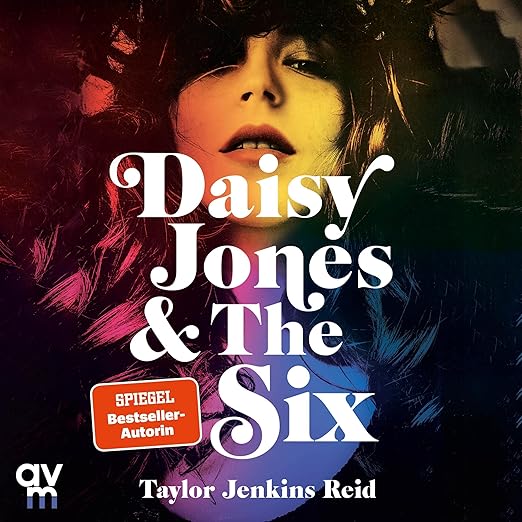
Taylor Jenkins Reid's Daisy Jones and The Six, in this audiobook edition led by Hans Bayer and a cast of more than twenty performers, arrives with an important caveat: this is the German-language production. The synopsis is written in German, the narrator list is entirely German-speaking, and at least one reviewer explicitly noted receiving a non-English edition. English-speaking listeners should verify the edition before purchasing. What follows is a review of the novel and its audiobook format, drawing on the German production's cast structure alongside what the novel's oral-history design offers to listeners who can engage with it in that language.
What Taylor Jenkins Reid Delivers
Reid's novel is constructed as a retrospective oral history, a series of interviews with the surviving members of a fictional 1970s rock band and the woman who joined them and transformed everything. Daisy Jones is the title character: young, neglected by wealthy parents, possessed of a voice and a will that makes her both irresistible and genuinely difficult. Billy Dunne is the band's lead singer, married, sober, magnetic, and the person whose creative and personal collision with Daisy drives the novel's central tension. The format, alternating first-person accounts from multiple characters reflecting on events years later, gives the story its distinctive rhythm: you are always hearing the same events described by people who experienced them differently and remember them selectively, and those gaps between accounts are where the novel's emotional intelligence lives.
The multi-voice audiobook format, whether the English or German edition, is specifically designed for this structure. The novel reads like a transcript and sounds even more like one when performed by a full cast. A reviewer who initially found the writing style distracting, describing it as reading like a script, noted that they got quickly into it and that the different personalities emerged distinctly as the book progressed. That distraction resolves into an asset in audio form: when each character is voiced by a different performer, the structural innovation that takes some adjustment on the page becomes immediately legible to the ear. Hans Bayer and Monica Bielenstein anchor the German cast, with Detlef Bierstedt and Liane Rudolph among the twenty-plus additional voices carrying the ensemble.
What Taylor Jenkins Reid Gets Right
The audiobook format is arguably the ideal way to encounter Reid's novel for the first time. The oral history structure, which can feel formally distancing when encountered on the page by readers more accustomed to conventional narration, becomes natural when it is performed by a cast. Each character's distinct voice, their blind spots, their self-justifications, their loyalty to their own version of events, is more immediately apparent when physically embodied by a separate performer than when distinguished only by a dialogue tag. A reviewer described the experience as making them cry, laugh, and feel profound grief and loss alongside genuine satisfaction, which is the full emotional range Reid aims for and achieves across nine hours and thirty-nine minutes.
The 1970s rock mythology is also better served in audio. Reid captures the period through specific detail rather than nostalgia: tour buses, Sunset Strip dynamics, the specific social physics of a band becoming famous and then fracturing under the weight of it. A listener paying attention will notice that the novel is less interested in the music itself than in the professional and personal relationships that the making of music exposes. Billy and Daisy are explosive together on stage and off, and the audiobook's pacing builds that tension with considerable discipline through the middle sections before the final dispersal.
Where Taylor Jenkins Reid Loses Some Ground
The gaps between what different characters say about the same events are the novel's primary texture. When Billy describes a particular night and Daisy describes it differently, neither account is presented as authoritative. Reid uses those discrepancies to build a cumulative portrait of two people who are both unreliable about each other and honest about themselves in ways they do not fully recognize. Listeners who track those discrepancies will experience a different novel than those who follow only the plot. The final chapters, in which the oral history format confronts its own limitations, are also worth particular attention: Reid earns the ending structurally, and it lands considerably better when the whole audiobook has built to it rather than when encountered cold.
The supporting characters in the ensemble are also more carefully drawn than they initially appear. Karen Sirko's chapters, in particular, carry a thread about professional ambition and gender in the music industry that runs parallel to the Daisy-Billy tension without being subordinated to it. In the German production, the multiple narrators make these secondary voices distinctly audible rather than blended into the background, and the full-cast format serves the ensemble quality of the novel better than a single-narrator version can. Listeners who pay attention to the Karen chapters will find a parallel story about competence and invisibility that the novel's marketing rarely foregrounds.
Who Should Pick Up Daisy Jones & The Six
German-speaking listeners who enjoy literary fiction, character-driven drama, and the specific glamour and ruin of rock band mythology will find this full-cast production a strong choice. English-speaking listeners should confirm they are purchasing the English edition before proceeding: the recording in this listing is in German, and at least one reviewer noted disappointment at receiving the wrong language edition. Readers who found the print edition's oral history format alienating should try the audiobook first regardless of language, as the multi-voice performance resolves most of the structural friction that the transcript format creates on the page.
Questions Listeners Ask
Is this the English or German audiobook edition of Daisy Jones and The Six?
This is the German-language edition. The synopsis is in German and the full cast of more than twenty performers narrates in German. English-speaking listeners should verify the edition carefully before purchasing, as at least one reviewer received this edition when expecting the English one.
Does the multi-cast audiobook format suit the oral history structure of the novel?
Yes, and many readers find audio the superior format for a first encounter with the book. When each character is voiced by a different performer, the alternating interview structure becomes immediately legible where it can initially feel formal and distancing in print.
Is any knowledge of 1970s rock music required to enjoy this audiobook?
No. Reid builds the period through specific detail rather than assumed familiarity. The band mythology is fictional, and the emotional core of the novel is about creative ambition and personal loyalty rather than rock history specifically.
How does the audiobook handle the novel's emotional resolution without spoiling it?
The multi-voice format is particularly effective in the final chapters, where the oral history structure confronts what it cannot resolve. The performances carry the weight of what has accumulated across nine hours, and reviewers consistently describe the ending as emotionally satisfying rather than abrupt.