Key Details
- Performance: Skylar Kergil self-narrates his memoir with the directness and warmth of someone who built an audience by speaking truthfully about his experience on camera for years. The narration is essential, not incidental.
- What it covers: Gender identity before and during language, trans masculine coming-of-age, the long arc of family acceptance
- Feel: Candid and emotionally generous, mixing humor with vulnerability without forcing either
- Our call: Kergil's self-narration makes this audiobook the definitive version of the memoir, reaching readers who know his YouTube work and those who encounter his story completely fresh.
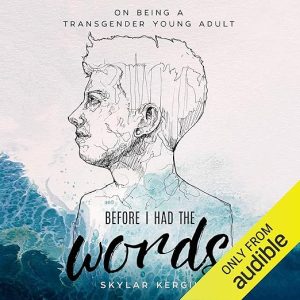
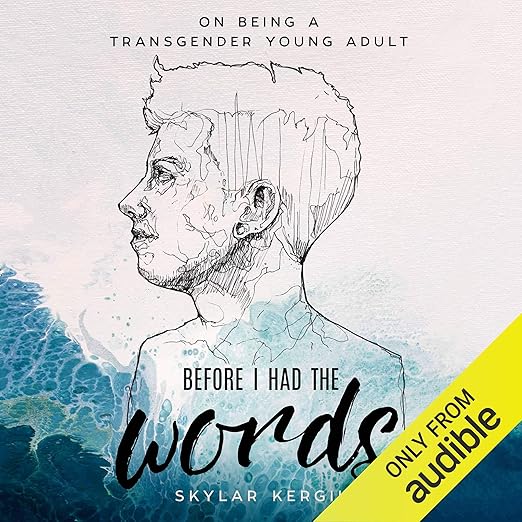
Skylar Kergil self-narrating Before I Had the Words is not an incidental casting choice. It is the book's central formal decision, and this audiobook earns it fully. Kergil built his following on YouTube by documenting his physical transition from female to male beginning at 17, attracting thousands of viewers who needed exactly that kind of visible, honest testimony about an experience most of them had no framework for. The memoir covers what the videos could not: the years before the camera turned on, the childhood confusions, the adolescent dislocation before the vocabulary arrived for what he was experiencing. His narration carries the same quality that made his YouTube presence matter so much to so many people: he does not perform emotion; he tells the truth in a voice that makes the truth feel accessible rather than exposed.
The book's structure mirrors its subject with real intentionality. The early sections are fragmentary and impressionistic, matching the pre-linguistic quality of experiences Kergil did not yet have words for. The prose becomes more direct and fluent as the narrative moves into the years of active transition and YouTube documentation, and this evolution in the writing itself is one of the memoir's quieter formal achievements. Kergil is doing something more deliberate than many first-time memoirists manage: the form of the book reflects the content rather than imposing retrospective clarity that would falsify the experience being described. The language available at the time of the experience is allowed to remain available, and the language that came later is allowed to arrive when it did.
Journal entries embedded throughout the memoir are a particular structural strength. They capture thought in real time rather than through reconstruction, and Kergil is honest about how different those raw entries sound from the adult voice reflecting on them. The family interviews add another dimension, giving listeners perspectives beyond Kergil's own and revealing the process of family acceptance as a complex and ongoing experience rather than a single moment of sudden understanding. A reviewer who had met Kergil and his mother in person writes that the book contains "so much more" than the YouTube videos could ever carry. That is the memoir's case for existing, stated simply and accurately.
What Works
The audiobook format is specifically well-suited to Before I Had the Words because Kergil's voice is one of his primary tools as a communicator. Listeners who have followed him on YouTube will immediately recognize the tone, the pacing, the comfort with both honesty and humor. Listeners who come to the book without any prior knowledge of his work will understand quickly why that platform worked for him. He is funny, specific, and genuinely at ease with vulnerability in a way that rarely sounds forced or calculated. A reviewer describes him as "open, honest, an activist, inspiring and down to earth at once," and all four of those qualities come through distinctly in the narration across the full 7 hours and 7 minutes.
The section on choosing a new name and learning to shave without eyebrow mishaps is a brief but carefully used example of how Kergil balances humor with genuine weight. These are not comic relief moments inserted to break the heavier sections. They are accurate representations of how large experiences and small embarrassments genuinely coexist during significant life change. His handling of the surgeries and recovery is similarly calibrated: direct about the medical reality, honest about the emotional complexity, and free of the kind of editorial framing that would be reductive in either direction.
For listeners who are themselves trans and navigating experiences similar to those Kergil documents, this audiobook offers something rarer than it should be: testimony that does not idealize the experience or sanitize the harder parts, and that does so in the narrator's own voice without an intermediary. That direct quality is what the format contributes that print cannot replicate with the same effect.
Before You Commit to Before I Had the Words
The memoir begins in early childhood and follows Kergil through high school and into college. Listeners looking for a comprehensive account of his adult life or his subsequent advocacy work should know that the book closes more or less at the threshold of young adulthood. The YouTube documentation that brought him to public attention is present throughout as context and parallel record rather than as the book's primary subject. The story here is the formation of the person who later became capable of making those videos and reaching the audience who needed them.
The book is classified in teen and young adult categories but functions equally well for adult readers. The experiences documented are not exclusively adolescent concerns. Coming-of-age confusion, the search for language to describe interior experience, the long and non-linear negotiation for family acceptance: these are not states that resolve cleanly at eighteen and remain resolved. Adult readers who did not have access to this kind of visibility when they were young, or who are reading to understand a family member's experience more fully, will find the memoir as immediately relevant as younger readers do. The teen classification reflects the developmental period the book covers rather than the age of its intended audience.
Who It's For
Skylar Kergil's YouTube audience will find this audiobook the essential companion to the videos, giving depth and history to the voice they already know and have followed. Trans readers at any age who are looking for memoir that documents the pre-linguistic confusion of identity without imposing a falsifying retrospective clarity will find this book among the more honest treatments available. Parents and family members trying to understand a trans child's or sibling's experience will find the family interview sections especially valuable for providing perspectives beyond Kergil's own narration. Listeners who prioritize memoir with strong authorial voice and a combination of humor and genuine vulnerability should seek out this audiobook format specifically, since those qualities are substantially amplified by Kergil's narration in ways the print version cannot match.
Common Questions
How does Skylar Kergil's self-narration change this audiobook compared to reading the print memoir?
Substantially and in ways that matter for this particular subject. Kergil built his public presence through direct-to-camera YouTube videos, and that same quality of honest, warm directness carries into the narration. Reviewers who encountered both the print and audio versions consistently describe the audio as the preferred format for this memoir specifically. The voice adds a layer of intimacy that cannot be replicated in print for material this personal.
Is this audiobook primarily for trans readers, or does it speak to a broader audience?
Both. Before I Had the Words documents a specific trans masculine experience with precision and honesty, making it directly valuable for trans readers. The themes of coming-of-age confusion, identity before language, and the long process of family acceptance reach across a much wider audience. Parents, siblings, and friends of trans people consistently report finding the memoir illuminating about experiences they had been trying to understand from the outside.
Does this audiobook require familiarity with Skylar Kergil's YouTube work to follow?
No. The memoir builds its own context from early childhood through early adulthood, introducing Kergil and his experience to readers with no prior knowledge of his online presence. Familiarity with the YouTube videos adds a layer of recognition and deepens appreciation of certain moments in the narration, but the audiobook is completely self-contained for first-time encounters with his story.
How does the audiobook handle the journal entries and family interviews that structure the memoir?
Kergil reads the journal entries in his own voice, creating an interesting layering of retrospective adult narration over real-time documentation from years earlier. The family interviews are integrated into the narrative rather than set apart as discrete sections. The effect is of a memoir that acknowledges the limits of a single perspective while remaining anchored in the author's own voice throughout, which suits both the subject matter and the audio format well.