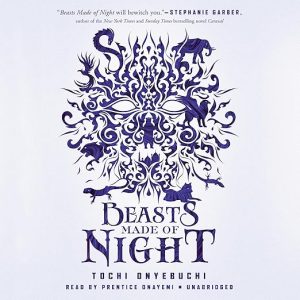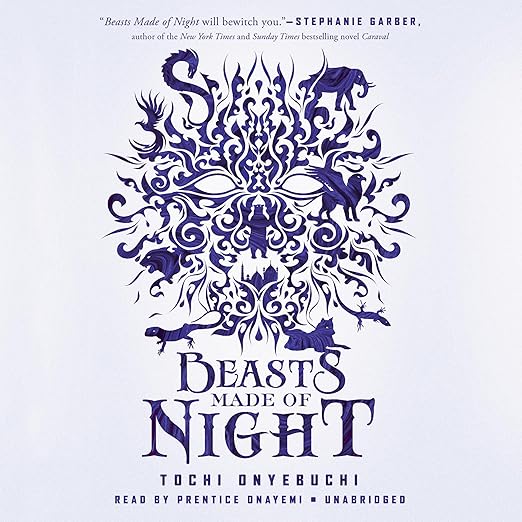
I started Beasts Made of Night on a rainy afternoon with low expectations, which is my own fault for not paying closer attention to the critical blurbs when they first appeared. The NPR designation as the beginning of a great saga and the starred reviews from VOYA and Kirkus were sitting right there, and I still treated it as a low-stakes listen. Within two chapters the city of Kos had established itself as one of the more original settings I had encountered in YA fantasy in recent years, and I stopped multitasking.
The premise is genuinely unusual. In the walled city of Kos, corrupt mages can summon sin from a sinner in physical form, producing sin-beasts, creatures spawned from guilt. Aki, young sin-eaters, are contracted to kill these beasts. Every beast they kill leaves a tattoo on their skin and a fragment of the sinner's guilt in their mind. Most aki go mad. Taj, the most talented among them, is cocky and desperate and trying to provide for his family. When he eats a sin from the royal family, he becomes central to a conspiracy that could destroy Kos entirely.
How Beasts Made of Night Holds Up
What separates this novel from generic YA fantasy is the specificity and internal logic of its world. The sin-eating premise is not decoration. It is a fully developed system with class implications, political stakes, and psychological costs that Onyebuchi explores rather than simply asserts. The aki are an indentured underclass. Their labor is essential to the mages and the wealthy who want to remain ritually pure, and the economic structure that arrangement produces is rendered with a clarity that makes Kos feel historically plausible rather than fantastically arbitrary.
Prentice Onayemi's narration is particularly strong in the street sequences where Taj moves through the lower city. The rhythms of spoken dialogue in these sections carry a cultural cadence that the written text describes but audio can actually deliver. For a debut novel drawing on Nigerian influences rather than the English and Scandinavian traditions that dominate the genre, that authenticity of voice matters considerably.
The Best Parts of Beasts Made of Night
The audiobook case for this novel rests significantly on Onayemi's performance and the world's auditory texture. Kos is a city of noise and crowd and ritualized ceremony, and those qualities come alive in a way that print cannot fully render. The sin-beast combat sequences, which could read as abstract in print, have kinetic clarity when narrated at pace. Reviewers who called the book a page-turner are responding to a quality of forward momentum that Onayemi preserves and amplifies rather than slowing down for interpretive coloring.
The duology structure also benefits from the audiobook format. Knowing going in that this is the first half of a two-book story, rather than a standalone with a cliffhanger problem, allows the listener to engage with the world-building investment without frustration at the incomplete resolution. The ending is genuinely a cliff, but the world that drops you off it is fully constructed and worth inhabiting.
Before You Commit to Beasts Made of Night
One reviewer noted that the world is detailed yet much remains unexplained, and that the math-and-magic mechanics of sin-beast conjuring are asserted rather than demonstrated. That observation is fair. Onyebuchi builds through atmosphere and social logic more than through systematic magic-system exposition, and readers who want every rule articulated will find some ambiguity. The trade-off is a world that feels organic rather than engineered, which is a different but legitimate choice.
Taj's decision-making at certain points also drew criticism from one reviewer as not fully coherent. This is less a plot hole than a consequence of a protagonist who is fundamentally reactive, operating in a conspiracy he does not understand and cannot fully map. Whether that reads as authentic teenage improvisation or as narrative convenience will depend on your tolerance for protagonists who are caught up in events rather than driving them.
The Right Listener for Beasts Made of Night
YA fantasy readers who are fatigued by European-influenced world-building and want something that draws from different traditions will find this exactly what they need. Fans of Nnedi Okorafor's work, which the blurbs explicitly invoke, will find a similar aesthetic commitment to African-influenced mythology made fully fantastical. Readers who need systematic magic explanations and fully resolved first-installment plots should know what they are entering. At nine hours with Onayemi's committed narration, this is a strong listen for the right audience.
A Few Questions About Beasts Made of Night
Does Prentice Onayemi's narration reflect the Nigerian-influenced setting authentically?
Yes, and this is one of the audiobook's specific strengths. Onayemi's vocal choices in the dialogue and environmental sections carry cultural texture that the text describes but a less specifically cast narrator might have flattened.
Is Beasts Made of Night appropriate for younger YA readers, or is the darkness more suitable for older teens and adults?
The content is dark but not graphic in the way that adult fantasy often is. The violence is present and consequential, and the class themes are serious, but the narrative register is appropriate for older middle grade through adult. The starred Kirkus and VOYA reviews indicate it fits squarely within the YA space.
How significant is the cliffhanger ending, and is the sequel Crown of Thunder available in audiobook format?
The cliffhanger is real and leaves major plot threads unresolved. The sequel Crown of Thunder does exist and completes the duology. Availability in audiobook format should be confirmed through your preferred platform.