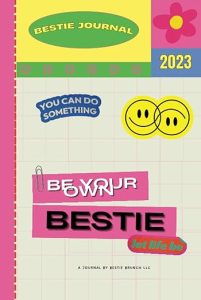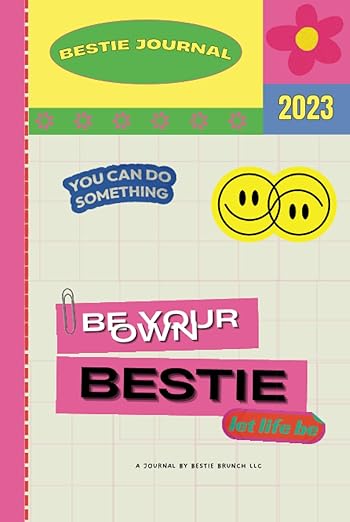
Be Your Own Bestie by Misha Brown sits at an interesting intersection in the audiobook world. The source material is described as an interactive journal: "over 100 fun filled pages" of gratitude prompts, habit trackers, self-assessment questions, and colorful entry pages, all framed around what Brown calls "the ultimate millennial diary" with a Y2K aesthetic sensibility. At 7 hours in audio, and with Brown herself narrating, the audiobook becomes something different from its print counterpart: less a guided writing experience and more a direct conversation with its creator about the ideas and intentions behind the journal's design.
Brown's self-narration is the audiobook's defining quality. She has a clear, energetic presence that makes the material feel personal rather than prescriptive, and the millennial voice she brings, that specific combination of irony, sincerity, and generational self-awareness, suits the content exactly. The Y2K aesthetic that Brown describes is not merely decorative: it represents a genuine attempt to recapture the pre-social-media emotional landscape of the late 1990s and early 2000s for an audience that grew up in that era and is now navigating adult life under very different conditions. In audio, that context comes through in Brown's delivery rather than in visual design choices.
Self-Friendship Explained From Inside the Community
The audiobook works best in its more reflective passages, where Brown speaks directly about what each section of the journal is designed to unlock and why those prompts matter to her personally. These moments reveal a coherent philosophy about self-friendship, the idea that the relationship you have with yourself is the foundation for every other relationship in your life, that gives the material more substance than a typical guided journal. The gratitude practice sections, the habit tracking framework, and the self-assessment questions all point back to this central argument, and Brown articulates it with the kind of directness that comes from someone who developed these tools for herself before packaging them for others.
Listeners in the LGBTQ+ community, the genre classification for which this audiobook is listed, will find a voice that speaks from inside rather than about their experience. Brown's framing of self-discovery and self-acceptance is not a framework borrowed from mainstream self-help; it reflects the specific challenges of belonging to communities that have historically had to construct self-esteem against external pressure rather than in alignment with social defaults. That specificity is valuable, and it comes through most clearly in the audiobook format where Brown's own voice delivers it without mediation or softening.
Brown's Intentions Matter More Than the Prompts
The case for this audiobook over the print journal depends on what you want from the material. If you want to complete the interactive exercises, the habit trackers, the gratitude entries, the self-assessment questions designed for written responses, the print journal is the right format. The audio version cannot reproduce those activities, and Brown's narration of prompts designed for written responses functions more as orientation than as practice. What the audiobook does uniquely well is give you Brown's intentions, her reasoning, and her personal relationship to each section of the material.
Listeners who want to understand the philosophy before committing to the journal practice, or who want to use the audio as a motivational companion alongside the print edition, will find this 7-hour format genuinely useful. The running time also suggests that Brown does not simply read the journal's prompts but expands on them: 7 hours of material rooted in a journal format points to substantial contextual content that goes considerably beyond what appears on the printed page.
Seven Hours Skip the Journal's Colorful Pages
Two aspects of the listening experience are worth noting for practical planning. First, the visual elements that are central to the print journal's design, the colorful pages, the structured layout of habit trackers, the aesthetic sensibility that Brown describes as Y2K-inspired, are absent from the audio. Some of what makes the journal visually engaging and practically usable as an interactive tool does not translate to audio. Listeners who want the full experience should consider the journal alongside the audiobook rather than instead of it.
Second, the content covers territory that some listeners in the self-help space will find familiar: gratitude practice, habit formation, self-assessment. Brown's treatment is specific to her community and perspective in ways that make it feel fresh rather than generic. The differentiating factor is the voice: Brown speaks from a position of personal history with this material, and that specificity is what elevates the content above the standard format of the guided journal genre and makes the audiobook version worth 7 hours of a listener's attention.
Fans of Brown's Voice Get the Most
Millennial listeners looking for a self-development audiobook that speaks from their cultural moment rather than at it will find Brown's approach refreshing. Members of the LGBTQ+ community wanting a guide to self-friendship developed from inside their experience will find the perspective genuinely resonant. Those interested in the philosophy behind Brown's journal practice, the reasoning for each type of prompt and what it is designed to activate, will get value from the audiobook even if they are also engaging with the print edition. Listeners expecting a conventional self-help audiobook with prescriptive steps and evidence-based frameworks may find the format more personal and conversational than they anticipate. The audiobook works best for listeners already drawn to Brown's voice and creative world, and who want direct access to the thinking behind the page design. Those approaching the self-friendship concept for the first time will find Brown's self-narrated delivery a genuinely inviting entry point into the material.
In Brief
- Voice: Misha Brown self-narrates, bringing an authentic personal energy to material she clearly created from direct experience: the millennial Y2K voice is genuine, not performed.
- Big ideas: Self-discovery, gratitude and habit formation, millennial identity and self-acceptance
- Atmosphere: Upbeat and intimate, with the warmth of a guided conversation rather than a lecture
- Worth it?: An engaging self-narrated audiobook that works best when Brown's voice and perspective carry the content, though listeners should note the original source is a journal format with visual components.
Before You Listen
Does the Be Your Own Bestie audiobook include the interactive exercises from the print journal, such as the habit trackers and gratitude pages?
The audiobook narrated by Misha Brown covers the content and philosophy of the journal, but the interactive components: habit trackers, colorful entry pages, self-assessment questions designed for written responses: cannot be replicated in audio format. Listeners wanting the full interactive experience should consider the print journal alongside the audiobook.
Why is the Be Your Own Bestie audiobook 7 hours if the source is a journal?
Brown's self-narration expands on the journal's prompts and framework with contextual material, personal reflection, and explanation of her intentions for each section. The 7-hour runtime suggests substantial spoken content beyond what appears in the written journal pages, making the audiobook a distinct companion to rather than simply a reading of the print edition.
Is this audiobook specifically for LGBTQ+ listeners, or is the content broadly applicable?
The audiobook is listed under LGBTQ+ genre and Brown's perspective is grounded in her experience in that community, particularly around themes of self-acceptance and constructing self-esteem outside social defaults. That said, the core themes of self-friendship, gratitude practice, and habit formation have relevance beyond any specific identity, and many listeners outside the LGBTQ+ community will find the material applicable.
Does Misha Brown's self-narration make this audiobook feel more personal than a professionally narrated self-help title?
Yes, and meaningfully so. Brown's delivery carries the energy of someone who developed this material from personal experience, and the Y2K millennial voice she brings to the narration is specific rather than generic. Listeners who prefer the intimacy of a creator-narrated work over a polished professional performance will find this format satisfying.