How many bedtime stories does a six-year-old actually keep? Not many, which is why the ones that stick matter so much, and why a seventy-three minute audiobook containing ten complete tales is a more interesting object than its runtime suggests. Ciel Publishing has built this collection around Alex, an axolotl living in the waters of Lake Xochimilco, and each story runs roughly seven minutes: one bedtime, one tale, one idea to talk about afterwards. That arithmetic is the whole design, and it explains a good deal about who this works for and who it will not.
Lessons That Arrive Without Moralizing
The lessons are declared upfront, which is either reassuring or alarming depending on your view of children's fiction. Across ten stories, Alex meets worry about fitting in, failure, sharing, and standing firm in a storm, and the collection openly sets out to teach empathy that inspires action, confidence in what makes a child different, courage in uncertain moments, the pleasure of generosity, the patience to let things grow, and the idea that real heroism usually happens quietly and unwitnessed. Written down like that it reads as a curriculum. The question is whether it plays like one.
According to the parent best placed to judge, it does not. Lee Athony reports that “The last three weeks my 6-year-old daughter has been insisting on these Alex the Axolotl stories each night”, and identifies why: “the life lessons are the result of the adventures and not imposed or moralizing.” That distinction is the entire craft problem of the didactic children's story, and a five-star review from a parent three weeks into nightly repetition is about as good a piece of evidence as this format produces.
The other two reviews agree from different angles. Mindy M. Mather calls it “a gem of a story collection that feels both magical and deeply relatable” and confirms the ten-tale structure. Tsubaki notes that the stories are “short, fun” and mentions real axolotl material woven in alongside the lessons about kindness, curiosity and perseverance, though that review breaks off mid-word before saying more. Three hundred and nineteen ratings sit behind an average of 4.7, so the enthusiasm is not confined to a handful of voices.
Marcus Gabriel's Restraint Over Energy
Seven-minute stories are the correct unit for this age group and audio serves them unusually well. A child of six can hold one complete narrative in their head from start to finish without an adult marking a stopping point, which means no negotiation about one more chapter and no cliffhanger to argue over. Ten of them fills a two weeks of bedtimes with nothing repeated, or fills a car journey twice over. The self-contained shape also means a distracted or half-asleep listener never loses the thread, because nothing carries across beyond the seven minutes in front of them.
Alex is a good vehicle for the age range too. An axolotl is an odd, appealing, faintly alien creature, and building a book of lessons about difference around one is a sharper choice than another rabbit or bear would have been. The collection frames one of its central ideas as a child grasping that their own oddness is the source of their worth, and the animal is doing quiet argumentative work there before a word of plot has happened. Lake Xochimilco gives the setting a real place name rather than a generic pond, which is a small thing that pays off in curiosity.
Marcus Gabriel is the credited reader, and what this collection asks for is specific and slightly unusual. A collection of ten discrete stories needs a reader who lets each one land as a complete unit rather than running them together into an hour of continuous voice, and bedtime material needs delivery that settles a listener rather than winding them up. Those two requirements pull against the instinct to perform hard for children. The reviews here discuss a six-year-old, a set of drawings and a bedtime habit, and never once the reading itself, which leaves the performance untested in public. What the material asks for is restraint rather than energy, and that is the whole of what I can say.
The Warmest Review Praises Missing Drawings
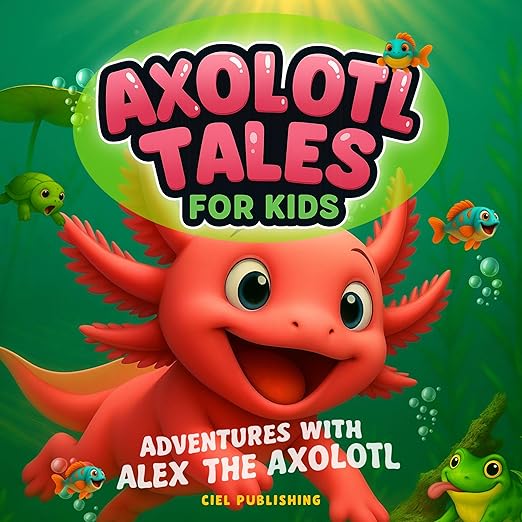
The sharpest loss in the audio edition was flagged, unintentionally, by the review that praises the book most warmly. Lee Athony writes that “The color drawings are bold and stimulating and they instantly get her attention.” Those drawings do not exist here. For a six-year-old, illustration is not decoration but a second channel of the story, and a family choosing audio for a child at the younger end of this range should know they are dropping the channel that reviewer credits with capturing attention in the first place. Older listeners at eight or nine will feel the absence far less.
Be honest with yourself about the lesson content as well. The publisher's description leans hard on research framing, citing developmental journals from 2019 and 2021 in support of emotional naming and moral reasoning through story. Those citations are about how children's stories work in general, not about this collection, and treating them as evidence for these ten tales would be a mistake. The reason to trust the book is Lee Athony's daughter, not a journal reference in the marketing copy.
One practical note on the series. This sits within a run of Axolotl books rather than standing alone in a catalog sense, but nothing in the collection's description requires earlier volumes: ten self-contained stories about a character introduced in the first paragraph is a structure that assumes nothing. If your child already knows Alex, this is more of what they like. If not, starting here costs nothing.
More Graceful in Practice Than on Paper
Families with children between roughly six and ten are the obvious target, and within that band the collection serves two quite different uses. As a shared bedtime listen it gives a parent a seven-minute story and a ready-made conversation, since every tale ends on something worth asking a question about. As an independent listen for a confident seven or eight-year-old, it offers stories short enough to finish alone and gentle enough to leave unsupervised. Teachers and childcare workers hunting for a discussion starter about kindness or courage will find ten of them here.
It is the wrong choice for a child who wants adventure without a point, since every story is going somewhere and the destination is a value. It is also a poor substitute for the illustrated edition if your child sits at the younger end and reads with their eyes as much as their ears. And parents who find explicit moral instruction in fiction uncomfortable should note that the lessons are stated as objectives in the description, even if the stories themselves are more graceful about it than that list suggests.