I finished the first Claimings book, Claimings, Tails, and Other Alien Artifacts, on a plane back from a conference, somewhere over the Atlantic, and found myself in the slightly embarrassing position of being visibly affected by a science fiction romance on a full flight. Lyn Gala had done something I did not entirely expect: built a genuinely alien psychology in Ondry that felt internally consistent rather than anthropomorphized, and then used that consistency to make the relationship between Ondry and Liam read as real in a way that most alien romance fiction does not manage. By the time I started Assimilation, Love, and Other Human Oddities, I had calibrated expectations and a specific hope that Gala would not soften what made the first book work.
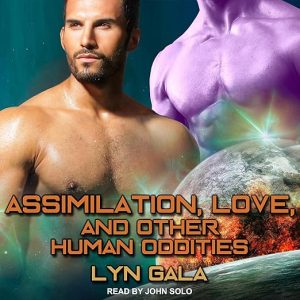
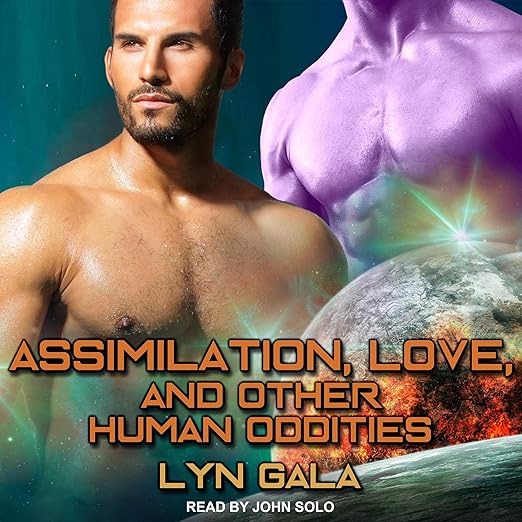
She does not. Assimilation is the second book in the Claimings series, narrated by John Solo for Tantor Media. It runs just under eight hours and takes Ondry and Liam further into the social and political complexity of Rownt-human relations, complicated by new human arrivals at the trading post whose presence threatens the equilibrium the pair has built. The synopsis describes Ondry's particular challenge precisely: he cannot understand human psychology in general, only Liam specifically, but his fundamental nature as a Rownt, peaceful, but predatory when family is threatened, is the variable the new arrivals are going to discover the hard way.
The Review
Gala's most important decision, which Assimilation preserves from the first book, is to locate conflict externally rather than manufacturing it between Ondry and Liam. A reviewer who found this choice defining articulated it precisely: external conflict with which characters must deal is so much more interesting, real, and satisfying than manufactured conflict between characters in an attempt to create tension. The relationship between Liam and Ondry is not in crisis in Assimilation. What is in crisis is the environment around them, and watching these two characters navigate a threat from their different positions, Liam's human social intelligence, Ondry's Rownt predatory assessment of danger, creates more genuine tension than a misunderstanding or jealousy plot ever could.
The world-building deepens here in ways that reward listeners who engaged seriously with the first book. Gala extends the Rownt cultural logic, their economic system, their social hierarchy, their understanding of what family means and what its defense requires, into territory that illuminates both the alien and the human by contrast. A reviewer described the character development as sublime and the world-building as reaching a depth uncommon in the genre. That depth is not ornamentation. It is the load-bearing structure of everything the plot does, and the Rownt economic and social detail that might initially seem like background texture turns out to be directly relevant to how the external conflict resolves.
The Best Parts of Assimilation, Love, and Other Human Oddities
Narrating Ondry requires a specific restraint. Ondry is not emotionally opaque, but his emotional expression follows Rownt logic rather than human convention. A narrator who plays him too warmly flattens what makes him interesting; one who plays him too coldly removes the genuine affection that drives the relationship. Solo finds the right register. His Ondry is patient, analytical, and visibly devoted to Liam in ways that operate through the logic of his own culture rather than human romance conventions. The contrast between Ondry's measured internal reasoning and Liam's more emotionally legible perspective gives Solo genuine range to work with, and he uses it effectively.
A reviewer from the United Kingdom described the book as written with great care and a delicate hand, shaking the reader's world view just a little. That quality, the sense that the book is using its alien protagonist to make the reader re-examine human social behavior, is what lifts Assimilation beyond the genre classification. It is using science fiction's oldest tool, the outside observer, to interrogate what we take for granted about how people relate to each other. The Rownt perspective on human conflict, human politics, and human concepts of loyalty is not merely exotic color. It is the book's argument about what those things actually cost.
The Caveats
Some alien romance fiction uses the non-human partner primarily as a vehicle for wish-fulfillment, the alien who finds the human protagonist uniquely worthy, uniquely beautiful, uniquely everything. Gala's construction of the Rownt is more demanding than that. Ondry's devotion to Liam is genuine and total, but it operates according to Rownt values that Liam has had to learn rather than values that simply happen to mirror human romantic ideals. When Ondry assesses the new human arrivals as threats and calculates what response is appropriate, he is thinking as a Rownt predator whose family is at risk, not as a romantic hero protecting his love interest. The distinction makes the character coherent in a way that most alien romance protagonists are not, and it is what sustains the series across two books and presumably beyond.
Who Should Pick Up Assimilation, Love, and Other Human Oddities
New readers should absolutely start with Claimings, Tails, and Other Alien Artifacts. The emotional investment in Ondry and Liam's relationship is built in that first book, and Assimilation rewards that investment rather than re-establishing it. Readers who enjoy alien romance, MM science fiction, or D/s-adjacent dynamics that prioritize psychological depth over explicit content will find this series among the better current examples of each. Listeners seeking action-forward science fiction without the emotional and cultural focus will find Gala's priorities different from what they are looking for. Currently available as a free audiobook on Audible, both books in the series are accessible without additional cost, a reasonable entry point for a series that demands you begin at the beginning.
Before You Listen
How explicit is the content in Assimilation, Love, and Other Human Oddities?
The book contains mature themes as noted in the synopsis, but multiple reviewers describe the focus as primarily emotional and world-building rather than explicit. The D/s dynamic is present but not the central driver of the narrative, political intrigue and alien culture take up considerably more of the runtime.
Is Assimilation, Love, and Other Human Oddities a free audiobook on Audible?
Yes, it is currently listed at $0.00, making it a free audiobook for Audible members. Given the series structure, this is an ideal time to access both books without additional cost.
Does John Solo's narration differentiate clearly between Liam's and Ondry's perspectives?
Yes. Solo maintains a clear vocal distinction between the human and Rownt perspectives, with Ondry's voice carrying the measured, analytical quality appropriate to his character. Listeners who found dual-perspective narration muddy in other audiobooks should find this edition cleaner than average.