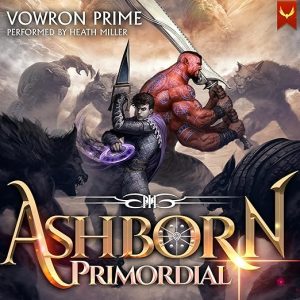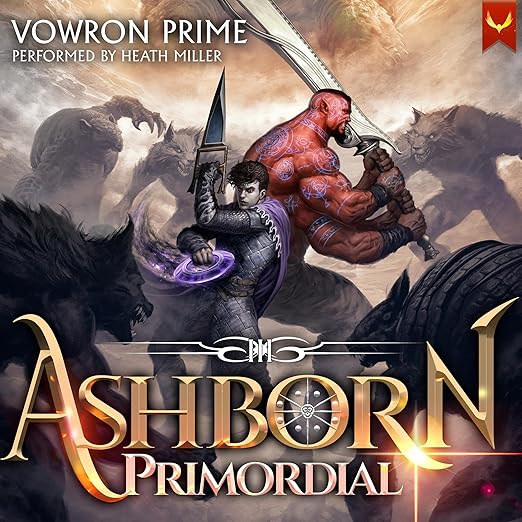
Quick Take
- Read by: Heath Miller is a reliable presence across this kind of progression fantasy, consistent energy, clear differentiation between characters, good pacing through the action sequences.
- At its heart: Power progression without plot armor, survival in a lethal environment, uncovering hidden history
- Vibe: Relentless and kinetic, the Ashen Realm is genuinely dangerous and Miller's narration keeps the urgency alive
- Short version: A strong third installment that rewards series readers, the Ashen Realm arc delivers on escalating stakes while Vir's refusal to become overpowered keeps the tension real.
I started listening to Ashborn Primordial 3 on a rainy afternoon with the specific intention of getting maybe two hours in and assessing. I ended up going much further than that. Vowron Prime has a particular skill that is rarer in progression fantasy than it should be: the ability to write a protagonist who is genuinely in danger and stays that way. By the third book in most series of this type, the main character has accumulated enough power and allies to make every conflict feel like a formality. Vir, entering the Ashen Realm, is still not safe. That matters enormously.
The Ashen Realm itself is a credible threat. The synopsis describes it as a place where most consider it suicide to set foot, city-devouring monsters, prana so concentrated it poisons the air, no escape once you are inside. Vir has entered it anyway, looking to reach the Demon Realm beyond, and the novel commits to the consequences of that decision. Every day in the Ashen Realm is a test, and Heath Miller's narration gives the landscape its proper weight, there is no casual energy when the characters move through it.
What We Made of It
Reviewer Duncan Shoemaker identified the training arc issue clearly: the early portion of the book, roughly the first 40 percent, is another preparation sequence, similar in structure to the arc in book one. This is a fair observation, and it is the most substantial structural criticism of this installment. If training sequences in cultivation and progression fantasy are a friction point for you, the pacing of this book's opening will test your patience. Once the Ashen Realm arc begins in earnest, however, the novel accelerates sharply. The back half earns what the front half sets up.
The dual perspective structure, Vir's journey and what appears to be a parallel or historical storyline, generated mixed reactions among readers. Shoemaker found the perspective shifts "kind of annoying," while reviewer bjr praised them for finally revealing "what happened in the past." This split is predictable: dual timelines in progression fantasy serve readers who are invested in the world's history, and feel like interruptions to readers who want to stay with the protagonist. The reveals in book three are substantive enough that the investment is justified, but the structural choice requires some tolerance for interruption.
The Best Parts of Ashborn Primordial 3
The central quality that distinguishes this series from genre peers is the honesty about Vir's limitations. Reviewer VS-PA put it precisely: the plot armor "isn't too impenetrable, and leaves enough weakness for the reader to be intrigued." By book three, Vir is significantly stronger than he was in the second installment, but he still cannot defeat his own retainer. That calibration is deliberate and it creates a different kind of reading experience than the genre usually offers. The danger feels real because Vir's ceiling is visible.
Heath Miller's narration deserves specific mention for how he handles the action sequences in the Ashen Realm. The choreography of cultivation battles, which can become confusing on the page when power levels and techniques multiply, is rendered cleanly in audio. Miller does not rush through the combat, which is the correct instinct: the fights in this series are tactical as much as physical, and the strategic dimension gets lost if the narration blurs the sequence of moves. Reviewer Anthony Osborne, drawing on a military background, praised the "strategic depth" and "camaraderie under overwhelming odds," noting the book excelled in areas he particularly values. That kind of genre-literate appreciation suggests the series is doing the difficult work of making its power systems feel coherent.
What Might Not Land
This is a third installment, and it expects series knowledge. The Ashen Realm, Vir's relationships with his companions, the political dynamics hinted at throughout, none of this is explained from scratch. New listeners who start here will likely find the early chapters opaque. This is not a book to begin your journey with; read or listen to books one and two first.
The promise of six total books, noted by one reviewer, also frames how to read this installment: it is a middle chapter, not a culminating one. The secrets revealed in book three are significant but not final. If you need resolution at the end of each volume, the open threads here may be frustrating.
The Right Listener for Ashborn Primordial 3
Readers who have already invested in the series and are looking for confirmation that it continues to deliver will not be disappointed. The Ashen Realm is the most dangerous environment Vir has faced yet, and the narrative takes that seriously. Listeners new to the series should start at book one. Those who are tired of invincible progression fantasy protagonists will find Vir's calibrated limitations genuinely refreshing.
Before You Listen
Can I start Ashborn Primordial with book 3, or do I need to listen to the earlier installments first?
You should start from book one. The third installment assumes familiarity with Vir's history, his companions, the power system, and the political context established in books one and two. Starting here will be disorienting.
Is the training arc at the beginning of book 3 as long as the one in book 1?
Reviewer feedback suggests it occupies roughly the first 40 percent of the book, similar in proportion to book one. It is the main pacing complaint from series readers. The Ashen Realm content that follows is widely considered worth the setup.
Does Heath Miller's narration handle the multiple perspective shifts well?
Yes, Miller differentiates the perspectives clearly enough that listeners can track whose point of view they are in without confusion. Whether the structural decision to include dual perspectives serves the story is a more subjective call, but the narration itself manages the transitions smoothly.