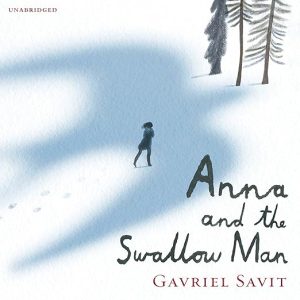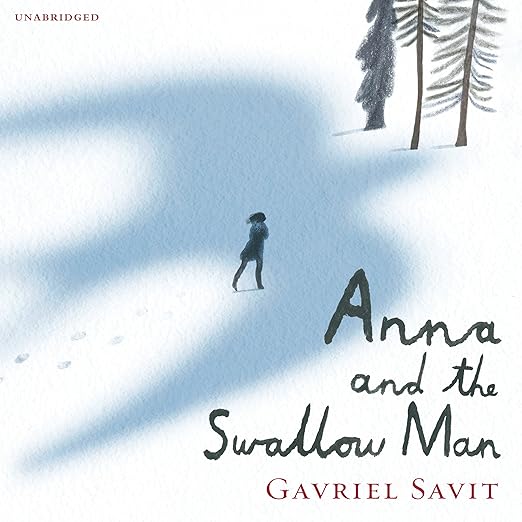
I came to Anna and the Swallow Man on a quiet Tuesday evening, after a run of thrillers that had left me craving something that asked more of me as a listener. A colleague had flagged it months ago with the single annotation: not like other WWII books. She was right, though that description undersells how deliberately this novel resists familiar shapes.
Gavriel Savit published this as his debut, and it announces a writer with a genuinely unusual imagination. The setup is simple on its surface: seven-year-old Anna is left alone in Krakow in 1939 when the Germans take her polyglot professor father. She falls in with the Swallow Man, a tall, mysterious figure who speaks dozens of languages and moves through occupied Europe as if belonging to none of it. What follows is not exactly a plot. It is something closer to a sustained meditation on language, identity, and the way children construct meaning out of chaos.
One of the things reviewers keep circling back to is the book's relationship to language, and rightly so. Anna's father taught her that every language is a different road. The Swallow Man takes this further: he switches tongues the way other people change clothes, becoming a different version of himself for German soldiers, Polish farmers, Russian patrols. For Anna, watching this is both wonder and education. She learns to read situations the way the Swallow Man reads his interlocutors, and the novel traces how that education shapes her at a cellular level.
Allan Corduner's narration is well-suited to this material. He does not rush. He has a natural capacity for weight and strangeness, and the Swallow Man's character, which reviewers rightly describe as odd and possibly creepy, benefits from a voice that keeps you slightly off-balance. There are moments where Corduner finds a kind of incantatory rhythm in Savit's sentences that I found genuinely moving. The bird language, when it appears, lands as the eerie, fanciful thing it is rather than becoming whimsical.
Why Anna and the Swallow Man Works as an Audiobook
Multiple reviewers flag the same quality: the book resists resolution. Who is the Swallow Man, really? What does he want with Anna? These questions are never cleanly answered, and Savit is doing that on purpose. One reviewer called it McLuhanesque, the medium is the message, and while that framing is a bit academically tidy, the instinct behind it is correct. The novel enacts in form what it argues in content: meaning is unstable, identity is performed, and certainty is a luxury wartime refuses.
This is both the book's strength and the source of its occasional frustration. A three-star reviewer noted it as a missed opportunity for something beautiful. I understand that reaction, even if I do not quite share it. The novel is genuinely unusual and the beauty in Savit's prose is real, but readers expecting emotional catharsis or plot resolution will feel the story slipping through their hands. The ending, in particular, does not close so much as it opens onto further uncertainty. That is a legitimate artistic choice. It is also a choice that will not satisfy everyone.
Weak Spots in Anna and the Swallow Man
What Savit does with Anna's development is quietly remarkable. She is seven at the start and observes everything with the frank precision of a child who has not yet learned to perform understanding she does not have. The Swallow Man teaches her his survival codes. She adapts. By the time they acquire their third companion, Reb Hirschl, the dynamic becomes a strange triangle of competing loyalties, and Anna's choices within it reveal how much the roads of wartime have already changed her.
The Krakow 1939 setting is not rendered with the documentary detail of historical fiction that prides itself on research density. Savit uses the war as atmosphere rather than texture, which may also disappoint readers looking for the sensory specificity of occupied Poland. What you get instead is symbolic compression: the soldiers are barking dogs, the forest is a kind of freedom and a kind of prison, the swallow is pure attention and care and something possibly wilder underneath.
The Right Listener for Anna and the Swallow Man
If you find WWII fiction through the lens of literary fable appealing, if you have been moved by books that traffic in symbol and ambiguity rather than linear drama, this is exactly the kind of audiobook that rewards careful listening. It pairs well with works like The Painted Bird or The Book Thief in its willingness to be strange about terrible events, though Savit's register is quieter and more interior than either of those.
If you need emotional resolution, if not knowing the true character of a central figure over the entire running time will frustrate rather than intrigue you, this one may leave you cold. One reviewer summarized it as sad, interesting, and lacking plot or ending, and that summary is accurate even if the judgment about whether those qualities constitute a flaw depends entirely on what you want from fiction.
At six and a half hours, this is not a long listen. It is a dense one. I found myself pausing between chapters rather than pressing straight through, which is not a complaint. Some books are worth sitting with. Corduner's steady narration makes those pauses feel earned rather than imposed.
Before You Press Play
- Narration: Allan Corduner brings an aged, measured gravity to Savit's prose, his voice carrying the strangeness of the Swallow Man with real authority.
- Themes: Language as survival, innocence in wartime, the ambiguity of protection
- Mood: Haunting and lyrical, unsettling in the best way
- Verdict: Readers who want a WWII story that operates on symbol and atmosphere rather than plot mechanics will find this one absorbing and strange.
Good to Know
Is the Swallow Man's true identity ever revealed?
Not definitively. Savit keeps the character deliberately ambiguous throughout, and multiple reviewers note that clues to his identity exist but are easy to miss. The uncertainty is an intentional part of the novel's design rather than an oversight.
Is this audiobook appropriate for younger teen listeners, given its YA categorization?
It is shelved as teen and young adult, and younger readers who enjoy literary and atmospheric fiction will find it accessible. There is no graphic violence, though the presence and weight of war is constant. It is more emotionally mature than it is content-challenging.
How does Allan Corduner handle the multiple languages in the text?
Corduner navigates the switches between Polish, German, Russian, and Yiddish with confidence. He does not turn the language-switching into theatrical performance but rather maintains a steady gravity that makes the Swallow Man's multilingual shapeshifting feel genuinely uncanny rather than showy.