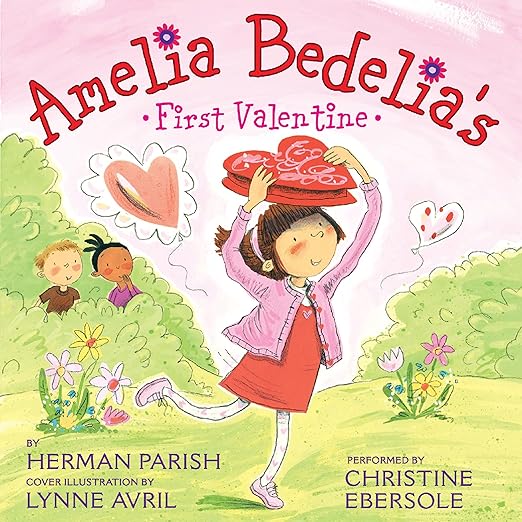
Leaving a stack of handmade valentines behind on the school bus is the small catastrophe at the center of Amelia Bedelia's First Valentine. Would young, literal-minded Amelia turn that panic into full classroom chaos, or has this prequel version of her found a gentler way through it? At nine minutes, Herman Parish's audiobook barely has time to answer the question, but it does, warmly, and that brevity is worth understanding clearly before you press play.
Ebersole's Comic Timing Rescues a Forgotten Valentine
This is the second entry in the Young Amelia Bedelia picture book series, the prequel line exploring the literal-minded housekeeper's childhood, and it leans into the specific anxiety of a kid who realizes, on the school bus, that she's forgotten the valentines she made for her whole class. Reviewer Dana described the resolution plainly: Amelia's mother had given her a spare deck of cards tucked away, and Amelia gets to remake her valentines at school rather than showing up empty-handed, a small, kid-scaled crisis with a kid-scaled fix.
Christine Ebersole narrates with the warm, expressive quality this format needs; a nine-minute picture book lives or dies on whether the narrator can make a very simple story feel eventful, and reviewer Monica Caillet's account of her granddaughter laughing out loud at "Amelia Bedelia's antics" suggests the comic timing lands even at this scale.
Why This Prequel Skips the Literal-Joke Formula
The original Amelia Bedelia series, created by Peggy Parish and continued by her nephew Herman Parish, built its reputation on a simple, durable joke: Amelia takes every instruction completely literally. This prequel line necessarily works differently, since a very young Amelia hasn't yet developed her signature literal-mindedness into a running gag machine, so the humor here leans softer and more situational than the classic misunderstanding format longtime fans expect.
The illustrations that accompany the print picture book obviously don't translate to audio, and Amelia Bedelia's visual comedy, her literal-minded facial reactions especially, has always been part of the character's appeal on the page. Ebersole's vocal performance has to carry that comic weight entirely through tone and timing rather than sharing the load with artwork.
35 Million Copies Stand Behind This Prequel
The Amelia Bedelia franchise has sold more than 35 million copies since 1963, and this prequel series exists specifically to give very young listeners, kids not quite ready for the original literal-joke chapter books, a way into the character earlier. That franchise durability matters here: this isn't a one-off tie-in but part of a long-running, carefully maintained line, and the production quality and Ebersole's casting reflect that ongoing investment rather than a rushed licensing product.
Forgetting Something Becomes a Quiet Lesson
For a book this short, the emotional beat still does real work: a kid forgetting something for a school event is a genuinely common, low-stakes-but-not-nothing anxiety, and Amelia Bedelia's specific brand of resourcefulness gives young listeners a model for fixing a mistake rather than spiraling over it. That's a modest ambition, but the book meets it cleanly.
That's a deliberate shift worth understanding going in: parents expecting the exact literal-joke formula from the original series will find this prequel entry gentler and more emotionally focused, built around a relatable classroom mishap rather than a wordplay misunderstanding. The emotional stakes, forgetting something for people you care about, translate more directly to a preschool audience than a pun ever could at this age.
Herman Parish has kept the character's core gentleness intact across decades of new installments, and this entry's emotional throughline, the fear of disappointing your friends followed by a small act of maternal support, fitting neatly into the classic children's picture book tradition of manageable stakes and reassuring resolutions.
The book also models a specific, gentle kind of problem-solving for its young audience: rather than panicking or hiding her mistake, Amelia works with what she has on hand to fix things before anyone else even notices something went wrong. That quiet competence, more than any punchline, is probably the most durable takeaway for a preschooler hearing this story on repeat.
Nine Minutes Leaves No Room for Subplots
The obvious thing to flag is the runtime itself: nine minutes is essentially one picture book read aloud, not a chapter book or anything with narrative complexity, and parents expecting more substance from an audiobook purchase should recalibrate expectations accordingly. This is built for a single bedtime listen or a car ride to preschool, not a long-form engagement.
It's also, per reviewer Diane Hoffman, pitched squarely at classroom Valentine's Day exchanges specifically, which narrows its year-round replay value compared to Amelia Bedelia titles built around more evergreen mix-ups. Families looking for a Valentine's-specific listen will find exactly what they want; anyone hoping for general literal-joke Amelia Bedelia content should look toward the original series instead.
The short runtime leaves essentially no room for subplot or supporting-character development; the classroom setting, Amelia's friends, and the valentine exchange itself are all sketched in broad, functional strokes rather than explored in any depth. That's appropriate for the intended age range and format, but it does mean this works better as a mood-setting seasonal listen than as a book with much to analyze or discuss afterward.
Parents should also know this is a single self-contained story rather than an anthology or a longer audio collection bundling multiple Amelia Bedelia tales together, so anyone hoping for a longer combined listen should look specifically for a bind-up edition instead.
Gift-giving is also a natural use case here; reviewer Dana specifically bought it as a Valentine's present for a four-year-old, and the combination of low cost, short runtime, and holiday specificity makes it an easy add-on alongside a physical card or small gift rather than a standalone purchase requiring much deliberation. Ebersole also differentiates Amelia's classmates enough to keep the brief classroom scenes legible by ear, a small but real technical achievement given how little time the format allows for establishing each character before moving on.
Gentle Audiobook Introduction for New Listeners
This is a lovely, low-stakes pick for preschool and early-elementary kids around Valentine's Day, especially as an introduction to Amelia Bedelia before graduating to the original chapter books. Grandparents and caregivers looking for a short shared-listening moment, the kind Monica Caillet described enjoying with her granddaughter, will get real warmth out of nine minutes here.
Teachers and school librarians building a small Valentine's Day listening rotation for young classes will find this a reliable, short addition, and its brevity makes it easy to fit into a single story-time slot without cutting the ending short. Parents introducing a child to audiobooks for the first time could also do worse than starting with something this short and low-stakes before committing to longer chapter book listens.
Older kids who've outgrown picture books entirely won't get much mileage out of nine minutes built for the preschool set.
Before You Listen
How long is the Amelia Bedelia's First Valentine audiobook?
About nine minutes, essentially a single picture book read aloud, so plan for a short listen rather than an extended chapter book experience.
Is this audiobook part of the original Amelia Bedelia series?
It's part of the Young Amelia Bedelia prequel line exploring her childhood, the second entry specifically, rather than the original literal-joke chapter books most adults remember.
Is the Amelia Bedelia's First Valentine audiobook only appropriate around the holiday itself?
Its classroom valentine-exchange plot is fairly specific to the holiday, so it has less year-round replay value than Amelia Bedelia titles built around more general mix-ups.
What age range is this audiobook best suited for?
Preschool through early elementary, based on both its nine-minute length and its gentle, low-stakes classroom conflict.