The Short Version
- Narrator: Vikas Adam leads a multi-narrator ensemble that reviewers consistently call top tier, a genuine highlight of the production.
- Subjects: Diverse identity and power, forbidden love and broken promises, monsters reconsidered and worlds reclaimed
- Tone: Vibrant, emotionally varied, and occasionally haunting
- Bottom line: Fifteen award-winning authors make this anthology earn its We Need Diverse Books mandate, though the format means quality varies and some stories will land harder than others across eleven hours.
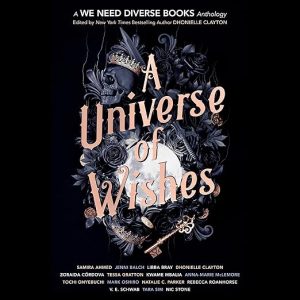
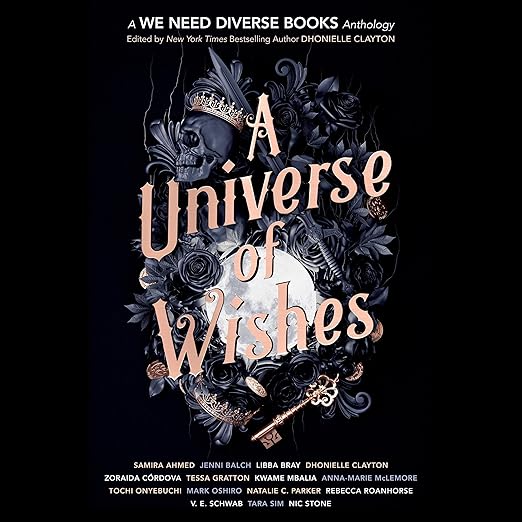
A Universe of Wishes arrives with an unusual set of credentials for a YA anthology audiobook. Curated under the banner of We Need Diverse Books and edited by Dhonielle Clayton, who co-wrote Blackout, this production gathers fifteen award-winning and bestselling authors into a single fantasy collection built on the proposition that adventure, romance, and mythological invention belong to everyone. Reviewers consistently praise the narrator ensemble as top tier, making this one of the more persuasive arguments for choosing the audiobook version of a multi-author anthology over the print edition. Over eleven hours and one minute, the collection covers a wide tonal range from light romance to politically urgent fantasy, and the production handles those transitions with real care.
The contributor list is genuinely impressive by any reasonable measure. V.E. Schwab, Rebecca Roanhorse, Libba Bray, Kwame Mbalia, Anna-Marie McLemore, Tochi Onyebuchi, these are authors who regularly appear at the upper end of YA and adult fantasy conversations, and their inclusion here is substantive rather than honorary. The editorial hand Dhonielle Clayton brings keeps the collection thematically coherent despite the breadth of individual styles and subjects. The wish for a braver and more beautiful universe threads through stories that otherwise cover very different tonal and emotional territory, and the curatorial intelligence behind that threading is evident in the sequencing of stories across the eleven hours.
Vikas Adam anchors the narration, and the broader narrator ensemble receives consistent and specific praise from listeners. One reviewer described returning to certain stories specifically for their calming narration quality, which says something meaningful about the quality of voice performances sustaining them. Anthologies on audio can be genuinely difficult to execute, because tonal shifts between stories are more dramatically amplified in the listening experience than in print. This production navigates those shifts with care, and the casting choices across the fifteen stories reflect serious thought about which voice serves which material.
The individual stories range across the fantasy terrain the collection promises: a princess with no need for a prince, spells that dissolve memory, ballgowns concealing dangerous secrets, monsters reconsidered from inside their own experience. The tonal variation between pieces is wide enough that listeners will find some stories indispensable and others merely competent. That is the nature of the anthology format rather than a criticism of this collection specifically. Over eleven hours, the variation actually keeps the experience from becoming monotonous in ways that a more tonally consistent collection might not.
Why It Works in Audio
The argument for choosing audio over print for this collection is stronger than usual. With fifteen contributors and a narrator ensemble that reviewers call excellent, the audiobook adds a performative layer that the print edition cannot offer. Some stories benefit specifically from being heard: the rhythm of the prose, the emotional texture of the dialogue, the pacing of a reveal. A well-cast narrator can carry a structurally weaker story further than the words alone would go, and the reverse holds equally: the strongest stories feel genuinely elevated by a narrator who understands what the material is doing.
The We Need Diverse Books mandate is not marketing language here in any superficial sense. The stories actively center characters and perspectives that mainstream fantasy has historically sidelined, and several of the most celebrated entries, particularly those by McLemore and Roanhorse, demonstrate what the genre can achieve when it operates from a different set of cultural premises. For educators looking for LGBTQIA+-affirming texts with strong fantasy frameworks, one reviewer specifically noted the audiobook's classroom utility, which reflects the seriousness of the collection's representational ambitions rather than mere category positioning.
Things to Know Before Starting A Universe of Wishes
No anthology of fifteen stories by fifteen different authors achieves uniform excellence. Every honest review of this collection acknowledges that some pieces land harder than others, and eleven hours means you will spend real time with stories that do not fully work as well as with the ones that do. That is the nature of the format rather than a flaw unique to this collection, but listeners coming in expecting a uniformly consistent experience should adjust their expectations accordingly before they start.
The anthology was published in December 2020, and several contributors have since moved significantly in their careers. The reputational weight of names like Schwab and Roanhorse has only grown, which means returning to their contributions here can feel like an encounter with an earlier, slightly different version of a familiar voice. That is not a negative in any straightforward sense, an author's earlier work often reveals things their later work has transcended, but it is a useful frame for listeners who know these writers primarily through more recent publications.
Who Will Get the Most From It
YA fantasy readers who already follow several of the contributors will find this a satisfying way to encounter the full list in a single extended session. Listeners who came to Dhonielle Clayton through Blackout and want to understand her editorial sensibility will get a clear picture from this collection's curation. The audiobook suits listeners in their mid-teens and above; the content addresses mature themes including abuse, loss, and violence, but with the care appropriate to the YA category rather than as exploitation. Listeners who are new to We Need Diverse Books as an organization will also find this anthology a useful introduction to the kinds of voices and perspectives the organization has championed since its founding. Skip it if you require a single sustained narrative and cannot tolerate the format's inherent variation in quality and tone across fifteen consecutive stories.