Quick Take
- Read by: Luna Rey is the single voice across nearly twenty-three hours the publisher flags for mature listeners.
- At its heart: why-choose dark romance, prophecy and ritual sacrifice, captivity and possessive love interests, fae courts
- Vibe: Heated and heavy, slow to the point of stalling
- Short version: For committed Moon Song readers only, and even they should expect a long middle volume that moves very little.
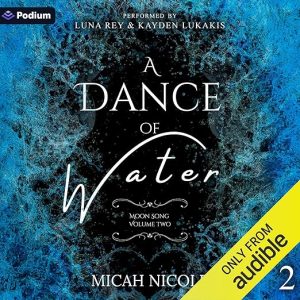
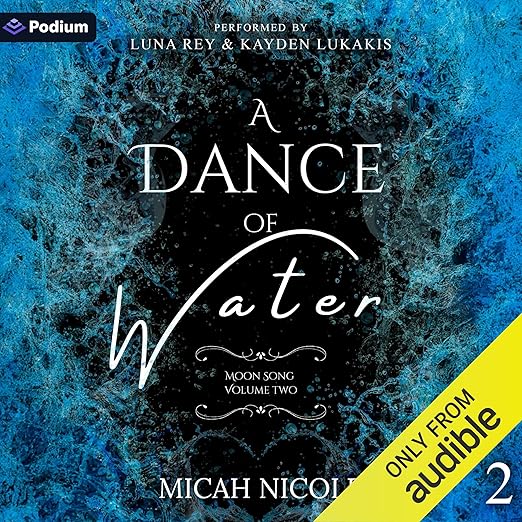
Book two of the Moon Song series runs twenty-two hours and fifty-three minutes, and that number is the first thing to know about this audiobook. Luella Eritrais comes out of her awakening remade as a Luna fae with more raw magic than anyone before her and no idea how to use it, the castle of Serpentis prepares for the Winter Solstice, and the ruler and his dragon intend to claim her as the sacrifice the tradition requires. Luna Rey reads it. The publisher labels the whole thing new adult, why-choose, dark fantasy romance, for mature listeners, and every one of those words is doing real work.
First, the Big Picture
Tension between Luella and the men around her is what the one enthusiastic response came for, and it says so happily: the world kept expanding, the length was a bonus and not a burden, questions carried over from the first book got answered in ways it found genuinely intriguing, and the softer bond in the middle of all that possessiveness read as sweet. That is the experience this book is designed to produce. If the description's promise of a bargain struck with a mage, a prophecy to fulfill and a bond that tightens with every touch sounds like your evening, you are the reader the author had in mind.
Solstice preparations organize the plot into three movements, and the description helpfully labels them: the selection of the Chosen, the storming of the castle by the Umbra as the Tenebrae approaches, and a journey to mountain temples where the gods demand payment. It is a clear structure with a ritual deadline built into it, which is exactly what a middle volume needs. The trouble, and the written column is loud about this, is how much runtime sits between those three posts, and how much of it consists of the same emotional argument restated.
Why Listen to A Dance of Water
Serpentis is a genuinely furnished world, and the vocabulary alone tells you how much invention is in play: Luna fae, Vincire bonds, a Prima mage, the Umbra, the Tenebrae. Readers who liked the first book come back for that apparatus, and the complaints on this page are all aimed at what happens inside that world, never at the world itself. Dark fantasy romance lives or dies on whether the setting can carry the weight of what the characters do to each other, and this one has the architecture for it, whatever you conclude about how it gets used.
Twenty-two hours and fifty-three minutes is an enormous amount of story for a single reader to hold, and the demands are unusual. The book runs on explicit scenes framed as ritual obligation, on a heroine bound to several men at once, and on a prophecy that keeps changing the terms, which means the performance has to sustain intimacy and menace in the same breath for the better part of a full day of listening. Series listeners will also arrive with the first book's voices in their heads.
Explicit content is not incidental here, and I would rather be direct about it than coy. The description sells pleasure as currency, sacrifice and captivity as romance, and a captor and enemy as a love interest, all under a mature-listener label. Handled well, that is a legitimate and popular subgenre with a large readership who know precisely what they are buying. Handled badly it curdles, and the written responses on this record are split on which of those happened.
A Few Reservations
Consent is where the sharpest objection lands. One three-star response says it loved the worldbuilding, states plainly that it enjoys obsessed and possessive men in fiction, and then draws a line at these two, who it says treated the heroine like an object instead of a person. That distinction is the useful one for anybody shopping this shelf. The complaint is not that the book is dark; it is that the darkness lands on a character the narrative never lets be a person, and that response is no longer sure it will continue with the series.
Filler is the other charge, and it comes with detail. A two-star response calls this one giant filler book, reports little to no character development across the whole runtime, and describes an ending that arrives at random, as though the author had run out of material rather than reached a stopping point. It also accuses the heroine of complaining for the duration while the men alternate between droning and issuing instructions. For a middle volume of a series, that is the most damaging thing a reader can say.
Averages on this page deserve a hard look before you commit. The badge reads 4.1 across 153 grades, which sounds solid. Four of the five people who actually wrote something graded it at three stars or below, and their five grades together average 2.6. Nothing improper is going on, since a hundred and fifty silent votes can easily outweigh five written ones, but the gap is wide enough to matter: the people who took the time to explain themselves were mostly unhappy, and three of them describe the same problem, a book in which very little happens.
Should You Listen to A Dance of Water?
Dark romantasy readers who are already invested in Moon Song are the audience, and one two-star response makes the case despite itself, admitting it wanted to skip large stretches and found the book boring, then saying it still intends to finish the series because the storyline has so much potential. That is the honest position for a middle volume. If book one worked for you and you want more of that world, the runtime is the tax you pay to stay current before the next installment.
Avoid this one if you are new to the series, since it assumes you know the bonds and the politics already, and avoid it if possessive heroes, captivity framing or ritual sacrifice as romance sit badly with you. The strongest warning on the page comes from a single-star response claiming that reading the last two chapters would leave you as informed as finishing the whole thing. That is an exaggeration written in frustration. It is also the kind of exaggeration that only gets written about a very long book.
Common Questions
Can you start this audiobook without reading the first Moon Song book?
Not comfortably. The story opens in the aftermath of an awakening that happened previously, and the bonds, the prophecy and the court politics all arrive pre-loaded. The description numbers this as the second Moon Song volume and makes no attempt at all to catch a newcomer up.
How explicit is the content?
Very. The publisher applies a mature-listener label of its own accord, and the description treats pleasure as a bargaining chip in nearly every section. Expect frequent explicit scenes, several partners at once and coercive dynamics presented as romance. This one is not for shared speakers.
Is almost twenty-three hours of audiobook worth it for a middle volume?
Only if the series already has you. Runtime is the single most contested thing about this book, and the argument on the page is entirely about whether those hours are generous or padded. Sample a middle chapter, not the opening, because the opening is not where the pacing problem lives.