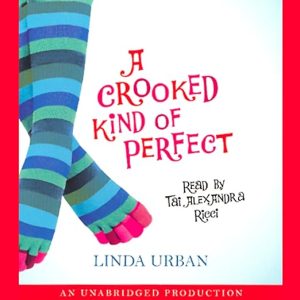
Short, funny and entirely unshowy, this is the rare middle grade audiobook I would hand to a ten-year-old and to an adult without changing the pitch. Linda Urban gives Zoe Elias perfect piano dreams, complete with Carnegie Hall and the applause already playing in her head, and then sends her father to the music store, where he comes home with a wheezy organ. The three hours and seventeen minutes that follow never once condescend to the distance between those two instruments.
A Household Running at a Tilt
Everything in Zoe's life is slightly off its axis, and Urban is careful not to explain any of it. Her mother is constantly at work. Her father is afraid to leave the house, a fact the book states and then simply lives with rather than resolving. A boy named Wheeler Diggs follows her home from school every day for reasons nobody articulates. The organ is only the loudest symptom of a household running at a tilt.
What lifts the book above its premise is that the organ never becomes a metaphor to be cashed in. Zoe learns organ arrangements of old television theme songs instead of Beethoven, enters the annual Perform-O-Rama competition, and the story declines to convert that into a lesson about lowered expectations. Leeann's five-star notice calls it "a fast and easy read" and says the main character was easy to relate to, which undersells the craft but gets the experience exactly right. Urban writes the whole thing in short bursts that read like a ten-year-old thinking, and the restraint required to sustain that across a whole book without a single adult aside is easy to miss precisely because it works.
Chapter Titles Reward Listening Over Reading
Chapter titles are the reason this book is worth hearing rather than reading, which is not a sentence I expected to write. One five-star reader, posting as firesprings, warns future readers not to skip them "because they definitely tell a story" of their own, running alongside the main one. In print that device asks a child to notice something typographic. Read aloud, the titles arrive automatically, in sequence, spoken by the same voice as the chapter, which is arguably where the joke was always meant to land.
Tai Alexandra Ricci's Comic Timing Carries the Jokes
Pacing and timing get equal billing in that same account, which also calls Zoe "the perfect blend of witty and snarky, but never mean." Timing is the operative word for an audio edition of this particular book. The comedy runs on beats and pauses rather than on wordplay, and a recording either finds those beats or flattens them into ordinary narration, which makes Tai Alexandra Ricci's reading the single production variable that matters most. A child will forgive a lot in a story and almost nothing in a joke that lands half a second late.
Three hours and seventeen minutes is short enough to be a single long afternoon or two bedtimes, and the chapters are famously brief. That combination is unusually well suited to a reluctant listener, since the natural stopping points arrive every few minutes rather than every half hour, and none of them lands in the middle of a scene. Parents of a child who has been defeated by longer books will find the arithmetic here friendlier than almost anything else on the shelf.
Nobody among the five written accounts discusses the recording. All five describe reading the book on paper, several of them for school, which means the performance you are buying is genuinely unreviewed and the 4.5 score attached to 261 ratings is measuring a novel rather than a reading of it. That gap is worth stating plainly, because a parent comparing editions has no evidence at all about the one being sold here.
The TV-Theme Organ Jokes May Need Explaining
Institutional reading shapes this pool in a way worth noticing. Allison's five-star note explains that a daughter read it for a school Battle of the Books event, and CS arrived because "this book was on a children's book list for our school." Titles that reach children through assigned reading collect ratings from adults pleased that the assignment went well, which is a different measurement from a child choosing the book unprompted and finishing it anyway. Both are real signals. They are not the same signal.
Age guidance on this listing is unreliable in a specific and fixable way. The school-list note attempts a grade level and the sentence breaks apart mid-thought, leaving the recommendation unreadable, and the page itself carries no age band, no reading level and no series information at all. Parents shopping for a particular child are working from the synopsis and nothing else, and the description only tells you that Zoe is ten. For a title that reaches most of its audience through school lists, that omission does more damage than it would on a book families find by browsing.
Dating from 2007, the recording carries one period problem worth flagging. Much of the comedy leans on organ versions of television themes from decades ago, a joke that lands differently for anyone who never encountered the originals, and that group now includes most of the intended audience. The gap spoils nothing, since the humor of a grand ambition reduced to a wheezy instrument survives without the references. A child may simply need an adult nearby to explain why a particular tune is funny.
One Story Reads Differently for Kids and Parents
Children who are already taking lessons on anything will recognize themselves immediately. KandP mom's four-star notice describes a nine-year-old daughter, almost a year into piano lessons, who came away more passionate about playing than before, and that is the cleanest use case this book has: it is genuinely encouraging about practice without pretending practice is fun. The competition arrives with real nerves attached and no guarantee of triumph, which is a rarer message in this corner of middle grade than it should be.
Families listening together get two books running at once, which is the strongest reason to choose this over a solo read. A parent hears a marriage under strain and a man who cannot make himself leave the house. A ten-year-old hears a dad who is around a lot and a mom who is not. Both readings are correct, neither requires the other to be spoken aloud, and the book never forces the adult version into the open, which is a considerable act of restraint for a story this short.
A child who needs plot velocity will not find it here, because the stakes stay resolutely domestic and the competition arrives late in a book that is already short. Expect no musical showcase either, because the performances are described rather than dramatized, and the organ, mercifully, never actually plays.