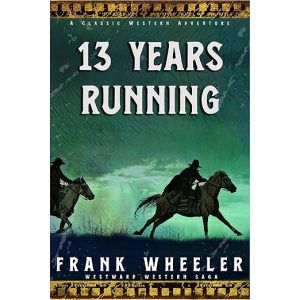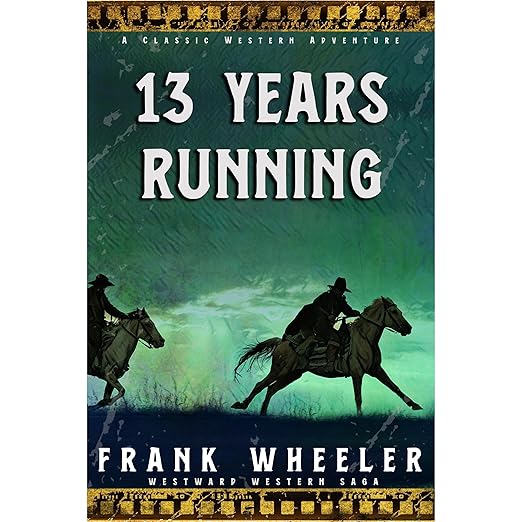
Frank Wheeler's frontier dentist has been running for thirteen years, and the arithmetic of that flight is the first thing the audiobook makes you feel. Thomas Farrow reported a colonel for selling rifles to the Comanche and then killing them for profit. The accusation was buried, the colonel was promoted, and Thomas lost his commission and then his footing. When the man threatened his infant daughter, he loaded a wagon and vanished into towns that did not ask questions, pulling teeth for a decade to stay fed and unfound. Fort Brazos was supposed to be two weeks of easy work.
How 13 Years Running Holds Up
What arrives instead is General Mark Tate, the same man under a higher rank, and peace talks that end with thirty-two unarmed Comanche dead in the dirt while Tate is decorated as a hero. Thomas and his daughter Ava watch it happen. So does Rain Crow, the chief's daughter and the only warrior to walk away alive. From there the novel becomes a pursuit: sixty miles of Comancheria between three witnesses and a territorial governor, with bounty hunters, soldiers, and hostile riders all closing the same gap.
Jim H. put a finger on what sets this apart from the standard range novel in a March 2026 entry, calling it closer to western Indian history than to the usual family fighting land barons. That reading holds. Wheeler builds the plot on an institutional crime rather than a property dispute, and the villain's power comes from rank, paperwork, and the promotion that followed a buried report, not from a payroll of hired guns waiting outside a saloon.
Rain Crow carries the moral weight. She knows the country Thomas and Ava have to cross, and guiding them means putting testimony ahead of the revenge she is owed by every reasonable measure. Wheeler refuses to settle that quickly, and the pull between the two available endings, a governor's desk or a rifle at close range, keeps the middle stretch from collapsing into pure chase mechanics. Her choice is the book's actual subject.
Why 13 Years Running Works as an Audiobook
joseph halsted describes the plot as an unusual but credible story of greed and high-level skulduggery, and that second noun is the accurate one. The crime at the center is not a stagecoach robbery. Selling rifles into a conflict and then billing the government for the corpses is a procurement fraud with bodies attached, which gives the pursuit a legal endpoint rather than a shootout, and gives the audio a genuine question to carry across nine hours.
Terrain does a lot of the work in the second half. Wheeler treats the sixty miles as an active adversary, with water, sightlines, and open ground dictating what the three of them can attempt on any given day. That kind of tactical specificity plays well in audio, where a listener holds a map in their head rather than on a page, and where each decision about a crossing or a ridge carries forward without needing to be re-read.
Romance, which the publisher copy does promise, is present and modest. What develops between Thomas and Rain Crow is built on shared risk and grudging professional respect long before it is anything else, and Wheeler keeps that sequence honest. Readers arriving for a courtship plot should calibrate; the emotional center of the book is a father, a daughter, and a witness who has more reason than either of them to let the whole thing burn.
Weak Spots in 13 Years Running
Virtual Voice is the credited reader here, which is the machine-generated option carrying a large slice of independently published audio. That credit deserves flagging on this book in particular, because a Western built on treaty talk, coded threats, and cross-cultural negotiation lives or dies on how spoken exchange is handled. A synthetic reader gives you the words. It does not give you a translated council meeting, a threat delivered under a smile, or the specific flatness of a man lying to a general.
A single four-star grade in the visible pool, filed on 10 March 2026, carries the only reservation anyone registers: the editing could have been tighter, and the epilogue does not land. Both notes fit a self-published title. The storytelling ambition is clearly there; the finishing is where the budget ran out. The same response is candid about coming to Westerns for escape, which is a fair frame for what the book delivers.
Worth knowing before you commit: the listing reports 4.4 across 231 ratings, while the five visible written responses average 4.8. That is a four-tenths gap between the sample you can read and the population you cannot, so the enthusiastic quotes on the page are running ahead of the crowd. The shelving is muddled too. The genre field says romance, the tag says Westerns, and the copy calls it a classic Western novel with a romance thread.
The Right Listener for 13 Years Running
Listeners who want frontier fiction with a political spine, rather than another dispute over grazing rights, are the natural audience. The book takes the massacre at its center seriously as an event with perpetrators and paperwork, and it gives the surviving Comanche warrior an interior life and a strategic mind instead of a role as local color in someone else's redemption.
Anyone who needs a human reader should treat this one as a print purchase instead. Nine hours of synthetic delivery is a real commitment, and the material is dialogue-heavy in ways that make the limitation more noticeable than it would be in, say, a procedural manual. Series shoppers should also note that the listing names the Westward Western Saga but leaves the volume number blank, so the page itself will not tell you where this falls.
Western readers who have had their fill of range wars will find this one aimed at something harder, and the publisher's standalone framing means the saga can be entered right here without homework.
- Subjects: Institutional crime and buried testimony, vengeance weighed against justice, a witness the state would rather lose
- Tone: Dry, sunlit, and steadily tightening, with the pressure of open country rather than of a ticking clock
- Bottom line: A Western with a procurement fraud at its heart and a genuinely realized Comanche lead, delivered by a synthetic reader that flattens its best scenes.
Questions Listeners Ask
Does the audiobook work as a standalone or do I need the earlier Westward Western Saga books?
It stands alone. The publisher copy states that every novel in the saga is self-contained and can be taken in any order, and nothing in this plot depends on earlier volumes. The listing does complicate matters by naming the saga while leaving the volume number field empty.
How much of the story is romance and how much is pursuit?
Pursuit dominates. The attraction between Thomas and Rain Crow develops slowly and stays subordinate to the flight across Comancheria and the question of whether the massacre will ever be testified to. Readers who came for the courtship should expect a thread rather than the spine of the book.
Is Rain Crow a real character or a guide for the white protagonist?
She is the character with the hardest decision in the book. She survived the killing of thirty-two of her people, she knows the ground, and helping the witnesses reach a governor means surrendering the revenge she is owed. That choice, not Thomas's, is what the plot actually turns on.
What does the Virtual Voice credit mean for this particular audiobook?
It means the reading is machine-generated rather than performed. For a plot driven by negotiation, threat, and cross-cultural dialogue, that is a real cost: the words arrive intact but the tonal information underneath them does not. Listeners sensitive to synthetic delivery should sample before committing to nine hours.