Quick Take
- Narration: Penelope Ann Rose delivers a polished performance that handles both the tender and intense scenes with control, well-cast for the emotional register Olivia Riley requires.
- Themes: Alien gladiatorial captivity, redemption through trust, enemies-to-lovers with earned slow burn
- Mood: Tense and romantic, with gladiatorial action framing a character study
- Verdict: The Vrisha Warriors series reaches a character complexity high point with Xeda, who turns out to be far more redeemable than the previous books suggested.
I tend to approach alien romance audiobooks with a certain wariness, not because the genre lacks ambition but because the redemption arc for a genuinely monstrous protagonist is difficult to execute without either rushing the emotional shift or making the reader complicit in something that does not hold up. Olivia Riley apparently earns that reputation for pulling off difficult redemptions, because reviewer JML, who wanted to throttle Xeda in the previous installment and was happy when he was defeated, reports that she trusted the author again and was completely right to do so.
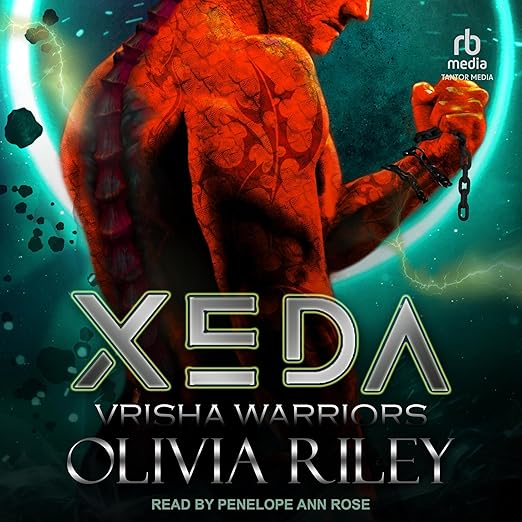
Xeda is the fourth book in the Vrisha Warriors series, following earlier installments in the series. The premise places Xeda, a former lethal warrior of the Blood Guard, as a captive in a gladiatorial system controlled by a powerful elite who want to weaponize him for their games. Ophilia is the human woman who watches him through the bars of his cell and becomes the one person he cannot terrorize. The setup is familiar to the genre, but Riley’s execution of the specific character dynamics is what distinguishes this installment.
Our Take on Xeda
What Riley does well is resist insta-love while still building genuine heat. Reviewer Kittensis notes that both characters were hesitant in the early relationship stages, comparing it to emotional caution rather than immediate romantic inevitability. Reviewer Reggie, who has followed the full series, emphasizes that there is no instant love connection and that these characters grow to love each other, which is the harder and more satisfying version of the romance arc. Xeda himself is not redeemed by Ophilia’s goodness in the convenient sense. He lets her break past his hate because she demonstrates consistency and courage, and the transformation tracks psychologically rather than just romantically.
The gladiatorial setting gives the book a Hunger Games energy that reviewer Rune H. captures directly, describing it as sexy alien hunger games. That is accurate as a mood descriptor. The games sequences create genuine tension and raise the stakes of the romance in ways that purely domestic settings cannot. The world-building, consistently praised across the series, continues to operate at a level of specificity that makes the alien civilization feel like a place with its own internal logic rather than a romantic backdrop.
Why Listen to Xeda
Penelope Ann Rose handles the dual demands of this recording, the physical danger of the arena and the slow emotional opening of the romance, with a performance that does not overweight either. She does not lean into melodrama during the tense scenes or rush the softer moments. Reviewer Kindle Customer, who has followed every installment, calls this a series where each book tops the previous one, which is a remarkable claim about a multi-book run, and attributes it to Olivia Riley’s character development consistency and world-building depth. The series can apparently be read in any order for individual entries, though Xeda is the one book in the series where you actually have met the main character before, which gives returning readers additional satisfaction.
What to Watch For in Xeda
Reviewer Rune H., who gave five stars, still flags that the intimate scenes, when they arrive, feel rushed relative to the heat built during the slow burn, describing them as fast and somewhat robotic. For readers who invest heavily in the physical resolution of an enemies-to-lovers arc, that pacing issue is worth knowing in advance. The romance intensity is concentrated in the emotional and psychological dimension rather than the physical, which will satisfy some readers more than others. The book contains mature themes per the synopsis, and the gladiatorial violence is depicted with enough specificity to qualify as adult content alongside the romantic material.
Who Should Listen to Xeda
Alien romance readers who have followed the Vrisha Warriors series will find this the most emotionally complex entry and the one that benefits most from series context. New listeners to alien romance looking for a standalone introduction to the subgenre can enter here, though the full arc of Xeda’s character in the series will land differently without having encountered him as an antagonist first. Readers who prefer slow-burn emotional development over accelerated physical romance will be well-served. Those who require explicit, extended intimate content may find the spice level lighter than expected given the intensity of the setup.
Frequently Asked Questions
Do I need to read the previous Vrisha Warriors books before listening to Xeda?
Riley writes each book to function independently for new readers. However, Xeda is the only main character in the series who appeared as an antagonist in an earlier book, which means series readers will have a richer experience of his transformation. New listeners will follow the story without confusion but will miss that additional layer.
How explicit is the romantic content in this audiobook?
The book is categorized as containing mature themes and is written for an adult audience. The heat builds slowly through the emotional arc, and reviewer feedback suggests the physical resolution is less extended than the emotional buildup might lead readers to expect. It is spicy but not at the most explicit end of the alien romance spectrum.
Is the gladiatorial setting central to the plot or more of a background element?
The games are structurally central. The gladiatorial system is how Xeda and Ophilia are thrown into proximity and how the stakes of their growing bond are raised. The action sequences in the arena are woven throughout rather than confined to early setup chapters.
Does Penelope Ann Rose differentiate between Xeda’s perspective and Ophilia’s clearly in the narration?
The performance handles the dual perspective clearly enough that listeners do not lose track of whose interiority they are in. Rose does not use dramatically different voices for each perspective but shifts in emotional register and pacing create sufficient distinction.