Quick Take
- Narration: Lynnette R. Freeman brings a richness to Hazel Scott’s voice that feels period-appropriate without becoming a costume, she captures the woman’s fire without smoothing over her contradictions.
- Themes: Black female artistry under Jim Crow, love and ambition in conflict, the cost of visibility
- Mood: Sweeping and emotionally charged, with a jazz-tinged undercurrent
- Verdict: Readers drawn to richly researched historical fiction about overlooked Black artists will find this one of the more fully realized portraits of the genre.
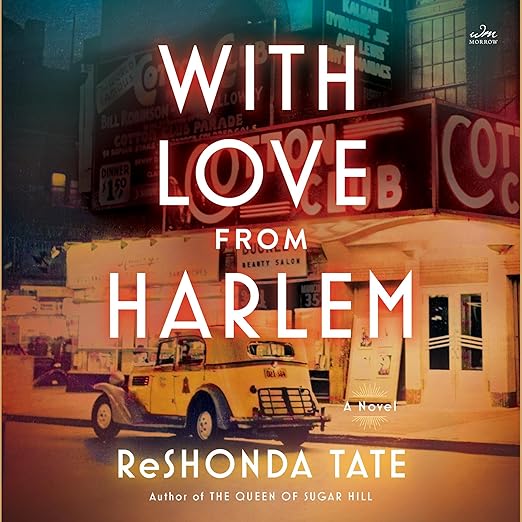
I was halfway through the second chapter when I realized I had put down my coffee and was just listening. ReShonda Tate has a way of placing you inside a scene, the Harlem of 1943, with twenty-three-year-old Hazel Scott at its center, is rendered with enough heat and specificity that you feel the weight of everything she is carrying. Jazz prodigy, film star, civil rights advocate, and soon the focus of a decades-long entanglement with Harlem’s most electrifying preacher-turned-congressman, Adam Clayton Powell Jr. The synopsis makes this sound like a romance. It is, in part. But With Love from Harlem is also a reckoning.
Tate’s novel is inspired by real figures, and she is transparent about where she is working in the space between documented history and imagination. Library Journal noted she "blends fact and fiction with elegance," and that precision is felt in the audiobook. One reviewer described reading passages where you could not tell where the truth ended and the fiction began, and that they took that as the sign of excellent writing.
Our Take on With Love from Harlem
What makes this novel more than a biographical tribute is the way Tate handles the darker architecture of Hazel and Adam’s relationship. Behind the glamour of a marriage that made them the toast of the country is a battlefield of ego, ambition, and sacrifice. Adam Clayton Powell Jr. is charismatic, powerful, and already married when he walks into Hazel’s life. Tate does not sanitize the dynamic. The thrill of their attraction and the costs it extracts from Hazel’s career and autonomy exist on the same page, and the book does not look away from either.
Hazel Scott herself is a revelation for listeners who had never encountered her name before. A jazz and classical pianist of extraordinary range, she was also one of the first Black artists to refuse to perform before segregated audiences, a stance that eventually cost her her television show after she appeared before the House Un-American Activities Committee. Tate honors that complexity without reducing Hazel to either a martyr or a symbol.
Why Listen to With Love from Harlem
The thirteen-hour-and-forty-eight-minute runtime gives the audiobook room to breathe in ways a compressed adaptation could not. The backdrop of twentieth-century Harlem, Billie Holiday, Langston Hughes, James Baldwin moving through the margins and foregrounds of the story, accumulates presence gradually. Lynnette R. Freeman’s narration is a significant part of why this works. She navigates the emotional range from the exhilaration of Hazel’s early career to the grinding personal losses of the later years without becoming melodramatic. Her voice suits the period and the woman.
The supporting cast of historical figures is handled with care. These are not cameos designed to impress; Holiday and Hughes appear when the story needs them, and their presence deepens rather than distracts. Tate’s research is evident but lightly worn.
What to Watch For in With Love from Harlem
At nearly fourteen hours, this is a commitment. The novel’s scope is genuinely sweeping, it covers decades of Hazel’s life, the arc of her marriage, the civil rights movement’s intensification, and the political theater of Adam’s congressional career. Listeners who prefer tighter narratives may find the breadth a challenge. The pacing is expansive rather than propulsive, and some middle sections slow as Tate works through the less dramatically heightened years of the relationship.
The novel is told from a perspective sympathetic to Hazel, which is appropriate given that Tate’s stated purpose is to restore her to public memory. Listeners looking for a more neutral historical treatment of Adam Clayton Powell Jr. should seek out a biography alongside this novel.
Who Should Listen to With Love from Harlem
Readers who enjoy Sadeqa Johnson’s work, or who have been moved by novels that center overlooked Black women’s histories, will find this deeply satisfying. It is also an excellent choice for listeners who came to Tate through The Queen of Sugar Hill and want to see what she does with more ambitious historical scope. Those who need a faster pace or a narrower focus may find the novel asks more patience than they are willing to give, but those who stay will find it worth it.
Frequently Asked Questions
How much of With Love from Harlem is historical fact versus fiction?
Tate draws on documented history for the major events and relationships, then fills in the interior lives and some scenes with imagination. She is transparent about this blending, and the result is that historical and invented elements are woven rather than separated.
Do I need to know who Hazel Scott was before listening?
No, and in fact, many reviewers noted they had never heard of her before this book. Tate provides enough context for the uninitiated while rewarding readers who do know the history.
Is this audiobook primarily a romance or a historical novel?
Both, but the balance tips toward historical fiction. The romantic relationship between Hazel and Adam is central, but the book is equally concerned with Hazel’s artistic career, her civil rights activism, and the larger political and cultural world she moved through.
How does Lynnette R. Freeman’s narration handle the period setting?
Freeman brings appropriate warmth and authority to the material. Her pacing suits the novel’s sweep, and she differentiates the emotional registers of Hazel’s public and private selves without overplaying either.