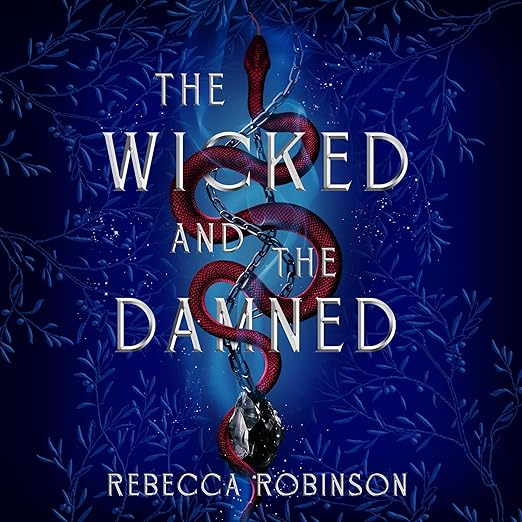
Quick Take
- Narration: Jesse Vilinsky brings controlled intensity to Vaasa’s chapters and handles the shifting power dynamics with audible intelligence, her voice is a strong fit for political intrigue romantasy.
- Themes: Power taken and reclaimed, love tested by distance and political violence, the cost of magic in patriarchal systems
- Mood: Propulsive and politically charged, with romance woven through crisis rather than beside it
- Verdict: A strong second installment that leans into politics over romance, rewarding for readers who want more from the genre than a love story with battles.
I started Wicked and the Damned on a Friday evening with the intention of listening to a couple of hours before dinner. I was still listening at midnight, eating leftovers at my desk with the volume turned up, because Rebecca Robinson had thrown Vaasa into chains in the first chapter and I needed to know how she was going to get out. The book opens with exactly zero scene-setting warmth. There is no recap, no gentle reintroduction. It assumes you remember where The Serpent and the Wolf left you, because it has no interest in waiting.
That confidence is earned. The second entry in Robinson’s Dark Inheritance Trilogy moves with the momentum of a book that knows what it wants to do and isn’t interested in the structural courtesies of the mid-trilogy installment. Vaasa is no longer a ruler, she is a pawn in Ozik’s political machinations, stripped of agency and subjected to annulment proceedings, a forced betrothal, and a magic she cannot control. Reid, across the continent, is done with diplomacy. The dual-POV structure keeps both arcs moving, and Robinson has the discipline to give each perspective genuine interiority rather than using one as mere setup for the other.
Our Take on Wicked and the Damned
What separates this series from much of the romantasy market is Robinson’s evident interest in political systems. The Asteryan court is not simply a backdrop for Vaasa and Reid’s separation, it functions as a working environment with factions, competing loyalties, and a villain in Ozik who has genuine strategic intelligence. One reviewer noted that this book leans more heavily into politics than romance compared to the first entry, and that’s accurate. The sustained distance between Vaasa and Reid means the romance is largely conducted in memory and urgency rather than in direct interaction, which demands more from both characters and from Jesse Vilinsky’s narration.
The magic system continues to develop. Vaasa’s power, which she has struggled to control across both books, becomes a central problem in this installment in a new way, Ozik’s ability to suppress and potentially direct it creates a vulnerability that is both tactical and deeply personal. Robinson uses this to set up the subplot involving Vaasa’s mother’s message and the missing necklace, which gives Vaasa a mission within her captivity that keeps her from becoming simply reactive.
Why Listen to Wicked and the Damned
Jesse Vilinsky is a strong choice for this material. Her performance of Vaasa in the earlier book established a vocal profile for the character that carries over here, there’s a quality of controlled fury in her delivery of Vaasa’s internal monologue, a woman who is still fighting even when all the external indicators suggest defeat. Vilinsky also handles the guest POV chapters with enough distinction that the switches feel clean rather than disorienting.
The pacing is notably faster than book one. Robinson has shed the world-introduction obligations that the first installment carried and is operating in full plot mode. Chapters are tighter, transitions are sharper, and the tension around Vaasa’s forced betrothal and the suitor subplot maintains a sustained level of pressure that prevents the book from sagging in its middle section, which is where many second installments lose their footing.
What to Watch For in Wicked and the Damned
The ghost from Vaasa’s past who appears among the suitors is the book’s most complex secondary character. Robinson uses him to complicate Vaasa’s options without reducing him to a simple plot function, and the history between them carries weight that Vilinsky’s delivery handles with care. How that subplot resolves, and the betrayal it potentially requires, is where the book’s emotional center of gravity sits. A reviewer noted the ending leaves you desperate for book three, and that assessment is fair: Robinson has constructed a cliffhanger that feels organic rather than manufactured.
Listeners who prefer their romantasy evenly balanced between action and romance should be aware that this installment is weighted toward the political and tactical. The emotional core is Reid and Vaasa’s separation and the question of whether love can survive prolonged institutional violence, which is a more interesting premise than most mid-trilogy romances manage, but it’s a different register than swoony romance readers may be expecting.
Who Should Listen to Wicked and the Damned
Book one is essential listening before this, Robinson does not recap. Readers who found the first entry’s politics engaging alongside the romance will feel this installment delivers on that promise. Those primarily in the series for the Vaasa and Reid dynamic should be aware the book keeps them physically separated for most of its runtime, which is a deliberate structural choice that pays off emotionally but requires patience. Jesse Vilinsky’s narration makes that patience easy to maintain.
Frequently Asked Questions
How much of Wicked and the Damned is told from Reid’s perspective versus Vaasa’s?
The book is predominantly Vaasa’s POV, with Reid chapters appearing periodically to show his counter-campaign. It’s roughly a 70/30 split, with Vaasa’s captivity in Asterya driving the main plot while Reid’s chapters function as a tension release and strategic counterpoint.
Is Jesse Vilinsky’s narration a good fit for the political intrigue sections as well as the romance?
Yes, Vilinsky’s strength is in conveying intelligence and restrained emotional pressure, which suits the court scenes and negotiation sequences as much as the more intimate moments. She’s particularly effective in the scenes where Vaasa must perform compliance while internally strategizing.
Does Wicked and the Damned end on a cliffhanger?
Yes, meaningfully so. Multiple reviewers have noted the ending leaves threads unresolved in ways that make the wait for book three genuinely uncomfortable. It is a satisfying installment on its own terms but does not wrap its central conflicts.
What makes Ozik work as a villain compared to simpler antagonists in the genre?
Ozik is strategically patient and politically sophisticated, his plan to install himself as the power behind the Asteryan throne is careful and incremental rather than dramatically villainous. He is dangerous precisely because he works within systems rather than against them, which makes Vaasa’s position especially precarious.